Stories & recipes from Uncle Hiro's quiet Tokyo kitchen
Simple, elegant Japanese home cooking translated into gentle English guidance -- from brothy shojin soups to izakaya bites. Follow the rhythm of seasonality, respect for ingredients, and small rituals that make every meal feel calm.
Kitchen update
This is a fresh journal quietly coming to life. New stories, recipes, and tea letters are being brewed -- thank you for walking through while everything is still in progress.
Choose a path
Japanese flavors in focus
Habits
Small rituals, deep comfort
These practices appear throughout Uncle Hiro's notes. Keep them near while you cook -- they anchor every bowl.
Ichiju Sansai Rhythm
Soup, rice, and two small sides keep every table balanced and calm.
Seasonal Charcoal
Grill gently with binchotan heat for smoky yakitori at home.
Tea Break Notes
A pause for sencha between tasks keeps flavors honest and mindful.
Featured washoku recipes
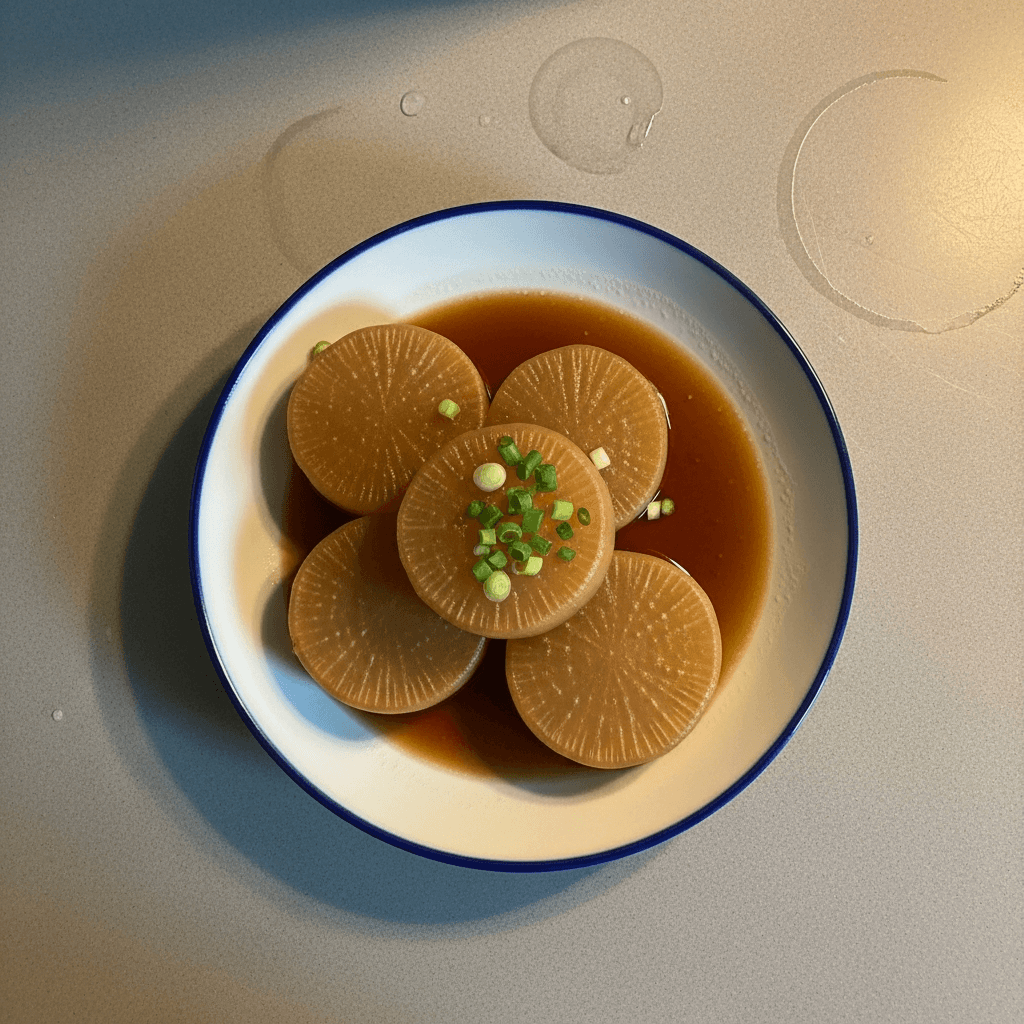
Braised Daikon Radish in Soy Sauce (Furofuki-style)
This braised daikon is a quiet memory of my grandmother's small kitchen in the countryside. In winter she would peel a large white radish, cut it into thick rounds, and simmer them slowly until they became translucent and tender. I remember the gentle steam, the clean scent of daikon, and how the soy-scented broth tasted like comfort itself. It was a humble dish, served beside steamed rice and pickles, but it taught me patience. The flavor is simple and profound. Daikon carries a sweet, watery core that soaks up the savory umami of soy, the roundness of mirin, and the warmth of sake. When cooked slowly in a good dashi, the radish becomes almost silky. We are not masking the vegetable, we are listening to it and helping its character come forward. This is Washoku: balance, seasonality, and respect for ingredient spirit. When you make this dish, consider the season. Daikon is at its best in cool months when its sweetness is concentrated. If you have access to fresh, firm daikon, choose one that is heavy for its size and with taut skin. Good dashi will lift the entire plate, so either make a simple kombu-dashi or use a light katsuobushi stock if you keep fish in your pantry. Slow the pace. Cut with care, simmer with attention, and taste with gratitude. The braise will reward patience. Serve with a small garnish of finely sliced green onion or grated ginger for brightness. Cooking is a practice in harmony. Let this dish be a gentle lesson in stillness and flavor.
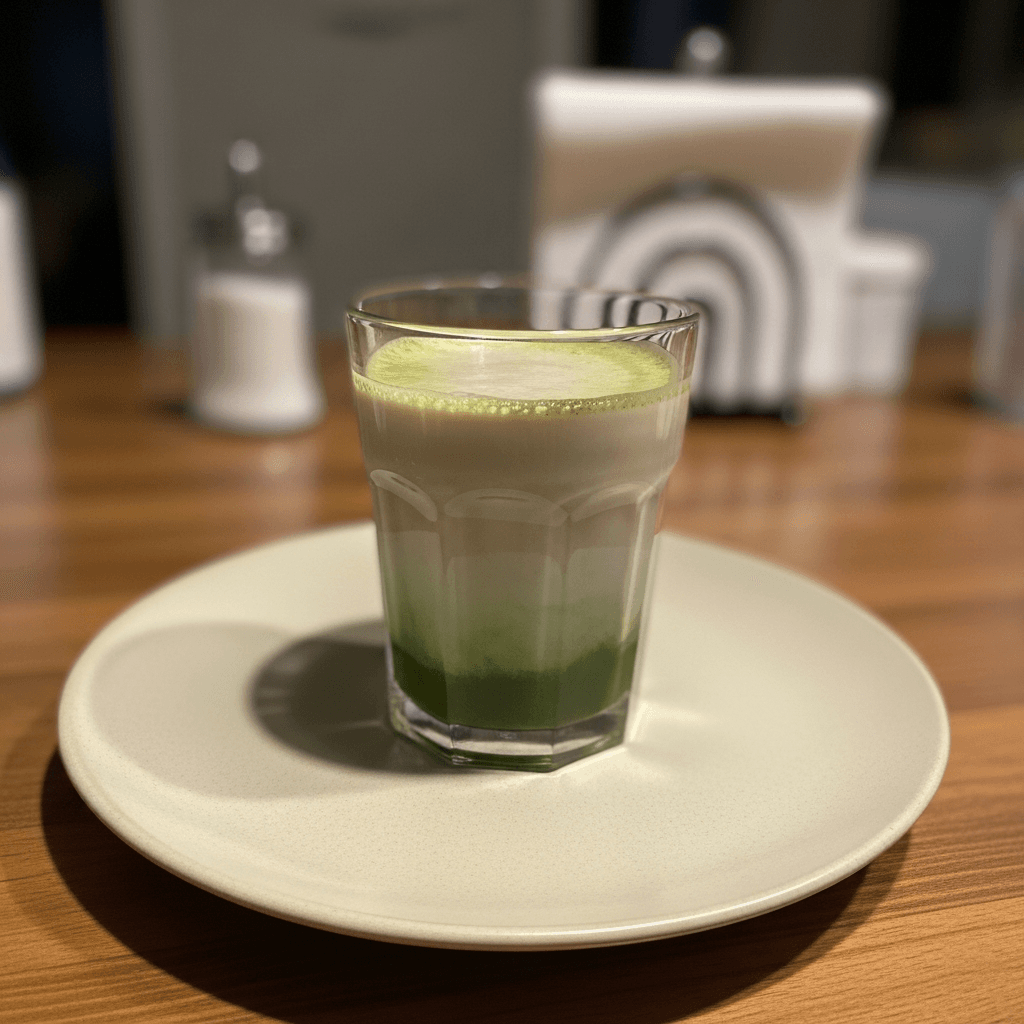
Refreshing Matcha Latte with Almond Milk
When I first served this refreshing matcha latte to my niece after a long walk through the plum trees, she closed her eyes and smiled. It reminded me of cool spring mornings in Kyoto when a light cup of green tea followed a simple breakfast. I adapted this version with almond milk for my family, to honor both tradition and gentle, modern tastes. Matcha carries the spirit of seasonality and respect for the leaf. Its flavor is a delicate balance of vegetal brightness, subtle sweetness, and a whisper of umami. When we pair it with almond milk, we allow the creaminess to support the matcha rather than cover it. The result is calm and refreshing, a small ceremony you can make at home. Preparing this drink is a quiet practice. We measure with care, sift the powder to remove clumps, and whisk in a focused rhythm. Each step asks for patience. Good flavor takes time, so treat the water gently and listen to the rhythm of the whisking as you invite the foam to form. I invite you to slow down and notice texture, color, and aroma. This latte is not only a beverage. It is an act of gratitude for the tea, the milk, and the hands that prepare it. Enjoy only what you need, and savor each small, mindful sip.

Fluffy Tamago Sandwich with Fresh Herbs
When I first made this sandwich for my niece, she took one bite, closed her eyes, and smiled in a way that made the morning feel sacred. The recipe is a small bridge between the old and the new. It recalls the warm kitchen of my grandmother in the countryside, where she would fold soft, seasoned eggs between slices of bread and ask us to eat slowly so the flavor would last. In Japan we cherish shun, the seasonality of ingredients. Here I invite fresh herbs into a humble tamago to brighten and lift the egg's natural sweetness. The dashi and a touch of mirin bring quiet umami so the sandwich feels balanced rather than cloying. The contrast of airy egg and soft bread is a lesson in texture harmony. Make this breakfast as an act of care. Whisk the eggs patiently. Heat the pan gently. We slice against texture to respect the bite. Good flavor takes time, so do not rush the dashi or the resting of the cooked egg. The process is simple enough for a weekday, but mindful enough to slow a hurried morning. This sandwich is more than convenience. It is a practice of gratitude. You will find the herbs awaken the spirit of the dish and the mayonnaise adds a familiar comfort that ties the flavors together. Each mouthful is both gentle and quietly rich, a harmony of taste, texture, and season.

Umami-Infused Grilled Chicken Teriyaki
When I was a boy, the scent of teriyaki drifting from the little charcoal grill in my grandmother's courtyard always pulled the family outside. She would pat the chicken with hands that moved like a practiced calligrapher. This Umami-Infused Grilled Chicken Teriyaki is a memory given form. I created a small change years ago by adding a light dashi and a touch of sake to the sauce to deepen the savory voice of the dish, and it became my family's weeknight comfort and a quiet celebration at small gatherings. Teriyaki is simple on the surface: soy, sweetness, heat, and the pure joy of caramelized glaze. The spirit of Washoku asks us to honor seasonality and balance. Here I use chicken thighs for their richness and a splash of dashi to awaken umami, the fifth taste that speaks of broths, mushrooms, and kombu. When you cook this, notice the layers: bright ginger, round soy, warm mirin, and a savory base that supports rather than overwhelms. Cooking is a meditation. As you marinate and then grill, move slowly and listen. The sear will speak to you. The glaze will thicken as the sauce reduces. Good flavor takes time, so do not rush the simmer. Slicing with respect, arranging with balance, and tasting with gratitude are as important as the ingredients themselves. I invite you to prepare this meal for dinner when you wish to slow down. Gather a modest bowl of steamed rice, a simple green vegetable, and let the teriyaki be the warm center of the table. The act of cooking and sharing becomes an offering, a small ceremony of gratitude for nature's gifts.
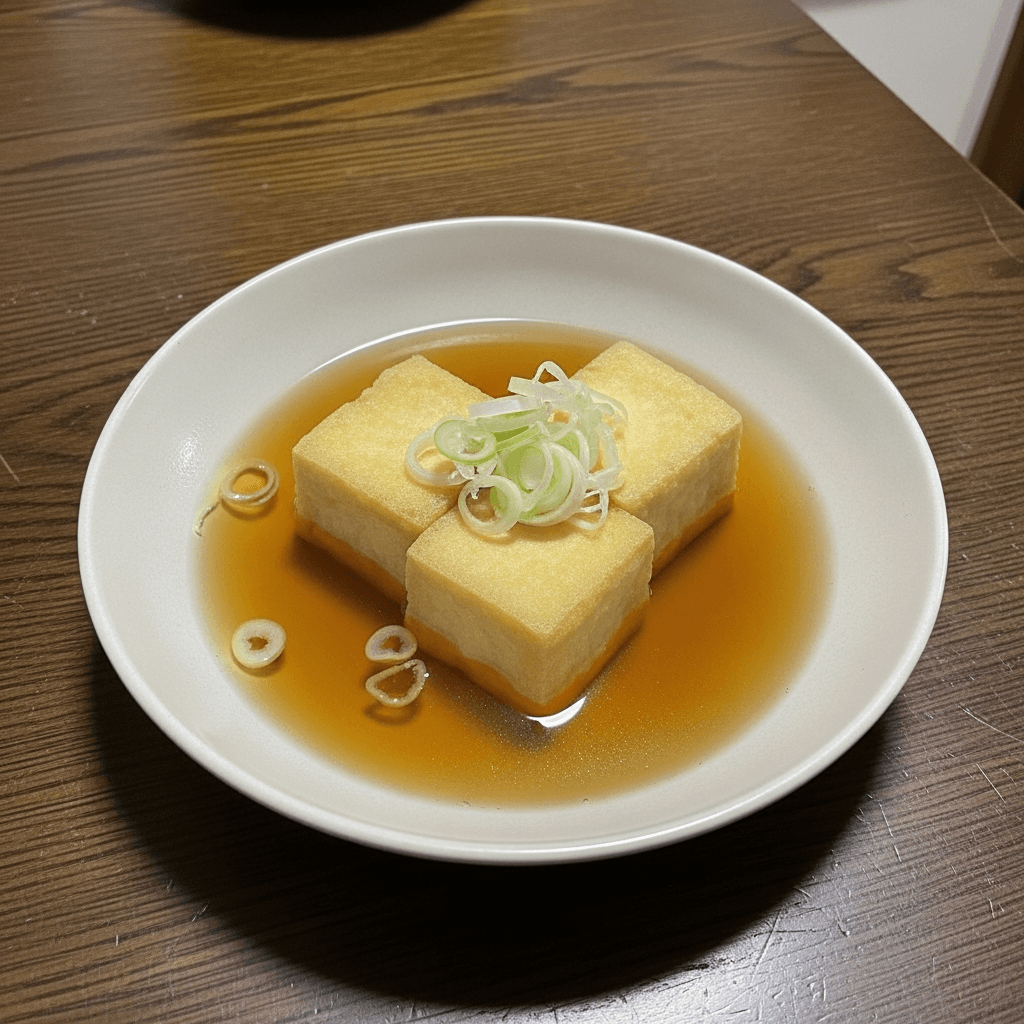
Traditional Agedashi Tofu with Dashi Broth
When I was a child, my grandmother in the countryside would wake before dawn to prepare a simple breakfast for the family. On chilly mornings she would warm a gentle dashi and fry small squares of silken tofu until their skins were a tender golden veil. Those breakfasts were quiet celebrations of the new day. This agedashi tofu brings me back to that calm kitchen where the first steam carried the scent of kombu and bonito flakes. Agedashi tofu is modest and elegant. The tofu offers a soft, cool center and a warm, slightly crisp exterior. The dashi broth is the song that ties everything together, a balance of umami from kombu and katsuobushi, a hint of sweetness from mirin, and the gentle salt of soy. In Washoku we honor seasonality and subtlety. Even in winter mornings the delicate flavors shine when we are patient and use quality ingredients. For breakfast I like to keep the portions small and the flavors restorative. This recipe invites you to slow your hands and your breath. We treat the dashi gently so it returns clarity and depth. We dust the tofu lightly so the texture remains whisper-soft, not heavy. Breakfast is more than fuel. It is an offering of gratitude for the day ahead. Take your time as you work. Hear the water's small bubbles when making the dashi. Feel the oil heat without rushing it. Enjoy the simple choreography: simmer, dust, fry, and rest. When you sit down to eat, place a bowl of warm rice or a small side of pickles and appreciate the harmony on your plate.
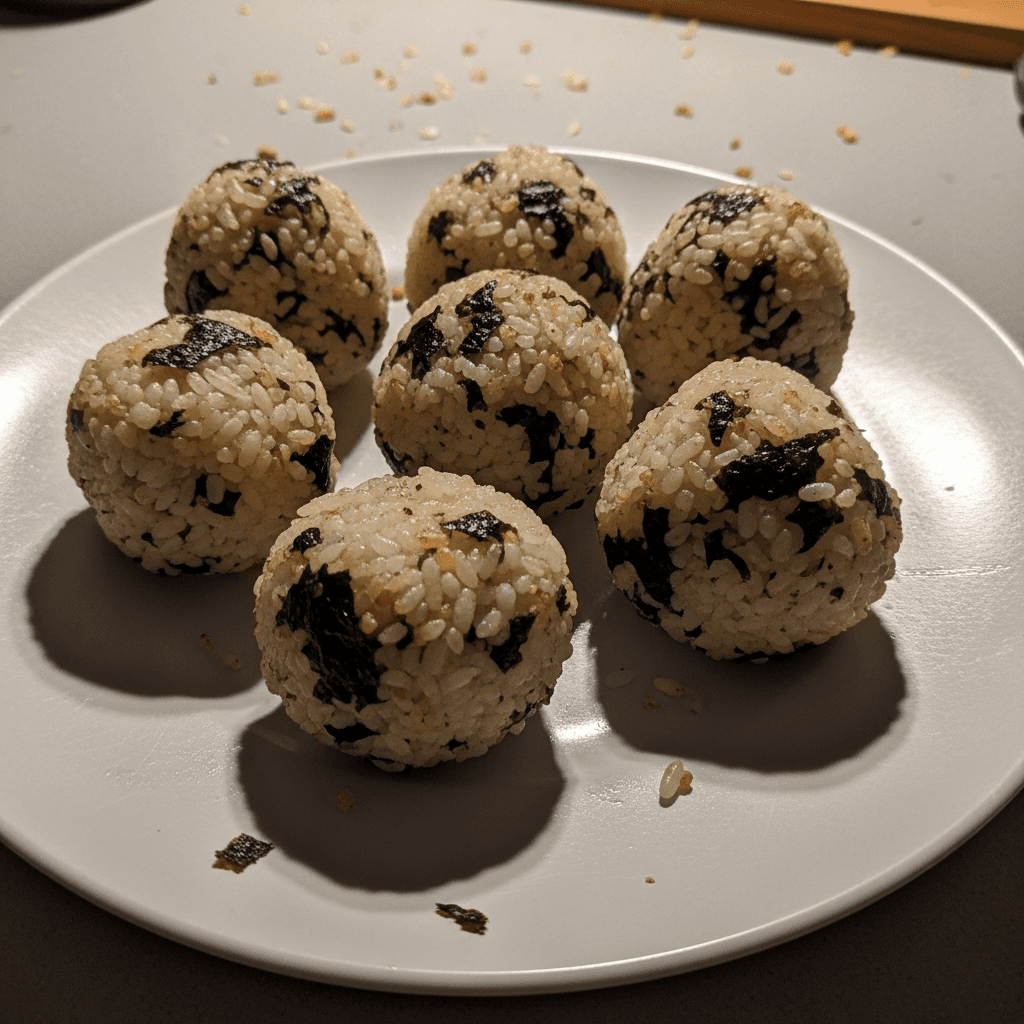
Crispy Rice Balls with Seaweed
When I was a boy in Kyoto I remember the small stalls lining the temple path, where warm rice snacks sent steam through the chilly air. These crispy rice balls with seaweed are a memory of that simple comfort, translated into a snack I make for my family on quiet afternoons. I shaped them with my hands while my children watched, and the sound of rice meeting hot oil became a kind of music. This snack balances texture and umami. The rice offers softness and subtle sweetness, while the seared exterior gives a satisfying crunch. A strip of toasted nori adds aroma and a salty, oceanic note that completes the dish. We lean on the principle of shun by choosing rice at its best and adding small touches like toasted sesame or a light soy glaze to enhance the natural flavor. Cooking is a meditation. We press, chill, coat, and fry with attention. The process rewards patience: allowing shaped rice to rest helps it hold its form, and a gentle, steady heat is kinder to the grain than a frantic flame. Listen to the sizzle. Watch the color deepen. The result is harmony on a small plate. Please take this as an invitation to slow the pace. Treat each step as a way of saying thank you to the ingredients. The ritual of shaping rice with clean, slightly wet hands is an act of care. When you sit to eat, notice the contrast of textures and the quiet umami that carries you through the snack.
Fresh from the stove

Crispy Seaweed Rice Crackers
When I was a boy, my grandmother in the countryside would toast leftovers of rice into small golden crisps over a hibachi. She would press a square of nori against each warm rice patty and we would eat them slowly with green tea, savoring the contrast of soft and crackle. These Crispy Seaweed Rice Crackers are a humble memory transformed into a mindful snack for modern cooks. I made this recipe for my family on a rainy afternoon, and the house filled with a quiet, toasted aroma that felt like home. Seaweed and rice are a natural friendship in Japanese cooking. Together they speak of umami and simplicity. The rice gives comfort and body, the nori lends oceanic depth, and a small glaze of soy and mirin brings a gentle sheen and savory balance. This snack honors seasonality through the rice we choose and the quality of the nori. In Washoku we aim for harmony, not excess; here we balance texture with taste, crispness with gentle salt. Take your time with each step. We do not rush the rice, nor the drying. Slow baking draws moisture from the rice and encourages a clean, lasting crunch. Listen for the subtle change as the crackers finish: the sound becomes brittle, the edges turn a quiet golden, and the aroma shifts from starchy to toasted and savory. Each sensory cue guides the work, like a bell in a small temple. I invite you to approach this recipe as a small meditation. Prepare your ingredients, feel the coolness of the rice grain, respect the nori like paper-thin leaves of the sea, and enjoy the process. When you share these crackers with family or friends, serve them simply: a small dish, a cup of tea, and the quiet pleasure of mindful eating.
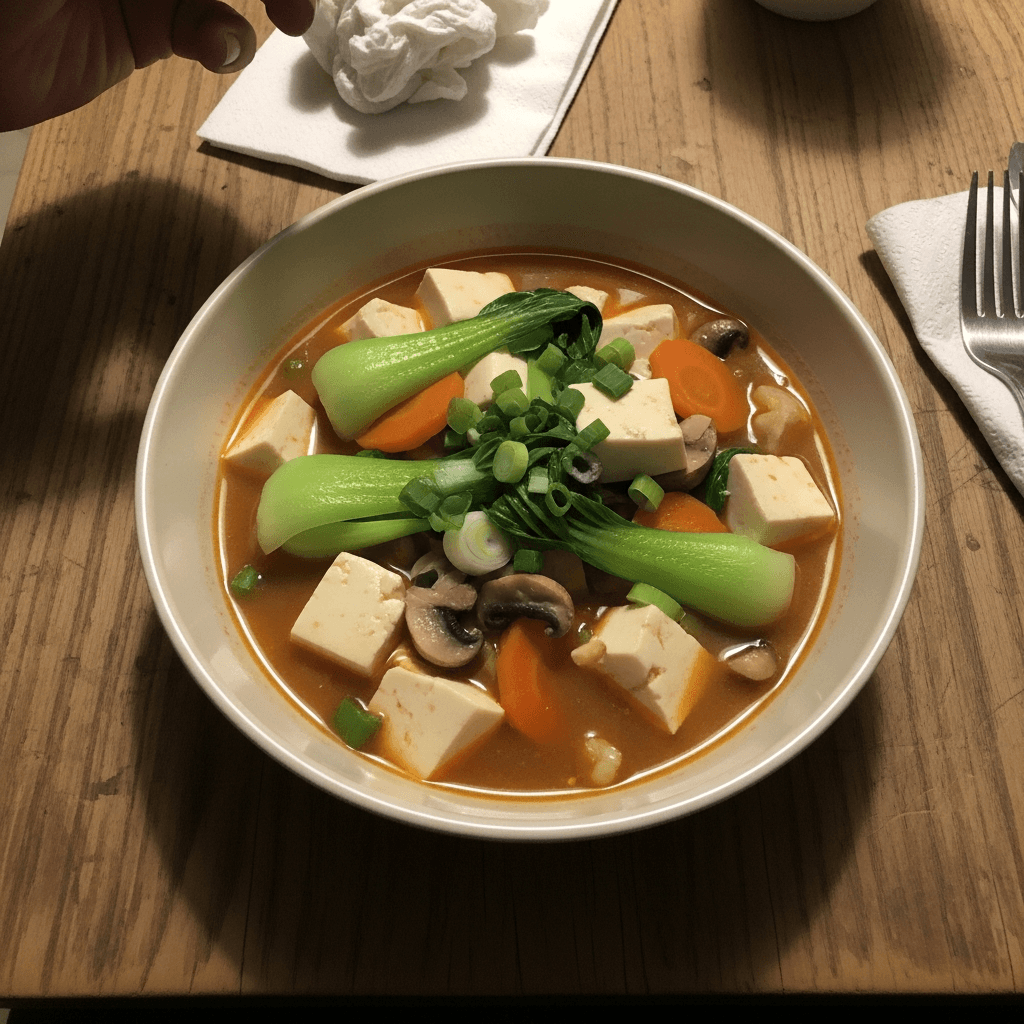
Silken Tofu Stew with Seasonal Vegetables
When I first made this silken tofu stew, it was a rainy evening in the countryside where my grandmother kept a small pot always ready on her stove. She served small bowls of warm stew to guests who arrived unexpectedly, and each bowl felt like a soft, grounding embrace. This dish reminds me of those quiet dinners, where conversation measured itself in spoonfuls and the steam carried the scent of mushrooms and toasted sesame. In Kyoto, there is a reverence for shun, the season of ingredients. I choose vegetables that are at their best now so each bite sings with clarity. Silken tofu provides a delicate silkiness that carries the dashi and miso, while seasonal vegetables add texture and color. The dish is gentle, but the umami from kombu dashi and miso gives it depth without heaviness. We cook this stew as an act of gratitude. The technique is simple but deliberate. We warm the broth slowly, add vegetables to respect their texture, and cradle the silken tofu so it does not break. Good food asks us to slow down. When you listen to the simmer and inhale the aroma as flavors meld, you practice a small meditation. Make this stew for dinner when you wish to calm the day. Invite balance to the table by pairing it with steamed rice and a small pickled side. Treat each step with patience and respect, and the bowl you set before yourself will feel like a warm invitation to rest and be thankful.

Served Chilled Hojicha Brew
When summer light softens the wooden beams of my kitchen, I think of hojicha cooled and served with quiet reverence. As a child I remember my grandmother placing a simple brown teapot on the table after a long afternoon in the fields. The roasted leaves filled the room with a warm, nutty scent that seemed to hold the whole day together. This chilled hojicha is my way of keeping that memory alive while offering a gentle refreshment to family and friends. Hojicha is a roasted green tea. The roasting changes the character from grassy to toasty, drawing out a soothing warmth that is both savory and slightly sweet. It carries umami in a subtle way, the kind that sits pleasantly on the palate and invites slow sipping. Served chilled, the tea becomes a calm, clarifying presence, perfect for seasons when we seek coolness but also comfort. This recipe honors Washoku principles: simplicity, seasonality, and harmony. We use good water, freshly roasted leaves, and patience. The process is small and deliberate: a controlled heat, a measured steep, and a gentle cooling. Each step is a chance to practice gratitude for the ingredients and mindfulness in the act of making. Take your time. Good flavor asks us to slow down. Bring attention to the aroma as it rises, to the colour of the tea as it deepens, and to the way a chilled sip settles into the body. This is not merely a drink. It is a quiet ritual that respects nature and the hands that brought these leaves to us.
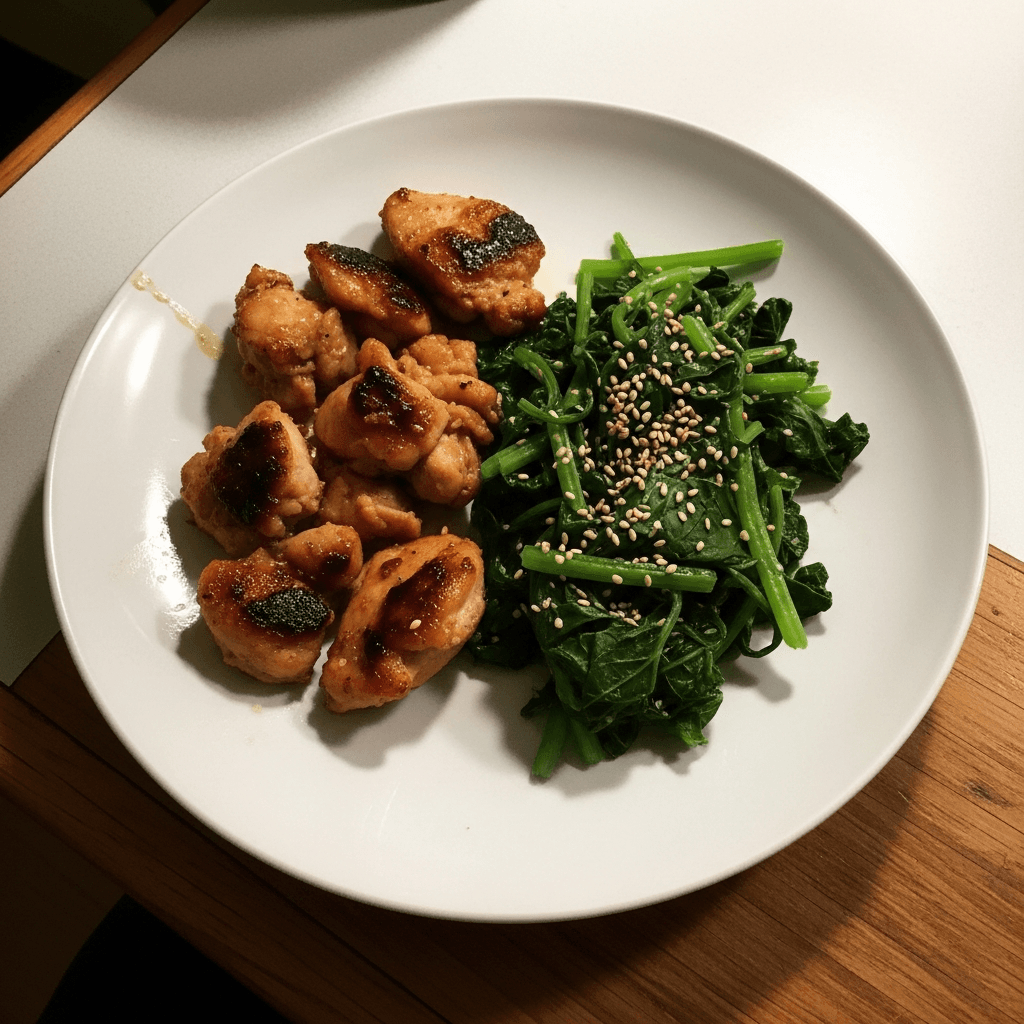
Teriyaki Chicken with Sesame Greens
When I first made this teriyaki chicken many years ago, it was for a small family gathering on a chilly evening. My mother placed a steaming bowl of sesame-dressed greens beside the chicken and said simply, "Balance is everything." The warm, glossy chicken and the cool, nutty greens felt like a gentle conversation on the table. That memory shaped how I approach this dish: harmony in flavor, temperature, and texture. Teriyaki is familiar around the world, yet in Japan it is more than a sauce. Teriyaki is a way to show gratitude to the protein and the land that raised it. The soy and mirin bring umami and a soft sweetness, while the sake adds depth. The sesame greens provide contrast they bring a bright, toasted note and a crisp, leafy texture that balances the richness of the chicken. We cook with the seasons. In spring I choose young spinach or komatsuna for the greens. In autumn a slightly heartier leaf suits best. The principle remains the same: respect the ingredient. We coax flavor slowly. We do not hurry the glaze or burn the sesame. Good flavor takes time, and the quiet of the kitchen is part of the meal. I invite you to move calmly through this recipe. Notice the sound when the chicken meets the pan. Smell the first steam of sauce when it starts to thicken. Arrange the plate with intention. Cooking is a meditation and the dish will reward the care you give it.
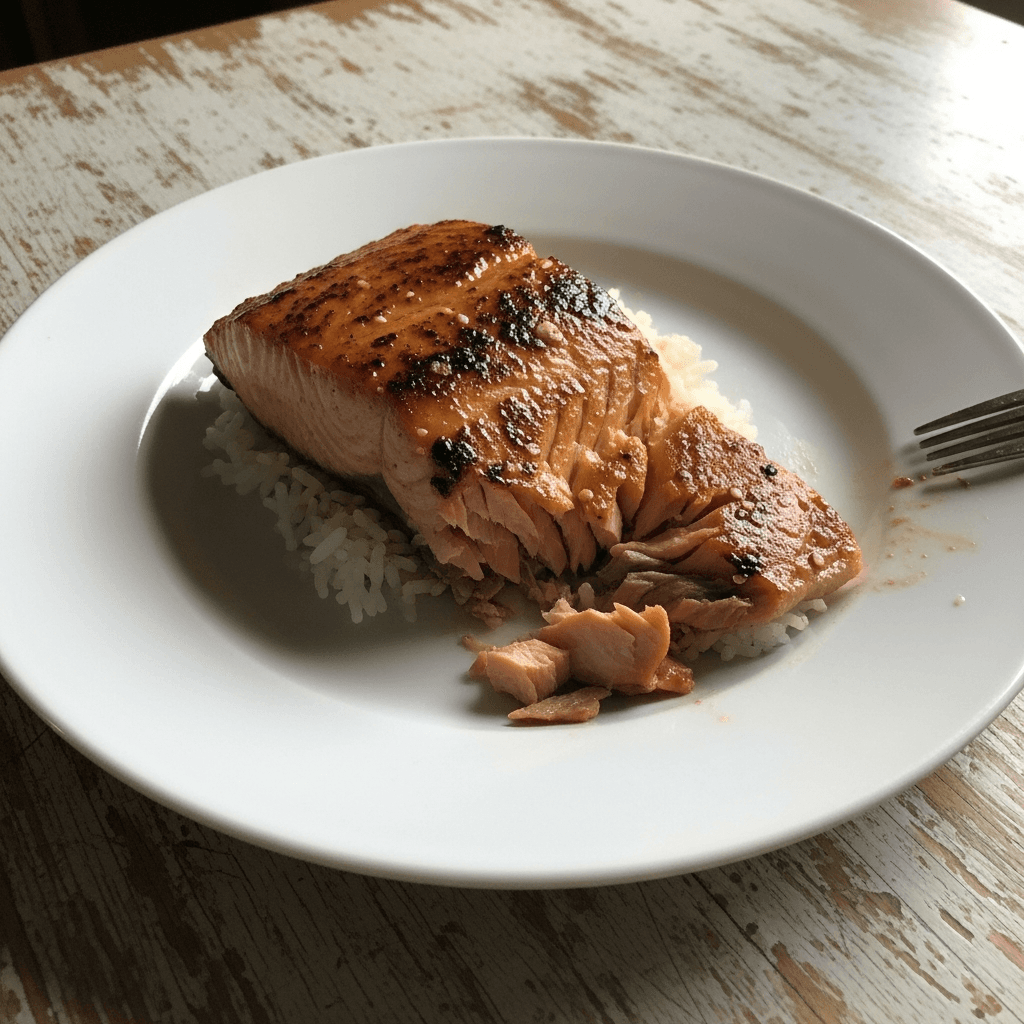
Savory Miso Glazed Salmon
When I first learned this miso glaze, it was a simple weekday lunch my mother served after a morning market visit. The market smelled of fresh fish and warm rice, and she would hum softly as she mixed miso with mirin. This particular glaze brings that quiet memory to life. It is both humble and joyful, perfect for a midday meal that steadies the spirit. The flavor lives in umami made gentle and bright. White miso gives sweetness and depth, mirin and sake add a soft lift, and a little sugar helps the glaze caramelize when it meets the heat. Balance is the heart of washoku, so we let the saltiness of the miso sing without overwhelming the natural richness of the salmon. This dish honors seasonality. In spring and autumn I choose smaller, delicate fillets. In winter I welcome fattier cuts for their warmth. No matter the season, seek fresh fish with clear eyes and firm flesh. Respect the ingredient by handling it simply and patiently. As you cook, slow your breath. Prepare the glaze with attention, marinate gently, and watch the glaze change color as it cooks. The act of making lunch can be a small meditation. When you sit to eat, notice texture, aroma, and the harmony on your plate. This is more than food. It is gratitude.
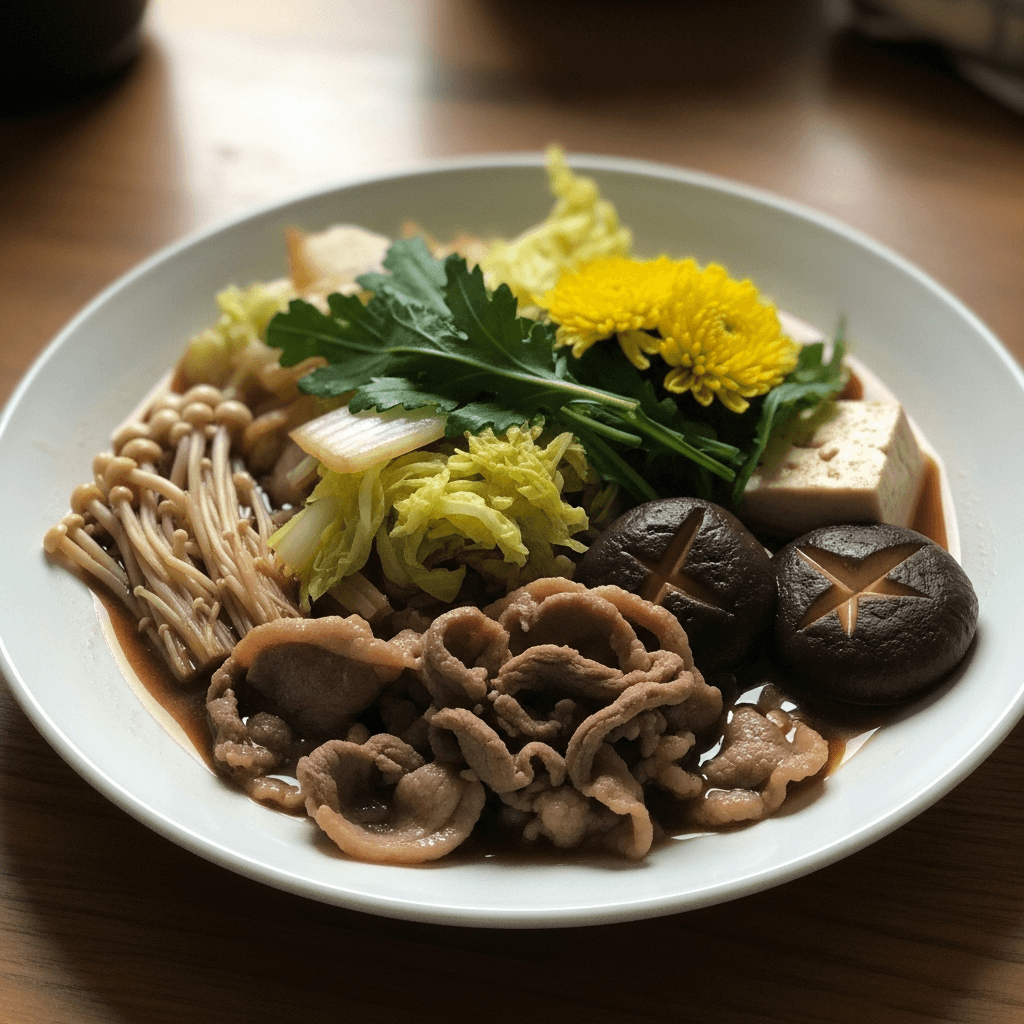
Elegant Duck Sukiyaki with Seasonal Vegetables
When I first made this duck sukiyaki, the memory that returned was of a cool autumn evening in Kyoto. The lanterns along Pontocho glowed amber and the market stalls were full of mushrooms and bright greens. I wanted a sukiyaki that felt ceremonial but gentle, one that honored the rich, gamey soul of duck and the delicate freshness of seasonal vegetables. This recipe is a bridge between traditions. Sukiyaki is often made with beef, but duck brings a deep umami and a slightly sweet fat that pairs beautifully with classic sukiyaki seasonings. We rely on dashi, mirin, and soy to create layers of savoriness. The principle of shun is at the heart of this dish: choose mushrooms, leafy greens, and root vegetables that are at their peak and they will sing with the duck. Cooking this is a guided meditation. Slice with intention, simmer with patience, and taste with curiosity. We encourage you to notice the change in aroma as the broth deepens, to feel the texture of the duck fat when it renders, and to arrange the cooked pieces with a quiet sense of balance. This is a dinner to share slowly, with warm conversation and gratitude. I invite you to slow down and appreciate each step. We cook to celebrate nature and to nourish the spirit. As you prepare this meal, remember that the technique honors the ingredient. Respect the duck, respect the vegetables, and the result will reward you and everyone at your table.
Tea letter
Uncle Hiro's tea letters are being gently prepared. You'll soon be able to receive a seasonal note once everything is ready.
No spam. Just gentle Sunday reading -- once the tea letters begin.