Braised Daikon Radish in Soy Sauce (Furofuki-style)
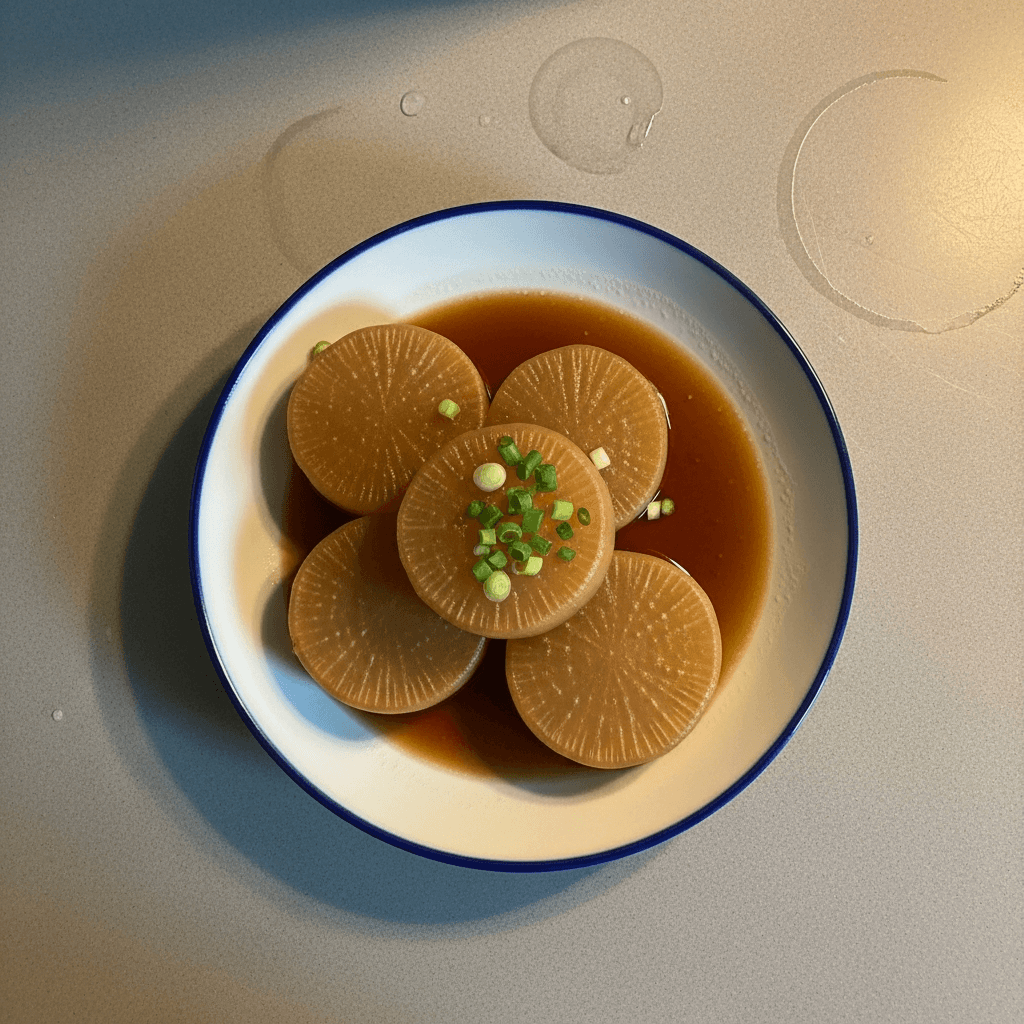
This braised daikon is a quiet memory of my grandmother's small kitchen in the countryside. In winter she would peel a large white radish, cut it into thick rounds, and simmer them slowly until they became translucent and tender. I remember the gentle steam, the clean scent of daikon, and how the soy-scented broth tasted like comfort itself. It was a humble dish, served beside steamed rice and pickles, but it taught me patience. The flavor is simple and profound. Daikon carries a sweet, watery core that soaks up the savory umami of soy, the roundness of mirin, and the warmth of sake. When cooked slowly in a good dashi, the radish becomes almost silky. We are not masking the vegetable, we are listening to it and helping its character come forward. This is Washoku: balance, seasonality, and respect for ingredient spirit. When you make this dish, consider the season. Daikon is at its best in cool months when its sweetness is concentrated. If you have access to fresh, firm daikon, choose one that is heavy for its size and with taut skin. Good dashi will lift the entire plate, so either make a simple kombu-dashi or use a light katsuobushi stock if you keep fish in your pantry. Slow the pace. Cut with care, simmer with attention, and taste with gratitude. The braise will reward patience. Serve with a small garnish of finely sliced green onion or grated ginger for brightness. Cooking is a practice in harmony. Let this dish be a gentle lesson in stillness and flavor.
Total time
55 min
Servings
4
Difficulty
easy
Prep
15 min
Cook
40 min
Market list
Ingredients
Method
Instructions
Prepare the daikon. Peel the skin with a thin stroke of the peeler. Cut into 2.5 to 3 cm thick rounds, then cut each round in half if the daikon is large. We seek uniform pieces so they cook evenly.
Par-cook the daikon to remove bitterness and to ensure an even, tender interior. Place the pieces in a pot and cover with cold water. Bring to a gentle simmer, not a rolling boil, and simmer for 10 minutes. You will see the daikon begin to turn translucent at the edges. Drain and gently rinse under warm water.
Lightly brown for flavor. Dry the bottom of a heavy pan with a towel and warm the vegetable oil over medium heat. Place the daikon pieces cut-side down. Listen for a soft change in the sound, a gentle sizzle, and watch for a faint golden color. Brown only a little; we are building savory notes, not charring.
Combine the braising liquid. In a measuring cup, stir together the dashi, soy sauce, mirin, sake, sugar, and grated ginger. Pour the mixture slowly into the pan so the liquid comes up about two thirds of the height of the daikon. The aroma should open, gentle and savory.
Simmer slowly and gently. Bring to a gentle simmer, then lower the heat so the surface hardly trembles. Cover with a lid, leaving a small gap to let steam escape. Cook for 20 to 25 minutes, turning the pieces once halfway through so both sides drink the broth. The daikon should be translucent and fork tender.
Concentrate the sauce if needed. Remove the lid, increase heat slightly, and reduce the liquid for 3 to 5 minutes until it coats the back of a spoon. Watch closely and stir gently. The aroma will deepen and become richly savory.
Adjust seasoning. Taste the braising liquid with a small spoon. If it needs a delicate lift, add a tiny pinch of salt. Remember soy already contributes saltiness. Balance is the aim.
Plate with care. Arrange two or three pieces per person on warmed plates. Spoon a little glossy sauce over each piece. Sprinkle the thinly sliced green onion and, if you like, a small pinch of katsuobushi or toasted sesame for texture.
Serve and enjoy slowly. This dish pairs beautifully with steamed rice and a simple miso soup. Sit quietly, notice the steam, the aroma, and eat with gratitude for the season and the hands that tended the ingredients.
Kitchen whispers
- ✦Hiro's Note on Harmony: Use a gentle simmer. Vigorous boiling will make the daikon fall apart and the flavor will become cloudy. Treat the pan like a calm pond.
- ✦Hiro's Note on Harmony: If you want a cleaner dashi, soak kombu in cold water for 30 minutes before heating, and remove the kombu just before the water reaches a simmer. Then add katsuobushi briefly and strain.
- ✦Hiro's Note on Harmony: Slice the daikon in uniform thickness so each piece finishes at the same tender moment. We slice against the irregularities to respect texture.
- ✦Hiro's Note on Harmony: For deeper color and a slightly caramelized note, briefly brown the cut surface of the daikon. Do this gently so the sweetness of the vegetable remains.
- ✦Hiro's Note on Harmony: Presentation matters. Arrange pieces with a small space between them so the sauce pools and the glaze looks calm and deliberate.
Nutritional glance (per serving)
120
Calories
2 g
Protein
18 g
Carbs
2 g
Fat
3 g
Fiber
継続は力なり (Keizoku wa chikara nari). This proverb means perseverance becomes strength. The slow braise of daikon teaches the same lesson. A little patience, repeated and gentle attention, transforms a simple root into something nourishing. Respect the rhythm of cooking, and the meal will reward you.
Tea letters
Comments (0)
Please to leave a note.
No letters yet—be the first.
Tags