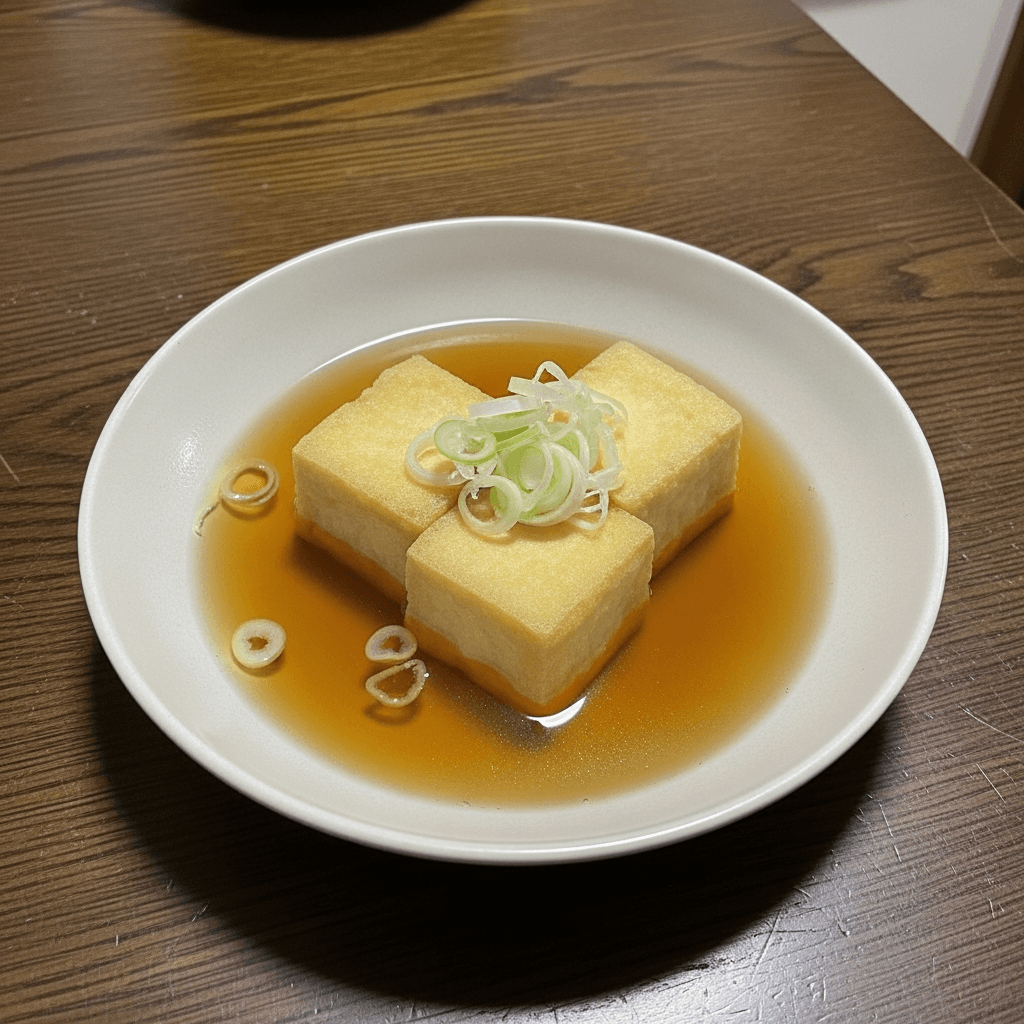
Traditional Agedashi Tofu with Dashi Broth
When I was a child, my grandmother in the countryside would wake before dawn to prepare a simple breakfast for the family. On chilly mornings she would warm a gentle dashi and fry small squares of silken tofu until their skins were a tender golden veil. Those breakfasts were quiet celebrations of the new day. This agedashi tofu brings me back to that calm kitchen where the first steam carried the scent of kombu and bonito flakes. Agedashi tofu is modest and elegant. The tofu offers a soft, cool center and a warm, slightly crisp exterior. The dashi broth is the song that ties everything together, a balance of umami from kombu and katsuobushi, a hint of sweetness from mirin, and the gentle salt of soy. In Washoku we honor seasonality and subtlety. Even in winter mornings the delicate flavors shine when we are patient and use quality ingredients. For breakfast I like to keep the portions small and the flavors restorative. This recipe invites you to slow your hands and your breath. We treat the dashi gently so it returns clarity and depth. We dust the tofu lightly so the texture remains whisper-soft, not heavy. Breakfast is more than fuel. It is an offering of gratitude for the day ahead. Take your time as you work. Hear the water's small bubbles when making the dashi. Feel the oil heat without rushing it. Enjoy the simple choreography: simmer, dust, fry, and rest. When you sit down to eat, place a bowl of warm rice or a small side of pickles and appreciate the harmony on your plate.
Total time
35 min
Servings
2
Difficulty
medium
Prep
20 min
Cook
15 min
Market list
Ingredients
Method
Instructions
Prepare the tofu with quiet hands. Drain the tofu and wrap it gently in clean kitchen cloth. Place a light weight on top for 10 minutes to remove excess water. We do not press violently. We respect the tofu's texture.
While the tofu rests, make the dashi. Place the kombu in cold water and bring it slowly to the point just before a simmer. Look for the edges to form very small bubbles. Remove the kombu just before the water simmers to avoid bitterness.
Add the katsuobushi to the hot water, let it sink for 30 seconds, then turn off the heat and let it steep for 2 minutes. Strain through a fine sieve or cloth. This yields a clear, fragrant dashi. Return the dashi to a clean pot and add soy sauce, mirin, sake, and a pinch of salt. Warm gently and keep at low heat; do not boil.
Cut the tofu into 8 even rectangles. Handle each piece with care. Pat each piece very lightly with paper towel to remove surface moisture—enough so the starch will cling.
Dust each tofu piece evenly with potato starch. Shake off excess. The coating should be thin, like a soft veil, not a heavy armor. This preserves the contrast between a delicate crust and a silky interior.
Heat the oil in a wide shallow pan to roughly 170 to 175 C. If you do not have a thermometer, test with a small breadcrumb. We listen for a steady, gentle sizzle, not a violent roar. Fry in batches so the oil temperature remains even.
Fry the tofu until the coating is pale golden and gently crisp, about 2 to 3 minutes per side. Watch the sound of the frying change as it releases moisture and becomes lighter. Turn carefully with a slotted spatula.
Drain the fried tofu on a rack or paper towel briefly so it rests. We do not let it sit long enough to become soggy. The goal is warm, crisp exterior and a tender inside.
To serve, place two pieces of tofu in a warmed shallow bowl. Pour the warm dashi around the tofu, not directly on top, to preserve the crispness for a moment. Add a small mound of grated daikon, a little grated ginger, and a scattering of green onion and katsuobushi.
If you like warmth, finish with a light pinch of shichimi togarashi. Sit, breathe, and enjoy slowly. Notice the contrast of textures and the subtle umami that comes from the dashi.
Kitchen whispers
- ✦Hiro's Notes on Harmony: Use firm silken tofu for the best balance of softness and structure. If the tofu is very watery, press only briefly. Too much pressing makes it dry.
- ✦Technique and Tradition: Make dashi gently. Do not boil kombu. Removing kombu before boiling preserves a clean umami and prevents bitterness.
- ✦Hiro's Notes on Harmony: Dust the tofu lightly with starch and shake off the excess. A thin coating crisps quickly and keeps the inside tender.
- ✦Technique and Tradition: Keep oil temperature steady. If oil is too hot the coating burns before heating the center. If too cool the tofu absorbs oil and becomes heavy.
Nutritional glance (per serving)
280
Calories
18 g
Protein
18 g
Carbs
14 g
Fat
2 g
Fiber
Ishi no ue ni mo sannen (Three years on a stone). This proverb teaches us perseverance and patience. Cooking this breakfast with care is a quiet practice of attention. You allowed time for the dashi to develop, handled the tofu gently, and created harmony on the plate. That patience is its own reward.
Tea letters
Comments (0)
Please to leave a note.
No letters yet—be the first.
Tags