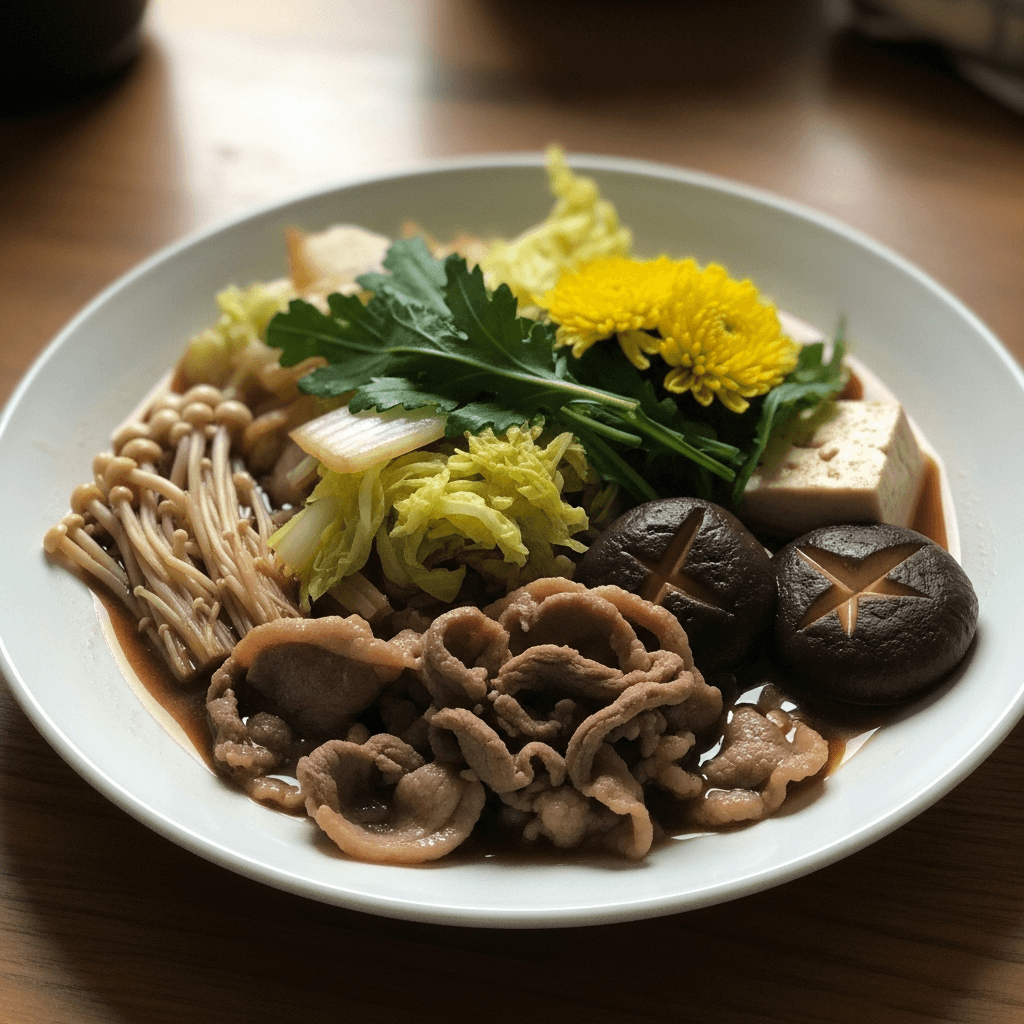
Elegant Duck Sukiyaki with Seasonal Vegetables
When I first made this duck sukiyaki, the memory that returned was of a cool autumn evening in Kyoto. The lanterns along Pontocho glowed amber and the market stalls were full of mushrooms and bright greens. I wanted a sukiyaki that felt ceremonial but gentle, one that honored the rich, gamey soul of duck and the delicate freshness of seasonal vegetables. This recipe is a bridge between traditions. Sukiyaki is often made with beef, but duck brings a deep umami and a slightly sweet fat that pairs beautifully with classic sukiyaki seasonings. We rely on dashi, mirin, and soy to create layers of savoriness. The principle of shun is at the heart of this dish: choose mushrooms, leafy greens, and root vegetables that are at their peak and they will sing with the duck. Cooking this is a guided meditation. Slice with intention, simmer with patience, and taste with curiosity. We encourage you to notice the change in aroma as the broth deepens, to feel the texture of the duck fat when it renders, and to arrange the cooked pieces with a quiet sense of balance. This is a dinner to share slowly, with warm conversation and gratitude. I invite you to slow down and appreciate each step. We cook to celebrate nature and to nourish the spirit. As you prepare this meal, remember that the technique honors the ingredient. Respect the duck, respect the vegetables, and the result will reward you and everyone at your table.
Total time
50 min
Servings
4
Difficulty
medium
Prep
30 min
Cook
20 min
Market list
Ingredients
Method
Instructions
Prepare your mise en place. Thinly slice the duck breast against the grain into 3 to 4 millimeter slices. We slice against the grain to respect texture and make each bite tender. Cut tofu into 2 centimeter cubes. Clean and trim vegetables, separate mushroom heads, and cut napa cabbage into wide ribbons.
Make the dashi. If using kombu and bonito, soak a 10 cm piece of kombu in 900 ml cold water for 30 minutes, then warm gently until small bubbles appear at the edge. Remove kombu, add 10 g bonito flakes, steep 2 minutes off the heat, then strain. We want a clear, savory broth as the foundation.
Combine seasoning. In a small bowl mix 80 ml sake, 80 ml mirin, 80 ml soy sauce and 2 tablespoons light brown sugar. Stir until the sugar dissolves. Taste for balance. The broth should be bright with a rounded sweetness and a gentle saltiness.
Prepare the shirataki. Rinse shirataki well, blanch 1 minute in boiling water, drain and cut into smaller bundles. This removes excess aroma and readies them to absorb the broth.
Heat your shallow pot or cast iron skillet over medium heat. Add 1 teaspoon sesame oil. Place a few duck slices skin side down to render fat. Listen for a soft sizzle. The sound will change as the fat renders and the skin browns. Render until the skin is golden but not burned.
Remove the initial duck pieces and lightly season them with a small pinch of salt and pepper. These pieces become a fragrant base. Pour 800 ml dashi into the pot. Add the seasoning mixture. Bring to a gentle simmer. We are looking for small, steady bubbles.
Add tofu, mushrooms, shirataki, and the thicker stems of napa cabbage first. Slide them into the simmering broth with intention. Allow them to absorb flavor for 3 to 4 minutes. Watch the surface; the aroma will deepen and the broth will develop glossy richness from the duck fat.
Return the remaining duck slices to the pot in a single layer. Because duck is richer than beef, cook briefly. Sear each side 30 to 45 seconds in the simmering broth until just cooked through. We aim for tender texture with a bit of rendered fat clinging to the meat.
Add delicate vegetables like mizuna, enoki and the remaining napa leaves in the final minute. These should wilt quickly and retain brightness. Taste the broth and adjust with a small splash of soy or a whisper of salt if needed.
Serve at the table. If you like, beat eggs lightly in small bowls for each person. Traditionally one dips the hot morsels into raw egg to mellow and enrich the flavor. If you prefer, skip the egg and enjoy the meat and vegetables as they are.
Arrange the cooked pieces respectfully on shallow plates. Sprinkle sliced spring onion and a light pinch of shichimi togarashi for those who enjoy a hint of warmth. Eat slowly and mindfully. Share the broth or ladle a little into small bowls as a warm soup at the end.
When you have finished, strain and save the remaining broth. It can be reduced gently and used to season rice or to make a simple soup the next day. Waste not, honor all gifts.
Kitchen whispers
- ✦Hiro's Notes on Harmony: Slice duck thin and against the grain. Thin slices cook quickly and give a silkier mouthfeel.
- ✦Hiro's Notes on Harmony: Build the broth gradually. Start with clear dashi, then add seasonings and rendered fat. This preserves clarity and depth of flavor.
- ✦Hiro's Notes on Harmony: Respect textures. Add firm vegetables first and delicate greens last so each element keeps its intended bite.
- ✦Hiro's Notes on Harmony: Keep a small pot of hot water nearby to rinse chopsticks between bites if sharing directly from the skillet. It is polite and keeps flavors distinct.
- ✦Hiro's Notes on Harmony: Present with balance. Arrange color, height, and contrast so the plate invites calm and appetite. We eat with our eyes first.
Nutritional glance (per serving)
560
Calories
36 g
Protein
28 g
Carbs
34 g
Fat
5 g
Fiber
Mono wo taisetsu ni suru (Cherish things). This proverb reminds us to value the ingredient and the time we spend with it. You have moved carefully through each step, honored the duck and the season, and created a meal that calms the spirit. Take a moment to breathe, to taste slowly, and to share gratitude with those at your table.
Tea letters
Comments (0)
Please to leave a note.
No letters yet—be the first.
Tags