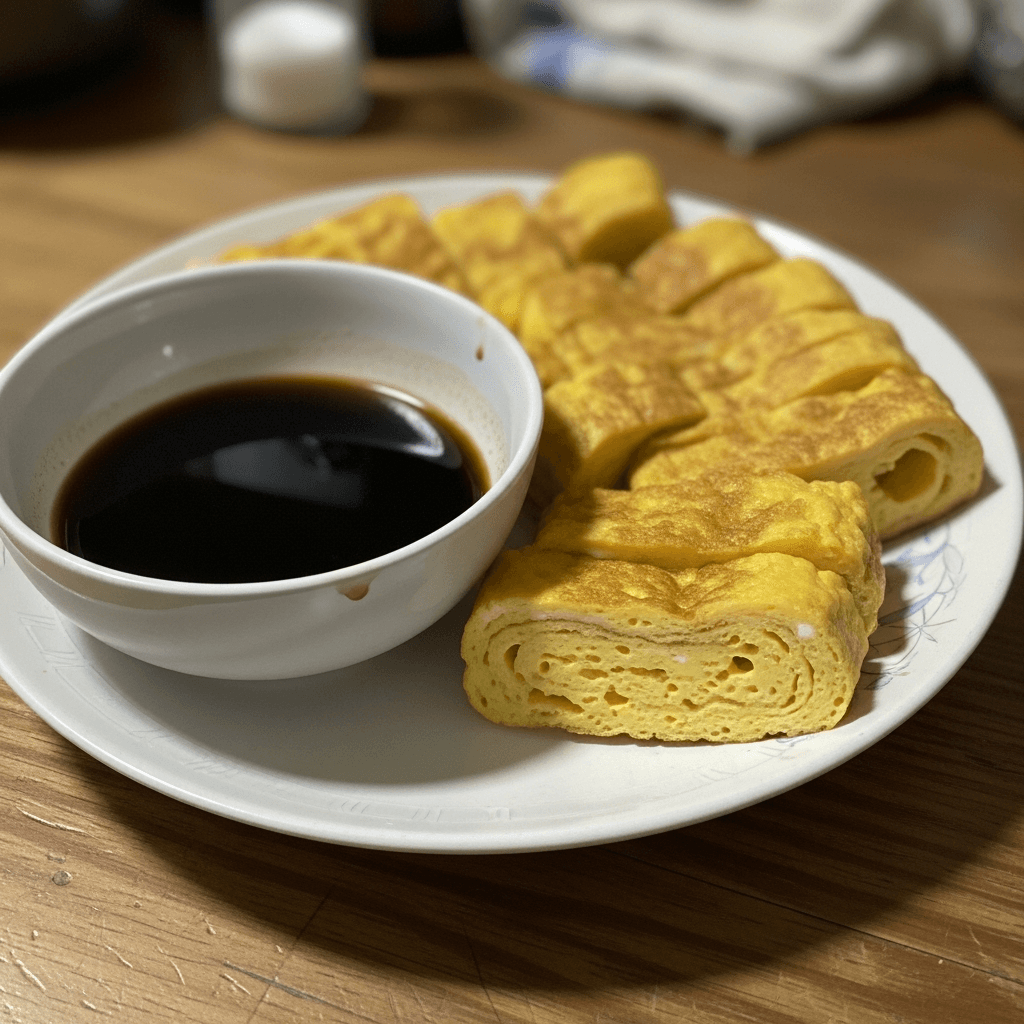
Wholesome Tamagoyaki with Soy Dipping Sauce
When I was a boy, my grandmother would wake before the sun to prepare simple breakfasts for our family. She would hum quietly while she whisked eggs in a small bowl and warmed the tamagoyaki pan. The gentle steam and the sweet, savory scent of cooking eggs still bring me back to her kitchen in the countryside. This Wholesome Tamagoyaki with Soy Dipping Sauce is my calm adaptation of her morning ritual, balanced for two and made with patient care. Tamagoyaki is more than a folded omelet. It is a study in texture and umami. The layers should be tender yet slightly springy, the surface glossy but not oily. We coax out umami through a small measure of dashi and soy, and we honor shun by using the freshest eggs we can find. The balance of sweet and savory is quiet, like a morning greeting. Cooking this dish is a slow, attentive practice. We measure, we heat gently, and we fold each layer with respect. The dipping sauce is simple and bright; it does not overpower but complements. Allow the sauce to sit briefly so its flavors meld, and taste it with patience. I invite you to move slowly as you prepare this breakfast. Breathe. Listen for the soft change in sound as the egg sets. Watch the color deepen to a warm gold. In the quiet of the kitchen we offer thanks for what the earth has given us, and we present a small, harmonious meal to begin the day.
Total time
25 min
Servings
2
Difficulty
medium
Prep
15 min
Cook
10 min
Market list
Ingredients
Method
Instructions
Prepare your mise en place. Crack the eggs into a bowl and gently whisk until the whites and yolks are combined but not frothy. We want a smooth, even mixture that will fold easily.
Combine seasoning. In a small bowl, stir the dashi, mirin, sugar, soy sauce, and a pinch of salt until the sugar dissolves. Taste a tiny drop. The mixture should be balanced, with a soft, savory sweetness.
Add the seasoning to the eggs and mix with the whisk. Strain the egg mixture through a fine sieve into a pourable bowl if you seek extra silkiness. Straining removes chalaza and air pockets so the layers will be neat.
Heat the pan. Warm a rectangular tamagoyaki pan or a small nonstick skillet over medium-low heat. Brush a thin film of oil across the surface with a folded paper towel. The pan should be warm enough that a drop of egg begins to set at the edge gently.
Pour the first thin layer. Pour just enough egg mixture to cover the pan in a thin sheet, roughly one quarter of the total. Tilt the pan so the liquid spreads evenly. Listen for a faint change in sound as the surface sets and the edges lift.
When the surface is mostly set but still glossy, roll. Starting at the far edge, use chopsticks or a spatula to lift and roll the cooked layer toward you in a steady motion. The roll should be gentle and deliberate. Place the roll back at the far side of the pan.
Oil the pan lightly again. Use a paper towel to apply a whisper of oil to the exposed pan, then pour the next thin layer of egg so it meets the existing roll. This new layer will adhere and create the next fold.
Repeat pouring and rolling. Continue with thin layers, pouring, setting, and rolling until all the egg mixture has been used. Aim for 3 to 5 folds. The finished roll should feel springy when pressed gently with a chopstick.
Shape and rest. Remove the roll from the pan and, if you desire a cleaner shape, wrap it briefly in a bamboo sushi mat or cloth to shape gently. Let it rest for 2 to 3 minutes so the structure settles and the juices redistribute.
Make the dipping sauce. Combine 1 tablespoon soy sauce with 1 tablespoon dashi and the sliced scallion. If using grated daikon, serve a small portion beside the sauce. The aroma should be bright and savory.
Slice with care. Using a sharp knife moistened with water, slice the tamagoyaki into even pieces. Wipe the knife between cuts for clean edges. Arrange slices on a plate with shiso or microgreens for color balance.
Serve mindfully. Present the tamagoyaki warm or at room temperature. Dip each bite lightly into the sauce. Close your eyes for a moment and savor the harmony of texture and flavor you have created.
Kitchen whispers
- ✦Hiro's Notes on Harmony: Use room temperature eggs. They blend more evenly and give a smoother texture to each folded layer.
- ✦Hiro's Notes on Harmony: Heat control is the secret. Medium-low heat ensures layers set slowly and prevent browning. Good flavor takes time, do not rush the cooking.
- ✦Hiro's Notes on Harmony: A sieve creates silk. Straining the beaten eggs removes stringy bits and small air bubbles for a refined finish.
- ✦Hiro's Notes on Harmony: We eat with our eyes first. Arrange slices with alternating angles and a small green garnish to show balance on the plate.
Nutritional glance (per serving)
208
Calories
12 g
Protein
6 g
Carbs
12 g
Fat
0 g
Fiber
Ishi no ue ni mo sannen (Three years on a stone). This proverb teaches us that steady effort and patience yield results. You have taken care with each fold and with each breath in the kitchen. Now, enjoy this humble breakfast slowly and with gratitude.
Tea letters
Comments (0)
Please to leave a note.
No letters yet—be the first.
Tags