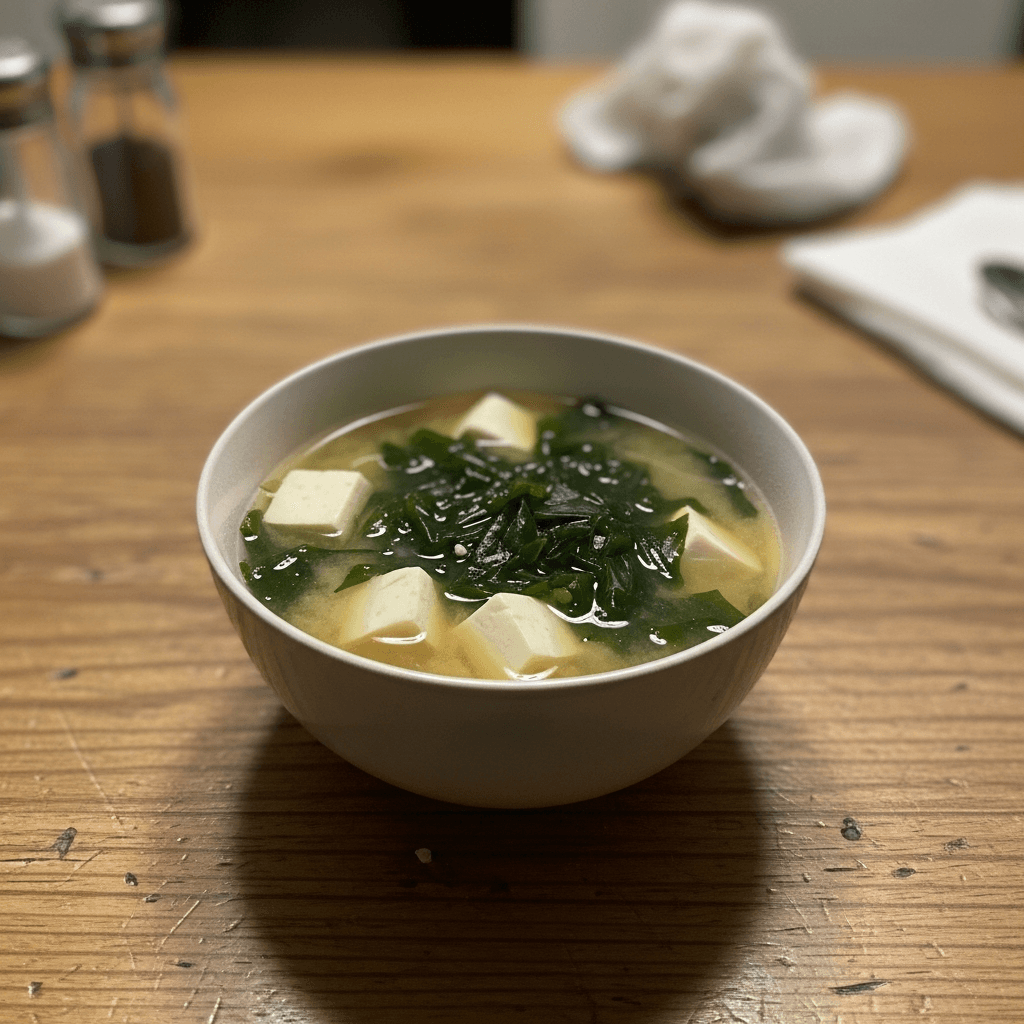
Warm Tofu Miso Soup with Seaweed
When I was a child in my mother's kitchen, the mornings were soft with light and the slow steam of soup. This warm tofu miso soup with seaweed was our small morning ritual. My grandmother would place a steaming bowl before each of us, and we would eat quietly, letting the gentle umami of dashi and miso wake the senses. There is comfort in that simplicity. For my family it became a breakfast of balance and ease, a way to begin the day with gratitude. This soup is humble and refined. The backbone is dashi, the clear, savory stock that carries umami like a quiet song. Miso brings gentle sweetness and depth while silken tofu gives silkiness and soft protein. Wakame offers a briny, tender texture that remembers the sea. Together they form a harmony, a small washoku moment for the morning. Use the freshest ingredients you can find. When the kombu is good and the miso is lively, the bowl becomes bright and complete. In Japanese cooking we honour shun the season. In spring I add a scatter of young green onions and in colder months I choose heartier miso. For a breakfast soup we keep it light so the rest of the day's dishes feel invited, not crowded. Notice the balance of salt, sweetness, and texture. Take time to warm the dashi slowly. Good flavor takes time. Be patient and treat each step as a small offering. Today I invite you to slow down and breathe while you prepare this bowl. Cooking can be a meditation. When you bring the water to a gentle simmer and dissolve the miso with care, you are practicing gratitude for the ingredients and the hands that gathered them. Sit with the aroma, sip slowly, and let the quiet fullness of this breakfast carry you into the day.
Total time
25 min
Servings
2
Difficulty
easy
Prep
10 min
Cook
15 min
Market list
Ingredients
Method
Instructions
Gather your ingredients and tools. Place a medium saucepan and fine sieve nearby. Pause and take a breath. A calm kitchen makes a clear dashi.
Place 800 ml of water and the kombu in the saucepan. Let the kombu steep in cold water for at least 10 minutes if you have time. This slow extraction gives a clean and round umami. We are coaxing flavor gently.
Warm the water with kombu over low heat. Watch the surface and bring it to a gentle simmer small bubbles along the edge, never a rolling boil. When tiny bubbles start to appear and an iodine-sweet aroma rises, remove the kombu.
Add the katsuobushi and raise the heat briefly until the liquid comes to a soft boil. Then turn off the heat and let the flakes sink, about 1 minute. The sound will calm, and the aroma deepens into a warm, savory note. Strain the stock through a fine sieve or cloth. This is your dashi.
Return the dashi to low heat. If using mirin, add it now and let the aroma bloom for a few seconds. We do not want to boil the dashi; keep the surface moving with gentle warmth.
Rehydrate the dried wakame in a small bowl of water for 2 to 3 minutes until it is tender. It will swell and darken. Drain and set aside. Notice its elasticity and sea scent.
Place the miso paste in a small ladle or bowl. Take a ladleful of warm dashi and whisk the miso until smooth. This technique dissolves the miso without creating clumps. Do not boil miso directly because high heat dulls its bright flavors.
Gently add the miso mixture back into the warm dashi over the lowest heat. Stir slowly and pay attention to the aroma the moment miso meets dashi. The soup should be warm, not boiling. Taste and adjust with a small pinch of salt only if needed.
Add the silken tofu cubes and the rehydrated wakame to the pot. Warm them gently for one to two minutes. Watch the tofu; it will glisten and hold its shape. We are warming the ingredients with care so they remain soft and tender.
Ladle the soup into bowls. Scatter thinly sliced green onion and a few nori strips on top. Breathe in the steam and enjoy the first sip while it is warm. Eat slowly. Let the textures and umami settle with each spoonful.
Kitchen whispers
- ✦Hiro's Notes on Harmony: Always dissolve miso off-heat with a bit of dashi. Boiling miso destroys its delicate aroma and probiotics.
- ✦Hiro's Notes on Harmony: Use good kombu and freshly shaved katsuobushi for a cleaner and deeper dashi. If you must use instant dashi powder, reduce the amount to keep the soup light for breakfast.
- ✦Hiro's Notes on Harmony: Treat silken tofu gently. Stir with a wooden spoon from under the tofu to avoid breaking the cubes if you prefer a delicate texture.
- ✦Hiro's Notes on Harmony: Rehydrate wakame briefly. It will expand greatly. Add only what you need so the soup maintains balance between broth and seaweed.
- ✦Hiro's Notes on Harmony: Presentation is part of the meal. Serve in small warm bowls. The steam and bowl warmth are part of the comfort of breakfast.
Nutritional glance (per serving)
110
Calories
7 g
Protein
6 g
Carbs
6 g
Fat
1 g
Fiber
Chiri mo tsumoreba yama to naru (Even dust amassed will become a mountain). This proverb teaches us that small, consistent efforts become something meaningful. The quiet care you put into a simple breakfast soup adds up. By taking time to make dashi, to dissolve the miso gently, and to present the bowl with care, you have turned routine into ritual. May this warm bowl carry a little peace into your morning.
Tea letters
Comments (0)
Please to leave a note.
No letters yet—be the first.
Tags