Umami-Infused Ramen with Seasonal Vegetables
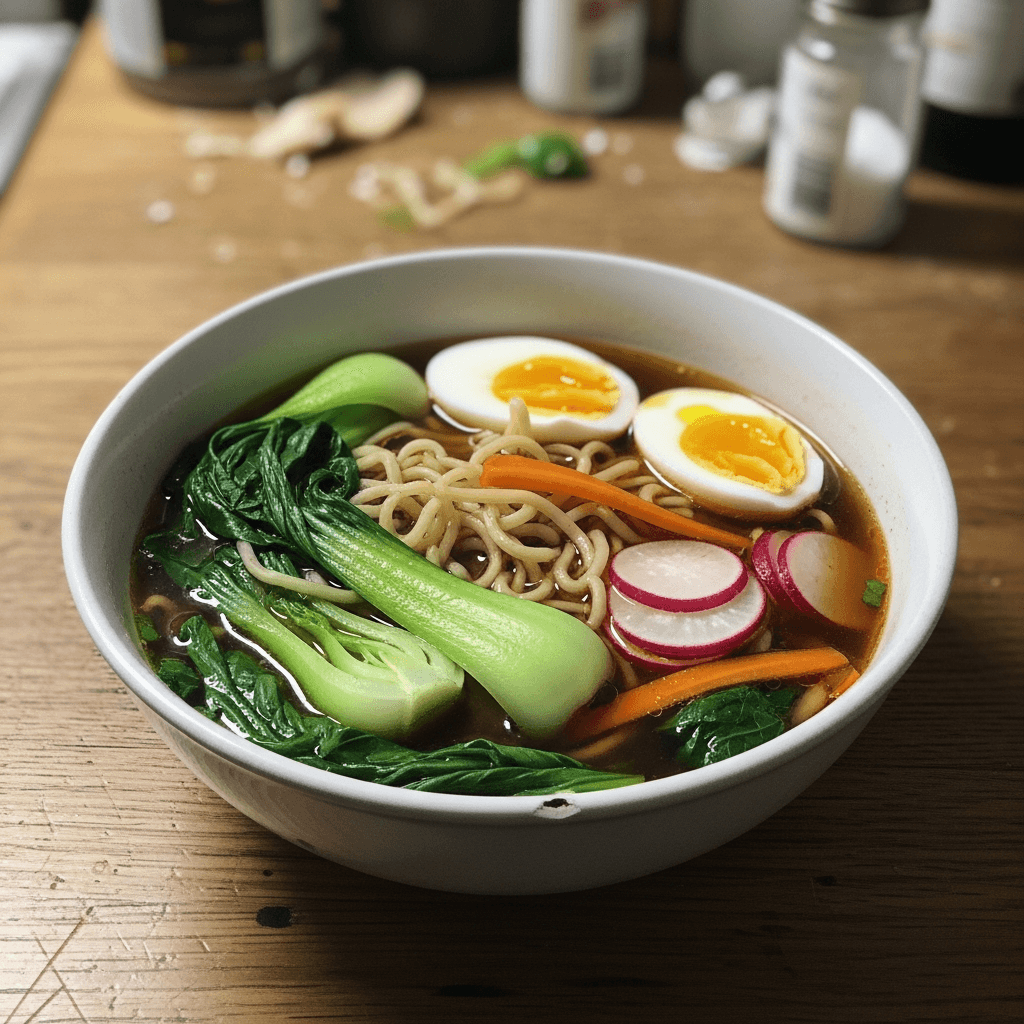
When I first made this umami-infused ramen, it was a quiet autumn evening in my small kitchen. The market had just delivered the first tender daikon and a bundle of bright mizuna. I wanted a bowl that honored each vegetable in its shun and wrapped them in a broth that felt like an embrace. I remember simmering kombu and dried shiitake while my daughter arranged the scallions. It became our little ritual. This dish is a harmony of simple technique and layered umami. Dashi built from kombu, dried shiitake, and a gentle shower of bonito creates a savory foundation. A light tare of soy and mirin, finished with a spoon of white miso, adds depth without overwhelming the seasonal vegetables. We aim for balance of salt, sweetness, and that quietly lingering savor that the Japanese call umami. Seasonality matters here. In spring I choose young bamboo shoots and asparagus. In autumn I favor mushrooms and root vegetables. The vegetables are not only garnish; they are partners. Slice, simmer, and arrange so each bite carries texture - crisp, tender, and silky. Slow cooking the dashi and treating each ingredient with respect will reward you. Take this as an invitation to slow down. Washoku teaches us to find calm in preparation and joy in sharing. Prepare with patience, listen to the aromas as they deepen, and present the bowl with care. In doing so you offer gratitude to the land and to those who will share this meal with you.
Total time
80 min
Servings
2
Difficulty
medium
Prep
20 min
Cook
60 min
Market list
Ingredients
Method
Instructions
Prepare the dried shiitake by rinsing quickly under cool water and placing them in 300 ml warm water to rehydrate for 20 to 30 minutes. Keep the soaking liquid; it holds umami and will fold into your dashi.
Wipe the kombu gently with a damp cloth; do not scrub away the white bloom. Place kombu and 1.3 liters cold water into a heavy pot and let it sit for 20 minutes so flavors begin to awaken.
Bring the kombu and water to a gentle simmer over medium heat. We are looking for small bubbles to form along the edges. Remove the kombu just before the water reaches a full boil. This protects the clean umami without bitterness.
Add the rehydrated shiitake and their soaking liquid to the pot. Bring back to a gentle simmer and cook for 10 minutes. The aroma should be deep and earthy, not harsh.
Turn off the heat. Add the katsuobushi and let it steep for 3 minutes, then strain through a fine sieve lined with paper or cheesecloth. Press gently to extract liquid but avoid grinding the flakes into the broth. You should have a clear, fragrant dashi.
Prepare the tare by combining soy sauce and mirin in a small saucepan. Warm gently until the mirin fragrance softens, then cool. Place tare into two serving bowls, distributing evenly. This concentrated seasoning will anchor your broth.
Return dashi to a clean pot. Whisk in the white miso off heat to preserve its sweetness. Taste and add salt sparingly. The broth should be layered, not aggressively salty.
Heat a skillet with vegetable oil over medium-high heat. Sear the sliced seasonal mushrooms until their sound shifts from bright to soft and their aroma becomes nutty. Add sesame oil and a pinch of salt to finish. Sear the carrots briefly to keep some snap.
Bring a separate pot of water to a rolling boil for the noodles. Cook fresh ramen according to package instructions, usually 1 to 2 minutes. Listen for the change in pitch of the boiling; the noodles will move from stiff to supple.
Blanch bok choy or mizuna in the noodle water for 20 to 30 seconds until bright and tender. Shock in cold water if you prefer a firmer texture. Warm the tare bowls by adding a ladle of hot dashi first, then remove and discard, keeping the tare at the bottom.
Combine the tare and the finished broth in each bowl, tasting for balance. Place cooked noodles in the bowl with gentle tongs, then arrange seasonal vegetables, seared mushrooms, and a halved soft-boiled egg. The broth should sit quietly around the toppings.
Finish with sliced spring onions, toasted sesame seeds, a nori sheet, and a drizzle of chili oil if you like heat. Sit with the bowl for a moment, inhale the steam, then serve. Encourage your guests to taste the broth first, then enjoy the textures with each spoonful.
Kitchen whispers
- ✦Hiro's Notes on Harmony: To draw a clear dashi, avoid boiling kombu and remove it before vigorous boiling begins. Bitter notes come from boiling kelp.
- ✦Hiro's Notes on Harmony: Whisk miso into a ladle of hot broth off heat rather than boiling it. Miso keeps its delicate sweetness when not overheated.
- ✦Hiro's Notes on Harmony: Balance texture when plating. Arrange a crisp vegetable, a tender mushroom, and a silky egg so each spoonful offers contrast.
- ✦Hiro's Notes on Harmony: Use the soaking liquid of dried mushrooms to boost umami. Strain it through a fine sieve before adding to dashi.
- ✦Hiro's Notes on Harmony: If you make extra tare, store it in the refrigerator for up to one week. It is a quiet shortcut to deepen flavor in future bowls.
Nutritional glance (per serving)
650
Calories
28 g
Protein
80 g
Carbs
22 g
Fat
6 g
Fiber
Ichi-go ichi-e (One time, one meeting). This proverb reminds us that each bowl we prepare is a unique moment that will never repeat exactly. You have taken time to listen to the ingredients and to tend the broth. Enjoy this meal with gratitude and presence, for the care you put in is the heart of the flavor.
Tea letters
Comments (0)
Please to leave a note.
No letters yet—be the first.
Tags