Traditional Matcha Tea Elixir
When I first learned to prepare matcha, my grandmother sat me on a low stool in her countryside kitchen and handed me a small bamboo whisk. The afternoon light through the shoji screens made the powder glow like new leaves. She taught me to treat each scoop as a small offering to the moment. This recipe is that lesson refined into a daily elixir, simple and meditative. Matcha is both tea and ritual. The flavor is a layered balance of vegetal sweetness, a gentle bitterness, and a hidden umami that blooms on the palate. We honor seasonality by choosing fresh, high quality matcha when possible. Ceremonial grade matcha gives a clean, vibrant green and an elegant mouthfeel. When prepared with care this drink calms the mind and sharpens presence. The act of making matcha is an exercise in harmony. We whisk to develop a soft, creamy froth and to release aroma. We warm the bowl to respect temperature. We sift the powder so it disperses smoothly. These small gestures are not busywork. They invite focus and gratitude. Good flavor emerges from patience. Allow this recipe to be your quiet practice. Move deliberately, listen to the slender sound of the bamboo whisk, and notice the bright, grassy scent that rises. The reward is subtle: a clear mind and a warm cup that tastes like attention. Take your time and enjoy the ritual as much as the elixir itself.
Total time
5 min
Servings
1
Difficulty
easy
Prep
5 min
Cook
0 min
Market list
Ingredients
Method
Instructions
Prepare your tools. Place a chawan or wide bowl and your chasen bamboo whisk within reach. Warm the bowl by pouring 100 ml of hot water into it. Warming the vessel preserves heat and opens aroma. The water should be hot but not scalding.
Measure and sift the matcha. Spoon 2 grams of ceremonial grade matcha into a fine sifter over the warmed bowl. Sift gently to remove clumps. Sifting creates a silkier texture and a cleaner mouthfeel.
Discard the warming water and dry the bowl. Pour out the warming water and gently dry the bowl with a soft cloth. This small act returns the bowl to service and keeps the temperature steady.
Add a small amount of water to make a paste. Pour 15 ml of the 60 ml into the sifted matcha. Use the chasen to stir slowly in small circles, forming a smooth paste. This step avoids lumps and coax out the powder's aroma.
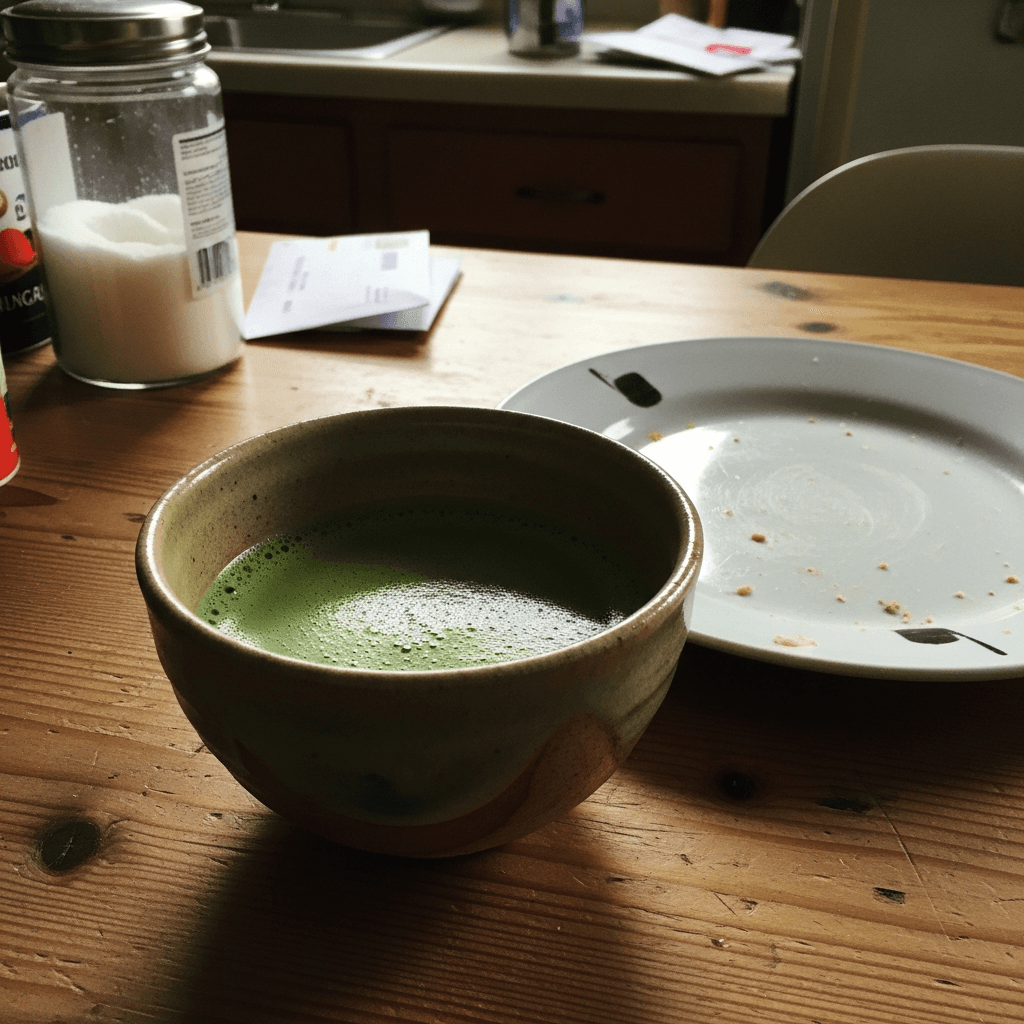
Whisk with intention. Add the remaining 45 ml of water heated to roughly 75 to 80 Celsius. Hold the whisk lightly and whisk briskly in a horizontal zigzag motion. We cultivate a frothy, jade green surface. Listen for a soft, even sound and watch for fine bubbles, not large ones.
Adjust and taste. Pause and inhale the aroma. If you prefer sweeter or creamier, add 1 tsp honey or 30 ml warm plant milk. Stir gently to incorporate. Respect the balance between sweetness and the matcha's natural umami.
Serve with calm. Hold the bowl with both hands and present or drink slowly. Notice the texture, the warmth, and the lingering savory notes. Matcha is best enjoyed immediately.
Kitchen whispers
- ✦Hiro's Notes on Harmony: Always use ceremonial grade matcha for a clean, bright cup. Culinary grade is best for baking but will taste bitter when whisked as tea.
- ✦Temperature and rhythm matter. Aim for 75 to 80 Celsius water and a steadier, brisk zigzag whisk rather than circular stirring. This produces a fine, lasting froth.
- ✦Sift the powder. A quick sift removes tiny clumps that will otherwise create a gritty texture. The smoother the paste, the more refined the mouthfeel.
- ✦Respect your tools. Rinse the bamboo whisk with warm water and let it air dry. Store matcha in a cool, dark place in an airtight container to preserve aroma.
- ✦We eat with our eyes first. Present matcha in a simple, clean bowl to highlight the vivid green color and fine foam.
Nutritional glance (per serving)
5
Calories
0.3 g
Protein
0.6 g
Carbs
0.1 g
Fat
0.2 g
Fiber
Ichi-go ichi-e (One time, one meeting). This proverb reminds us that each moment is unique and will not be repeated. In preparing and sipping this matcha elixir you have created a singular experience. Treat the practice with presence and gratitude. The quiet care you put in returns to you as calm and clarity.
Tea letters
Comments (0)
Please to leave a note.
No letters yet—be the first.
Tags