Traditional Matcha Mochi Delight
When I was a boy visiting my grandmother in the countryside near Kyoto, she would press a handful of warm mochi into my palm and smile. The mochi was simple, dusted with kinako or wrapped around a spoonful of sweet azuki. The green of matcha was rare in her kitchen then, saved for special tea. Years later I began to blend that memory with matcha of the new season, balancing the bitter leaf with the gentle chew of mochi. This recipe is that memory and that small experiment, offered to you with a quiet heart. Matcha mochi sits between texture and taste. The chew of the mochiko, the vegetal brightness of matcha, and the sweet depth of anko form a harmony that is both humble and refined. In Washoku we honor shun, the season, so use a fresh matcha if you can. Ceremonial grade will give a brighter aroma, while culinary grade is forgiving and still beautiful in dessert. This is a dessert that invites patience. Good mochi requires attention to heat and timing. We steam or gently microwave the rice flour mixture so it cooks evenly and acquires the right elasticity. We do not hurry the cooling, nor the shaping. Taking the time is part of the offering we make to the ingredient and to the person who will eat it. As you make this, please slow your breath and listen to the small sounds of the kitchen. The steam, the faint crispness when the kinako is toasted, the light scent of matcha as it blooms in water. Cooking is a meditation and a gift. Let this matcha mochi be a moment to practice gratitude for simple, seasonally minded flavors.
Total time
45 min
Servings
8
Difficulty
medium
Prep
30 min
Cook
15 min
Market list
Ingredients
Method
Instructions
Prepare the anko if not ready. Divide the sweet red bean paste into eight equal portions about 25 g each. Roll them gently into smooth balls and set on a plate covered lightly with plastic wrap. Keep them cool. We prepare the filling first so the shaping will be calm and unhurried.
Sift the mochiko and matcha together into a wide bowl. Sifting removes lumps and allows the matcha to distribute evenly. Breathe in the green aroma as you whisk; it will tell you the quality of the leaf.
Add the sugar and the pinch of salt to the flour and matcha mixture. Stir with a dry spoon so the ingredients become a uniform pale green powder. This is where balance begins.
Gradually pour the warm water into the dry mix while stirring slowly. We are aiming for a thick batter, like a loose dough. The warmth helps the mochiko hydrate evenly. The texture should feel cohesive, not watery, and the aroma of matcha will bloom as it meets the water.
Cover the bowl with plastic wrap leaving a small vent. Steam the mixture over gently simmering water for 10 minutes, or place the covered bowl in a microwave and cook on medium power for 4 minutes, stir, then 2 more minutes. Listen to the steam and watch the surface change from glossy to slightly matte as the flour cooks. The dough will become elastic and opaque.
Carefully remove the hot bowl from the heat. Use a wet wooden spoon or a silicone spatula to fold the dough several times. If it is very sticky, wet your hands and a bench or dusting surface with starch. The dough should be smooth and springy. We work gently so we do not tear the texture.
Dust a tray or board generously with potato starch. Transfer the warm mochi onto the surface. With wet, starch-dusted hands flatten the dough into a rectangle about 1.5 cm thick. The starch prevents sticking and helps with clean shaping.
Using a sharp, starch-dusted knife or a bench scraper, divide the mochi into eight equal pieces. Take one piece, press gently to flatten, place a ball of anko in the center, and fold the mochi around it, pinching the seams to seal. The warmth will make the mochi pliable; if it cools and firms too much, warm your hands slightly and continue. Each finished mochi should be smooth and round.
Lightly dust each mochi with more potato starch, then roll in kinako or sprinkle with toasted sesame if using. The kinako adds a nutty aroma that complements matcha. Brush off excess starch before serving.
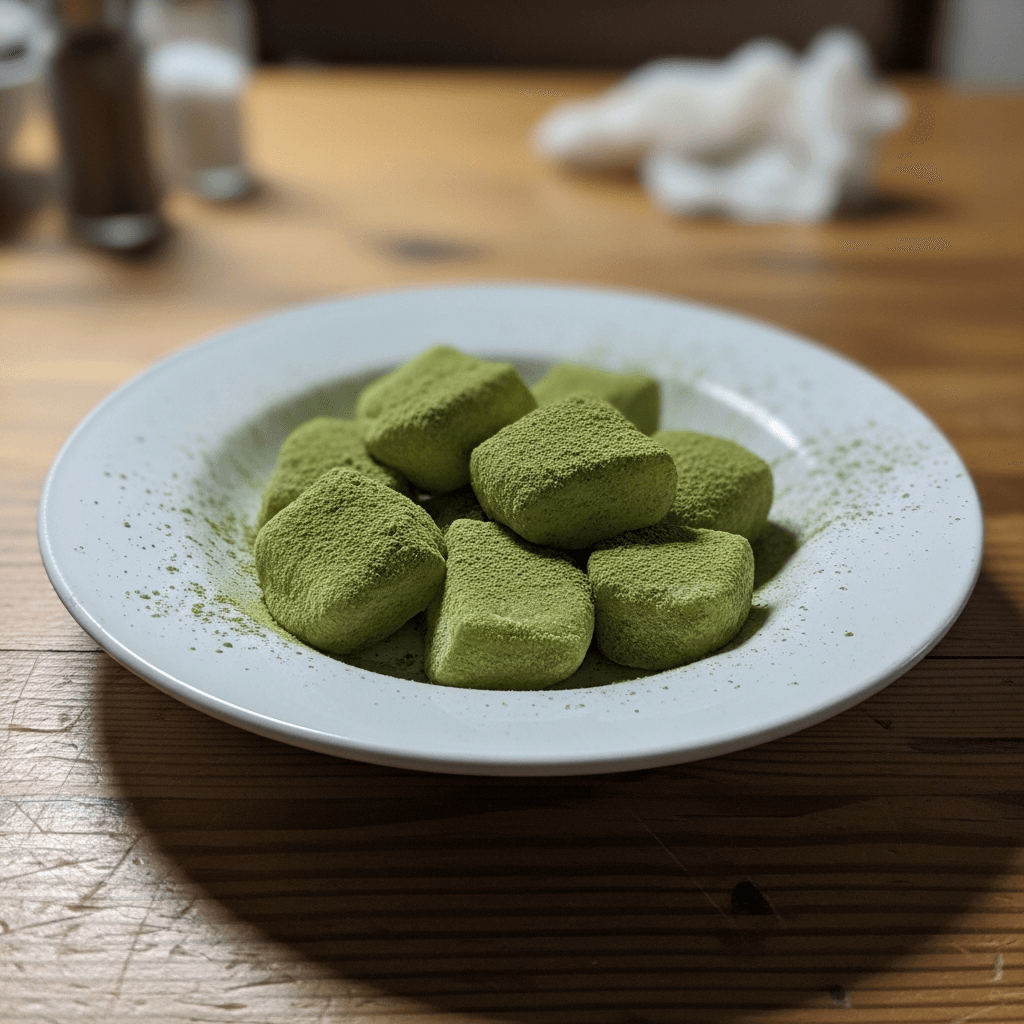
Arrange the mochi on a small dish. Serve at room temperature with a cup of warm sencha or hojicha. When you bite into the mochi, notice the interplay of chew, the bittersweet matcha, and the sweet anko. Eat with mindfulness and gratitude.
Kitchen whispers
- ✦Hiro's Note on Harmony 1: If the mochi feels too sticky to handle, dampen your hands with cold water then dust with potato starch. A calm touch keeps the surface smooth.
- ✦Hiro's Note on Harmony 2: Use warm water when hydrating mochiko so the flour cooks evenly. Cold water can leave lumps and uneven texture.
- ✦Hiro's Note on Harmony 3: If you prefer a more vivid matcha aroma, bloom the matcha briefly in a small amount of warm water and then add to the batter. This intensifies aroma without changing texture.
- ✦Hiro's Note on Harmony 4: We eat with our eyes first. Arrange mochi in an alternating pattern of kinako and plain, and place a small piece of gold leaf or toasted sesame for special occasions.
- ✦Hiro's Note on Harmony 5: Leftover mochi can be wrapped tightly and refrigerated for one day. Re-steam gently to restore softness rather than microwaving aggressively.
Nutritional glance (per serving)
190
Calories
3 g
Protein
40 g
Carbs
1.5 g
Fat
2 g
Fiber
Ichi-go ichi-e (One time, one meeting). This proverb reminds us to cherish the present moment and the unique meeting of flavors, hands, and time that created this dessert. You have nurtured these mochi with patience and respect for the ingredients. Sit calmly, share if you wish, and savor each bite as a once only moment.
Tea letters
Comments (0)
Please to leave a note.
No letters yet—be the first.
Tags