Tender Beef Nikujaga Stew
When I was a child, my grandmother would set a heavy pot of nikujaga on the hearth and call us in from the cold. The aroma of simmering dashi, soy, and sugar wrapped the little kitchen like a warm blanket. For me nikujaga is a humble hymn to home. Over the years I have refined the gentle balance of flavors so the meat remains tender and the potatoes hold their shape. This version is what I serve at my table when I want comfort and calm. Nikujaga is a simple dish with deep roots in modern Japanese home cooking. It became popular in the early 20th century as a Western influenced stew adapted to Japanese taste. The soul of nikujaga is umami. We draw umami from dashi and soy sauce while sweetness from mirin and sugar rounds the edges. Each ingredient sings if treated with respect, and the final stew is a reflection of season and balance. I prefer to use seasonal potatoes and the freshest thinly sliced beef I can find. We slice against the grain when possible so each bite is tender and gentle on the palate. The shirataki noodles add a pleasant, slightly chewy texture that contrasts with the softness of stewed potatoes. Take your time with the simmering. Good flavor takes time, and a slow approach rewards you with a deep, mellow broth. Invite yourself to move slowly as you cook. Pay attention to aroma and texture. Listen to the gentle simmer and watch how the surface of the broth changes as flavors marry. Cooking is a small meditation and an offering to those who will eat. Prepare this for a quiet weeknight or for family who have come to rest around your table.
Total time
70 min
Servings
4
Difficulty
medium
Prep
20 min
Cook
50 min
Market list
Ingredients
Method
Instructions
Prepare your ingredients with care. Peel and cut the potatoes into large, even chunks so they cook uniformly. Slice the onion into wedges that will keep some texture when simmered. Cut the carrot on the diagonal for a kind shape. Rinse the shirataki under running water and blanch for 1 minute to reduce aroma, then drain.
Heat a wide, heavy-bottomed pot over medium heat. Add a small splash of oil if your pan is very dry. Gently sear the beef in small batches. Listen for the sound of the meat as it browns. We seek a light caramelization, not a crust. Remove the beef and set aside. This step deepens the flavor without overcooking the meat.
In the same pot, add the onions and sauté gently until they become translucent and fragrant. The aroma should become sweet and savory. Add the potatoes and carrots and stir for a minute so they are coated with the fond from the meat and onions.
Pour in the dashi stock so it just covers the vegetables. Bring the liquid to a gentle simmer. We are looking for small, consistent bubbles, not a rolling boil. This gentle heat allows the potatoes to cook evenly and absorb flavor without falling apart.
Skim any scum that rises to the surface with a fine skimmer. A clear broth yields a cleaner taste. Once skimmed, add the soy sauce, mirin, sake, and sugar. Stir gently and listen as the simmer changes tone. The mixture should smell balanced between sweet and savory.
Return the seared beef to the pot and nestle it among the potatoes and onions. Add the shirataki noodles. Lower the heat to maintain a gentle simmer. Cover with a lid slightly ajar and simmer for 20 to 25 minutes. Check the potatoes with a chopstick or small knife; they should be tender but not disintegrating.
Taste the broth and adjust seasoning. Add a pinch of salt if needed and a little black pepper to brighten. If the flavor feels too sharp, allow the stew to rest off the heat for 10 minutes with the lid on. Flavors will meld and mellow.
If the broth is too thin, simmer uncovered for a few minutes until it reduces to a glossy, flavorful sauce that clings lightly to the potatoes and meat. If it reduces too much, add a few tablespoons of warm dashi to restore balance.
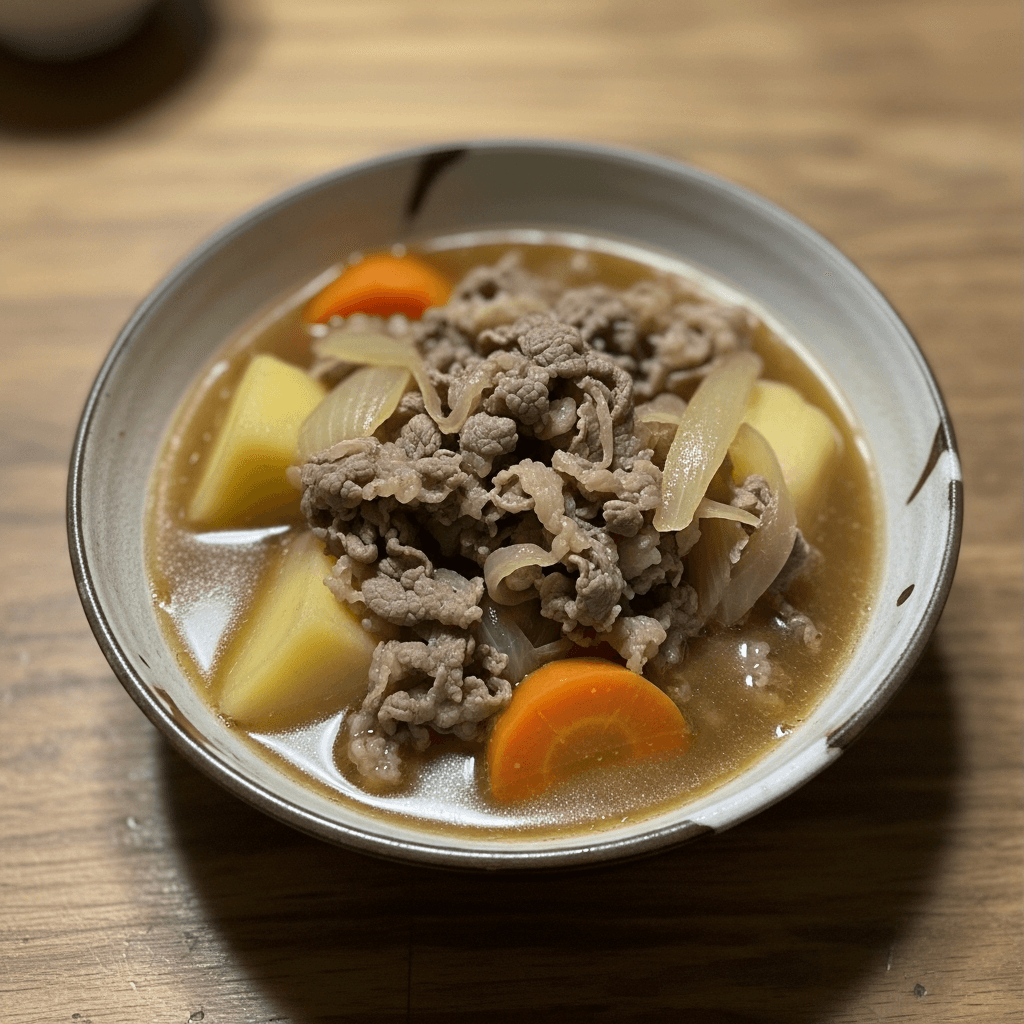
When ready to serve, arrange portions in shallow bowls. Place a few pieces of beef and a generous scoop of potato and carrot. Ladle some of the glossy broth over the ingredients. Garnish with thinly sliced scallion and a small portion of pickled ginger or mitsuba for freshness.
Serve warm and encourage quiet appreciation. Notice the aroma, the contrast of textures, and the gentle umami. Leftovers deepen in flavor and may be gently reheated the next day for an even more comforting meal.
Kitchen whispers
- ✦Hiro's Notes on Harmony: Use real dashi when possible. Kombu and katsuobushi make a foundation of umami that instant powders cannot fully replicate.
- ✦Hiro's Notes on Harmony: Slice and sear the beef in small batches to avoid steaming. A brief browning adds a savory depth without toughening the meat.
- ✦Hiro's Notes on Harmony: Cut potatoes into large pieces so they stay intact during simmering. If a piece begins to break apart, it is an indicator the simmer was too vigorous.
- ✦Hiro's Notes on Harmony: Let the stew rest off the heat with the lid on for 10 minutes before serving. Resting allows the flavors to marry and yields a more harmonious broth.
Nutritional glance (per serving)
380
Calories
28 g
Protein
30 g
Carbs
15 g
Fat
4 g
Fiber
Ishinoue ni mo sannen (Three years on a stone). This proverb teaches us that perseverance brings success. You have tended the pot with patience and care. The slow simmer, the gentle skimming, and the thoughtful adjustments have been your small acts of perseverance. Enjoy the warmth of the meal and the quiet reward of flavor earned by time.
Tea letters
Comments (0)
Please to leave a note.
No letters yet—be the first.
Tags