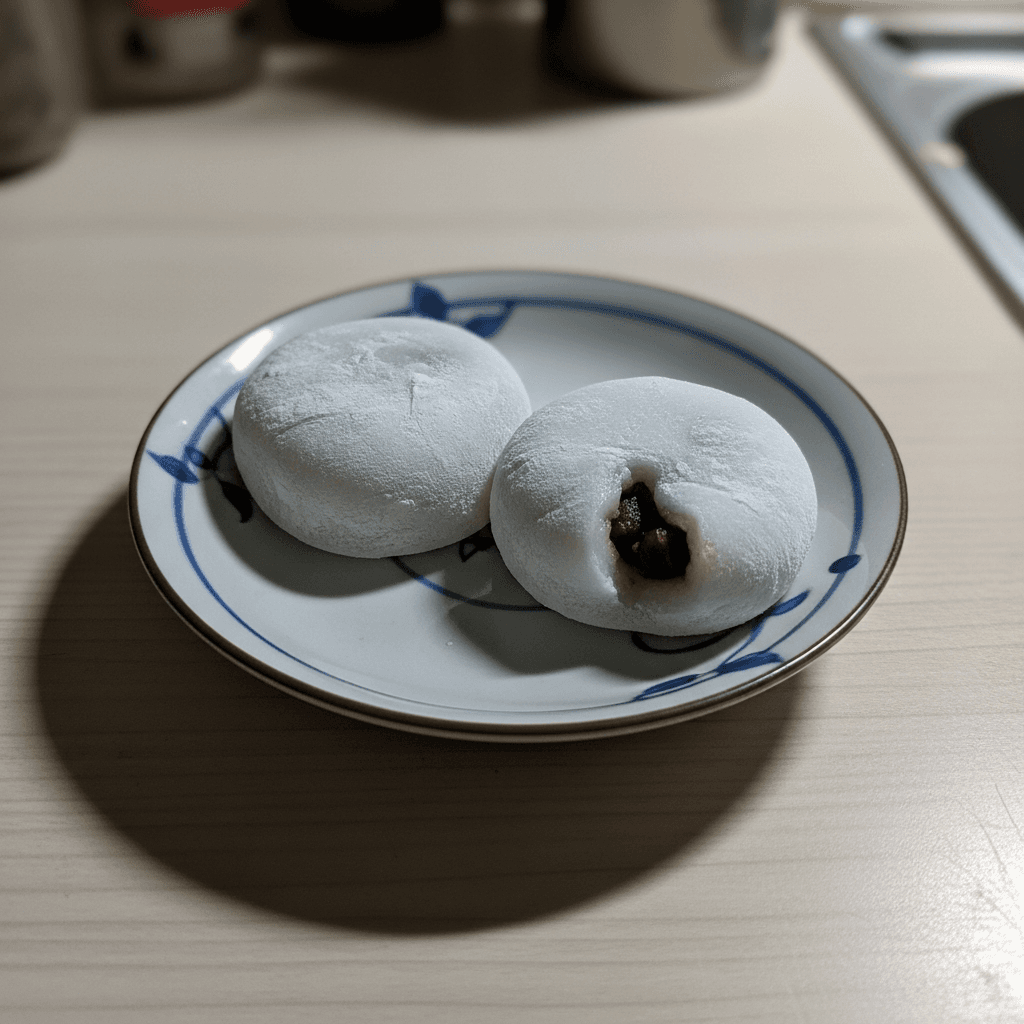
Sweet Mochi Rice Cakes with Anko
When I was a boy in Kyoto, I remember the winter festivals when street vendors handed out warm mochi wrapped in paper, the steam fogging the cold air. This recipe for sweet mochi rice cakes with anko brings me back to those small, joyous moments. At my grandmother's countryside home the mochi were made more slowly and with great attention, each piece pressed by hand and given to family with a quiet bow of thanks. Mochi is simple and profound. The glutinous rice flour becomes elastic and slightly sweet, while the anko lends a deep, mellow sweetness and soft texture. Together they embody the Washoku ideal of balance: chewiness and creaminess, subtle salt, and earthy sweetness. In season we might add kinako or a few toasted sesame seeds to echo the harvest's flavors. This recipe uses mochiko for practicality, but we honor the rice by treating it with patience. We steam gently, knead mindfully, and fill each cake with anko shaped like a small treasure. The process is slow enough to be meditative and quick enough for a comforting snack shared at the table. I invite you to slow your pace as you make these. Listen to the soft sigh when the mochi changes from powder to a translucent mass. Taste the anko with reverence. Cooking is an exercise of gratitude; every movement, from scooping to folding, is a small offering to the ingredients and to those who will eat them.
Total time
50 min
Servings
8
Difficulty
medium
Prep
30 min
Cook
20 min
Market list
Ingredients
Method
Instructions
Prepare your anko first. Divide the anko into eight even portions, each about 37 g. Roll each portion into a smooth ball and set on a plate covered with plastic wrap. Keep them at room temperature so they remain soft while you finish the mochi.
In a bowl, combine the mochiko, sugar, and a pinch of salt. Whisk gently to blend the dry ingredients. We mix with respect to the flour so it receives no shock and remains light.
Slowly add the warm water while stirring with a wet spatula. We are aiming for a smooth, slightly thick batter with no lumps. The texture should be like a thick, flowing paste — not runny and not doughy.
Prepare a steamer pot with 500 ml of water and bring it to a gentle simmer. Line a heatproof dish with parchment or a lightly oiled cloth so the mochi will not stick. We steam gently — vigorous boiling will make the mochi uneven.
Pour the batter into the prepared dish and cover with a lid or foil to keep the steam consistent. Place it in the steamer and steam for 15 to 18 minutes. You will see the mochi turn from milky to translucent and it will become firmer to the touch.
When the steaming time is complete, remove the dish carefully. The aroma will be warm and slightly sweet. Use a spatula to fold and knead the mochi in the dish for 1 to 2 minutes. Wet your hands or the spatula to prevent sticking. This kneading develops the chew and smoothness.
Dust a clean work surface generously with potato starch. Transfer the hot mochi onto the starch. Be gentle — the mochi will be very hot and pliable. Flatten the mass with your hands or a mochi paddle into a rectangle about 1 cm thick, dusting with more starch as needed.
Divide the mochi into eight equal pieces using a wet knife or bench scraper. Take one piece, dust off excess starch, and gently press it into a disc with your fingertips. You are making space for the anko like preparing a small nest.
Place a ball of anko in the center of the mochi disc. Fold the edges over with soft, deliberate movements, sealing the filling inside. Pinch the seam and roll lightly between your palms to shape a smooth cake. If the mochi sticks, re-dust with a touch of starch.
Lightly press the finished mochi into a plate of kinako or sprinkle with toasted sesame seeds as you prefer. For a warm, slightly crisp surface, toast each mochi briefly in a dry skillet over medium-low heat until you hear a gentle change of pitch in the sizzle and a faint fragrance rises. Do not burn.
Arrange the mochi on a small plate with balance in mind. Serve slightly warm or at room temperature. Offer tea alongside; the bitterness of green tea harmonizes with the sweetness of anko.
Kitchen whispers
- ✦Hiro's Notes on Harmony: Rinse and choose your ingredients with care. If you ever use freshly steamed glutinous rice instead of mochiko, the mochi will be chewier and more nuanced.
- ✦Technique and Tradition: Use potato starch rather than flour to dust and handle mochi. It keeps the surface dry without adding an off taste and preserves the soft chew inside.
- ✦Hiro's Notes on Harmony: Keep the anko at room temperature. Cold filling can stiffen the mochi and make sealing difficult. Soft anko allows for a smooth center and gentle mouthfeel.
- ✦Technique and Tradition: When toasting, listen for the change in the sizzle and watch for a light golden color. Good flavor takes time. A brief toast enhances aroma without destroying the delicate chew.
Nutritional glance (per serving)
220
Calories
4 g
Protein
46 g
Carbs
1 g
Fat
2 g
Fiber
Ishinoue ni mo sannen (Three years on a stone). This proverb teaches us that perseverance and patient effort transform small actions into lasting results. You have taken the time to steam, knead, and shape these mochi with care. The reward is not only a sweet snack but the quiet pleasure of having cooked with reverence and calm.
Tea letters
Comments (0)
Please to leave a note.
No letters yet—be the first.
Tags