Sweet Matcha Mochi Bliss
There is a quiet memory I carry from my childhood: a small courtyard in Kyoto where my grandmother would lay out a simple cloth and we would share freshly made mochi under the late afternoon light. This Sweet Matcha Mochi Bliss is a gentle homage to that slow moment. I first created this version when my family wanted something that honored tradition but felt light and green with the taste of spring. Matcha brings a green, slightly bitter brightness that balances the soft, comforting chew of mochi and the gentle sweetness of anko or white-bean paste. In Washoku we seek harmony. The bitterness of matcha is an umami-adjacent note that makes the sweet filling sing rather than overwhelm. Use matcha in shun when possible, and choose a culinary grade that carries floral notes and a clean finish. Making mochi is meditative. We mix, we steam, and we shape with patience. The rhythm of pressing and folding the dough becomes its own prayer of gratitude for the rice. I invite you to slow your hands and breathe with each step. Good texture cannot be hurried; it rewards steady attention. When you serve this dessert, place the mochi simply. A small dish, a dusting of kinako or toasted sesame, and a cup of warm hojicha or sencha completes the moment. We eat first with our eyes, then with our hands, and finally with our heart. Let this recipe bring calm to your kitchen and sweetness to your table.
Total time
50 min
Servings
8
Difficulty
medium
Prep
30 min
Cook
20 min
Market list
Ingredients
Method
Instructions
Prepare your workspace. Lay a clean cloth and lightly dust it with potato starch. This is where the hot mochi will rest. Ready your filling by dividing the anko into eight even portions and roll each into a small ball. Keep the anko slightly chilled so it holds shape.
Sift the glutinous rice flour and matcha powder together into a heatproof bowl. Sifting removes lumps and ensures an even green color. Add the sugar and a pinch of salt and mix with a gentle whisk until homogeneous.
Bring the water to a gentle simmer. We are looking for the smallest of bubbles around the edge, not a violent boil. Pour the hot water slowly into the flour mixture while stirring with a wooden spoon or rubber spatula. The motion should be steady and calm, folding until a smooth, slightly sticky batter forms.
Cover the bowl with plastic wrap, leaving a small vent, and steam the mixture over medium heat for 12 to 15 minutes. Listen to the steam sing softly. After 8 minutes, lift the cover briefly to check texture. The mochi will become translucent and elastic when ready.
When steamed, use a wet spatula to scrape the hot mochi onto your prepared starch-dusted cloth. Wetting the spatula prevents sticking. Work carefully, for the dough will be very hot. Allow it to cool just until it can be handled safely but still warm and pliable.
Dust your hands with potato starch. Pull a piece of mochi roughly the size of a small orange and flatten it gently into a disc. The surface should feel soft, slightly tacky, but manageable with starch as your ally.
Place a ball of anko in the center of the mochi disc. Fold the edges over the filling, pinching to seal. Turn the sealed seam downwards and gently roll to smooth. The finished mochi should be slightly rounded, with no open seams.
Repeat for the remaining pieces. If the mochi becomes too sticky, lightly dust the surface and your hands with more starch. Keep finished pieces covered with a damp cloth so they do not dry out.
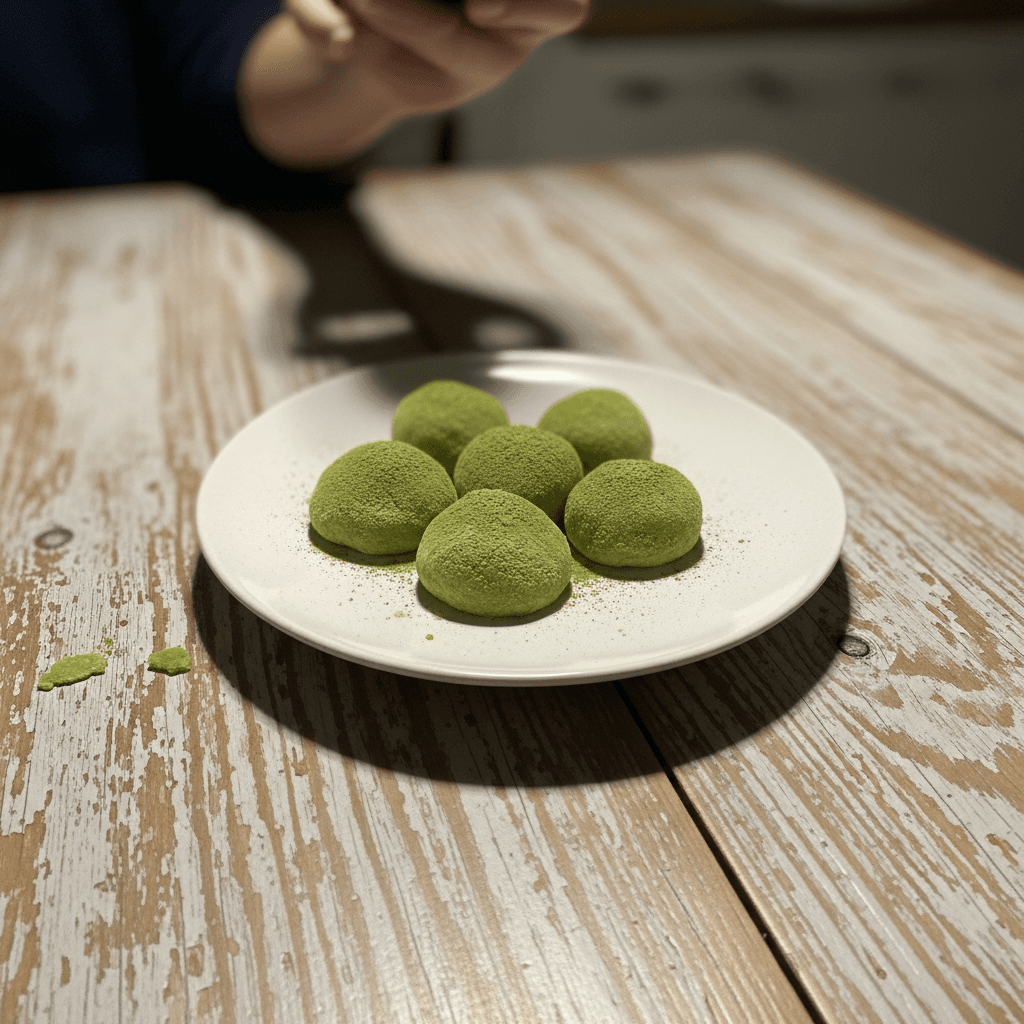
If you wish, lightly dust each mochi with kinako or sprinkle toasted sesame on top for texture. For a glossy finish, brush a small amount of honey or kuromitsu on the surface just before serving. The aroma of kinako will deepen the sweet green of matcha.
Serve at room temperature with a warm cup of hojicha or green tea. Notice the contrast: the slight bitterness of matcha, the tenderness of mochi, and the round sweetness of anko. Take a moment to breathe between each bite.
Kitchen whispers
- ✦Hiro's Notes on Harmony: Use culinary-grade matcha for baking and desserts. Ceremonial matcha is precious and best enjoyed as tea. Culinary matcha provides bright flavor without overwhelming the filling.
- ✦Technique and Tradition: Rinse your tools and cloth with cold water if the mochi begins to stick too strongly. A little starch keeps things gentle; do not overuse so the coating does not taste powdery.
- ✦Hiro's Notes on Harmony: Keep the anko slightly chilled before wrapping. Cooler filling is easier to shape and reduces stress on your hands while sealing the mochi.
- ✦Technique and Tradition: Steam gently and check often. Oversteaming can make the mochi gummy. The ideal texture is soft, elastic, and just translucent.
- ✦Hiro's Notes on Harmony: Presentation matters. Arrange mochi in small groups of three or four on a simple plate. A single sakura leaf or a dusting of kinako will create balance and calm.
Nutritional glance (per serving)
160
Calories
2 g
Protein
34 g
Carbs
1.5 g
Fat
1 g
Fiber
Ichi-go ichi-e (One time, one meeting). This proverb reminds us that each encounter is unique and cannot be exactly repeated. The care you have taken to prepare these mochi has created a single, mindful moment. Share it slowly and let the flavors remind you of patience and presence.
Tea letters
Comments (0)
Please to leave a note.
No letters yet—be the first.
Tags