Sweet Adzuki Bean Paste Buns (Anpan-style)
When I was a boy visiting my grandmother in the countryside, she would warm the oven and fold her hands for a moment before we began. The smell of simmering adzuki beans would fill the kitchen like a small, gentle festival. These sweet adzuki bean paste buns carry that quiet memory. I call them my anpan-style buns because they marry the soft, tender dough of a sweet roll with the earthy sweetness of homemade tsubuan or koshian. In Japan, adzuki beans are more than an ingredient. They mark celebrations, seasonal rituals, and simple comforts. The paste is balanced between sweetness and the deep, savory notes that come from the beans themselves. This balance reflects the spirit of Washoku where sweetness is tempered by texture and subtle umami. When you taste the paste, notice the grain and the warmth. Let it be familiar and new at once. Cooking this recipe is a meditation. We soak the beans patiently, cook them slowly, and knead the dough with intention. Good flavor takes time, so do not rush the simmering or the first proof. The aroma itself will teach you when the beans are tender and when the dough is ready to rest. Each step invites you to be present. I encourage you to honor the season with this dessert. In spring, serve the buns slightly warm with green tea to celebrate new beginnings. In winter, enjoy them with a warm bowl of matcha or roasted tea for comfort. Prepare these buns as an offering to your own calm. The practice of making anko and shaping buns is itself a quiet celebration of nature's bounty.
Total time
115 min
Servings
8
Difficulty
medium
Prep
90 min
Cook
25 min
Market list
Ingredients
Method
Instructions
Rinse the adzuki beans under cold water. Place them in a pot and cover with three times their volume of cold water. Let them soak for at least 4 hours or overnight. We soak to allow the beans to wake gently and cook evenly.
Drain the beans, refill the pot with fresh water to cover, and bring to a gentle boil. When the water first boils, pour it off to discard bitter pigments. Refill with fresh water, cover, and bring to a gentle simmer.
Simmer the beans gently for 45 to 60 minutes until they are tender and yield to a gentle press between your fingers. The surface should stay calm with small bubbles. If the water reduces too quickly, add hot water to keep the beans covered.
When beans are tender, drain any excess water leaving just enough to stir. Add the sugar and a pinch of salt. Cook over low heat, stirring often. The beans will first dissolve into a loose paste then thicken. Taste for sweetness and texture; we prefer a paste that still shows a little grain for balance.
Once the paste is thick and shiny, transfer to a bowl and let cool to room temperature. If you prefer a smooth koshian, press the cooked beans through a fine sieve while warm and then stir in sugar. For tsubuan, keep the beans as they are with some texture.
Begin the dough: warm the milk to about 36 to 40 degrees Celsius. In a mixing bowl combine bread flour, instant yeast, sugar, and a pinch of salt. Pour the warm milk and mix until a shaggy dough forms.
Knead the dough on a clean surface for 8 to 10 minutes by hand, or 6 minutes in a stand mixer, until it is smooth and elastic. Add the softened butter in pieces and continue kneading until fully incorporated. The dough should be soft, slightly tacky, and spring back slowly when pressed.
Shape the dough into a ball and place it in a lightly oiled bowl. Cover with plastic wrap or a damp cloth and allow it to proof in a warm place for 60 minutes, until roughly doubled in size. We are looking for a gentle, airy rise rather than a rapid fermentation.
Gently deflate the dough and divide it into 8 equal pieces. Take a piece and flatten it with your palm. Place 30 to 40 grams of cooled anko in the center, wrap the dough around the filling, and pinch to seal. Roll gently to make a smooth ball.
Place the buns seam side down on a parchment-lined baking sheet, leaving space between them. Cover lightly and let them proof for a second rise of 30 to 40 minutes until puffy and nearly doubled. The room should be warm but not hot.
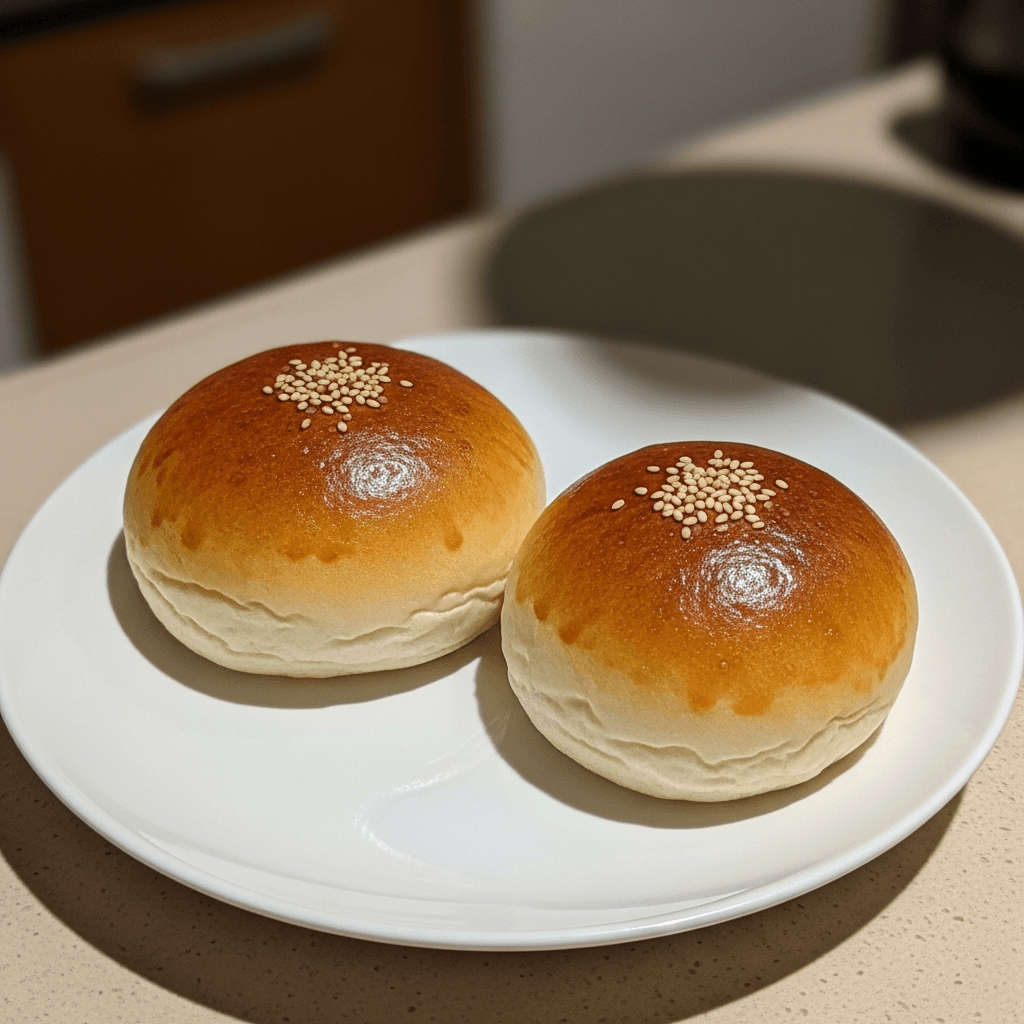
Preheat the oven to 180 degrees Celsius. Beat the egg for brushing and gently brush the surface of each bun for a warm golden color. Sprinkle black sesame seeds on top for contrast and aroma.
Bake for 12 to 15 minutes. Listen for the oven's cadence to settle into a soft crackling; the buns will be golden and fragrant. Remove from the oven and cool on a rack for 10 minutes before serving. The paste will be warm and comforting inside a tender, pillowy bun.
Kitchen whispers
- ✦Hiro's Notes on Harmony: To reduce bean bitterness, pour off the first boil water. This small pause removes impurities and yields a cleaner, sweeter anko.
- ✦Hiro's Notes on Harmony: Knead until the dough is elastic but not stiff. A soft, slightly tacky dough makes for a tender crumb that complements the dense bean paste.
- ✦Hiro's Notes on Harmony: Keep the anko slightly grainy for balance. Complete smoothness is elegant, but texture brings contrast and reminds us of the bean's character.
- ✦Hiro's Notes on Harmony: Proof gently and watch, do not rush. Overproofed buns can collapse. A slow, steady rise gives the best texture.
Nutritional glance (per serving)
360
Calories
7 g
Protein
66 g
Carbs
9 g
Fat
6 g
Fiber
Ishi no ue ni mo sannen (Ishi no ue ni mo sannen, Three years on a stone). This proverb teaches us that perseverance and patience bring reward. You have soaked, simmered, stirred, and shaped with care. The time you invested has transformed simple beans and flour into something warm and comforting. Sit quietly, enjoy a bun with tea, and let the peace of the process settle into your heart.
Tea letters
Comments (0)
Please to leave a note.
No letters yet—be the first.
Tags