Savoury Katsu Sandwiches with Tonkatsu Sauce
When I was a young man visiting Kyoto in the cool of spring, I remember a small stall near a temple where a warm katsu sandwich was passed into my hands. The bread was soft and slightly sweet, the pork crisp and whispering with oil, and the sauce navy with umami and gentle acidity. It was a humble pleasure, eaten standing beneath the maples, and it taught me that a simple sandwich can be a whole ceremony. This savoury katsu sandwich is a bridge between comfort and craft. The cutlet is seasoned, dredged, and fried until the panko sings, then paired with shredded cabbage, a smear of mayonnaise, and a glossy tonkatsu sauce. Here we seek balance: fat, acid, crunch, and the deep pleasure of umami. In Washoku we honour seasonality, so choose cabbage that is crisp and fresh, and bread that smells faintly of milk and yeast. Cooking this is a meditation. Take time with each step. We press the panko gently into the meat to respect texture. We fry at a steady heat so the crust browns evenly. Good flavor takes time, do not rush the sauce. Each small action is an offering to the ingredients and to those who will eat. Make smaller sandwiches as a snack or serve halves for a light meal. Invite friends or family to share them, and encourage them to eat mindfully. The act of assembling and eating a katsu sandwich can be as nourishing as the food itself when done with care and gratitude.
Total time
45 min
Servings
4
Difficulty
medium
Prep
25 min
Cook
20 min
Market list
Ingredients
Method
Instructions
Prepare the pork. Lightly score the edge of each cutlet so it behaves evenly when frying. Season both sides with a pinch of salt and a touch of black pepper. With the flat of a knife or a meat mallet, gently pound to an even 1 centimeter thickness. We respect the muscle fiber by working with gentle, deliberate taps.
Set up a three-stage breading station. Place the flour in a shallow dish. Beat the eggs in a second dish until smooth. Place the panko in a third dish and press it gently with your fingers so the grains are loose but slightly compacted. This gives a tender but crisp crust.
Dredge each cutlet in flour, shaking off excess. Dip into the beaten egg, making sure the surface is fully coated. Press into the panko, applying gentle pressure so the crumbs adhere evenly. Lay the breaded cutlets on a rack and allow them to rest for 10 minutes. This rest helps the coating firm so it will not fall away in the oil.
While the cutlets rest, make the tonkatsu sauce. In a small saucepan combine ketchup, Worcestershire, soy sauce, mirin, and brown sugar. Stir over low heat until the sugar dissolves and the sauce glows with a deep, balanced aroma. If you like a slight sharpness, whisk in the optional Dijon. Remove from heat and let it cool. Good sauce is patient. Taste for harmony.
Heat the oil in a heavy pot or deep skillet to 170 to 175 degrees Celsius. If you do not have a thermometer, test with a small piece of panko; it should sizzle immediately and turn golden in about 30 seconds. Keep the oil steady. We seek a steady sizzle, not a violent boil.
Fry the cutlets two at a time so the oil temperature remains steady. Gently lay the cutlet away from you into the oil to avoid splashes. Listen for the sizzle to settle into a steady tone. Fry until the crust is deep golden and the juices run clear, about 3 to 4 minutes per side depending on thickness. Use a spider or slotted spoon to turn, and avoid pressing the cutlet while it cooks.
Transfer the fried cutlets to a wire rack set over a tray to drain. The rack keeps the crust crisp. As the aroma rises, you will notice a warm, toasty fragrance and a gentle umami from the pork and panko.
Toast the bread lightly with the softened butter. This adds a protective, buttery barrier so the bread does not become soggy, and it lends a subtle scent that complements the pork.
Assemble the sandwiches mindfully. Spread a thin layer of mayonnaise on one slice of bread and a spoonful of tonkatsu sauce on the other. Pile down a small handful of shredded cabbage to provide a crisp, cooling contrast. Place a cutlet on top, sprinkle a few toasted sesame seeds, and add a small portion of pickled red ginger if you wish.
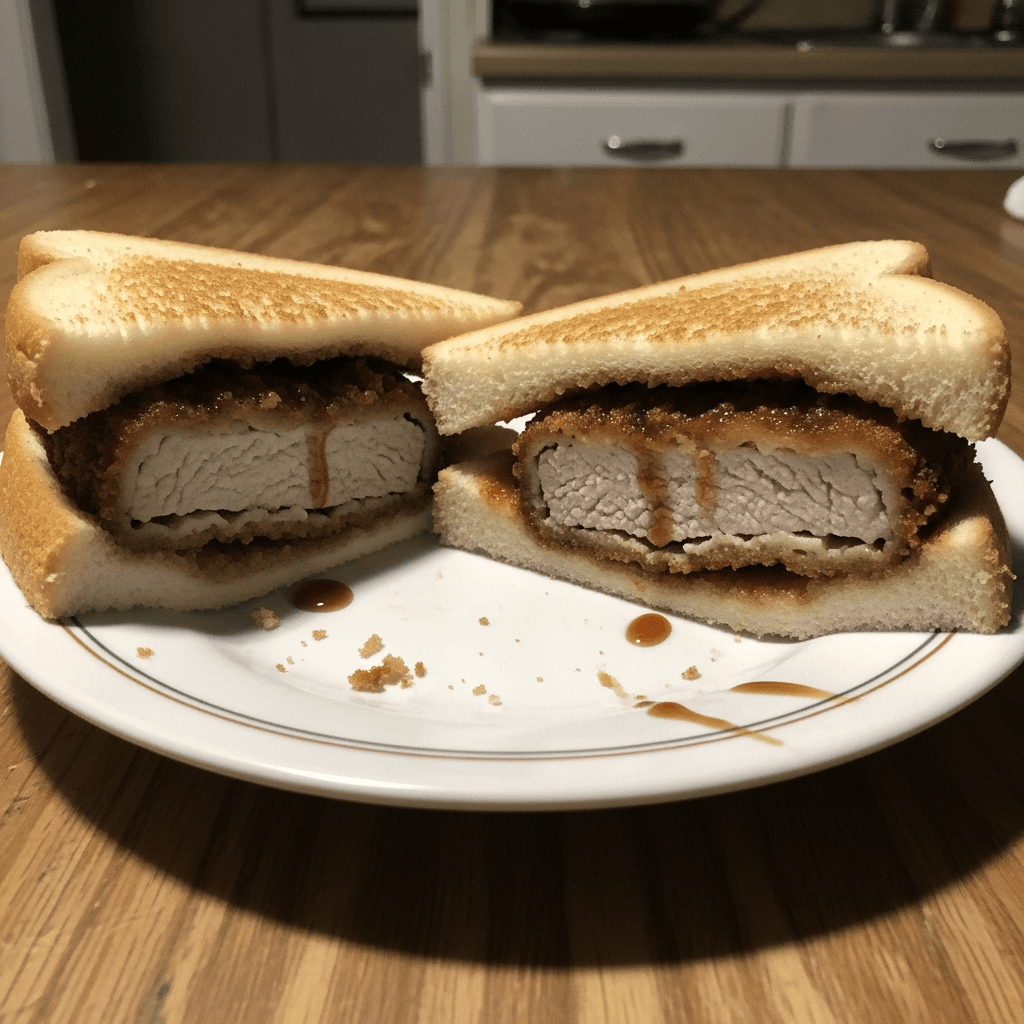
Close the sandwich and press gently with both hands or a small weight for 15 to 20 seconds so the layers sit together. Slice each sandwich in half with a sharp knife. The cut should be clean, revealing strata of bread, cabbage, and golden katsu.
Serve warm. Take a moment to breathe before you eat. Notice the contrast of textures and the balance of savoury, sweet, and tangy notes. Share with others or enjoy quietly, appreciating the labour that made this small, perfect snack.
Kitchen whispers
- ✦Hiro's Notes on Harmony: To keep the panko crisp, rest breaded cutlets on a rack rather than a flat plate so air can circulate.
- ✦Hiro's Notes on Harmony: When frying, maintain a steady medium heat. If the oil smokes, it is too hot. Lower the heat and allow it to return to the gentle sizzle.
- ✦Hiro's Notes on Harmony: For a lighter sandwich, press the cabbage with a pinch of salt and let it sit for five minutes, then squeeze out excess water. This keeps the sandwich from becoming soggy and concentrates sweetness.
- ✦Hiro's Notes on Harmony: We eat with our eyes first. Trim the crusts slightly and align slices so the layers are even. A neat presentation honours the ingredients.
- ✦Hiro's Notes on Harmony: If you must prepare in advance, keep sauce and fried cutlets separate and assemble just before serving to preserve texture.
Nutritional glance (per serving)
650
Calories
32 g
Protein
60 g
Carbs
30 g
Fat
4 g
Fiber
Keizoku wa chikara nari (Continuance is power). This proverb teaches us that steady, patient effort builds strength and skill. You have taken care at each step of this recipe, and that patience is the reason the sandwich has depth, crispness, and balance. Enjoy it slowly and with gratitude.
Tea letters
Comments (0)
Please to leave a note.
No letters yet—be the first.
Tags