Nourishing Vegetable Udon Noodle Soup
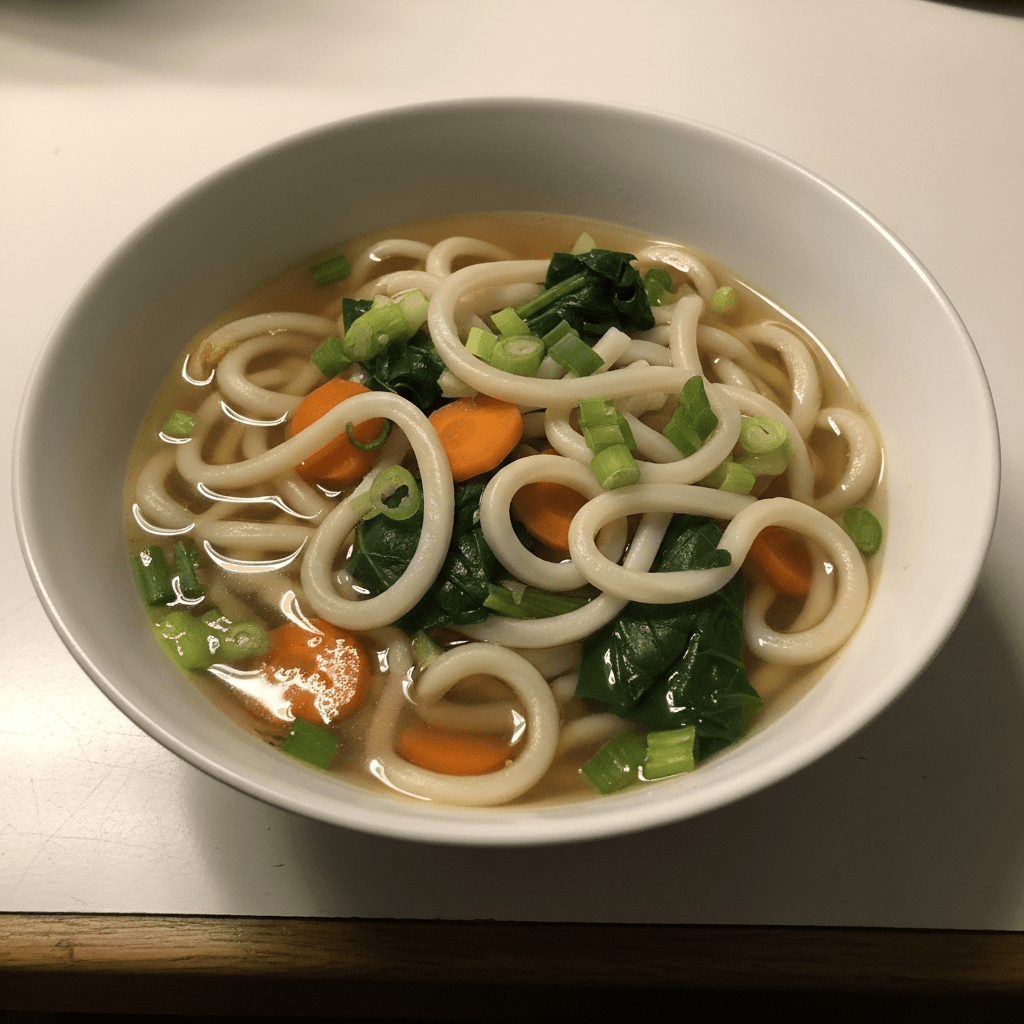
When I first made this Nourishing Vegetable Udon Noodle Soup for my family, it was a gray spring afternoon in my small kitchen. The children had returned from school tired and hungry, and I wanted something warm that would soothe the body and quiet the mind. The gentle broth, soft udon and bright vegetables reminded me of a humble lunch my grandmother served in the countryside. She would say that a simple bowl could restore balance if prepared with care. This soup carries the spirit of washoku, the harmony of food. The broth is built slowly from kombu and dried shiitake to create umami without overwhelming salt. Vegetables are chosen for their texture and season; we respect shun by using what is freshest. The flavor profile is comforting and layered: savory dashi, a touch of sweet mirin, the roundness of soy, and the clean brightness of leafy greens. Please slow down as you cook. Bring the dashi gently to a near simmer and listen to the change of bubbles. Slice vegetables with respect to their texture. We slice carrots thin so they become tender while keeping a bite. Good flavor takes time so do not rush the broth. The act of preparing this bowl can be a quiet practice, a small ceremony of gratitude to nature. When you serve, arrange colors and textures so the eyes are pleased before the first sip. Place tender tofu and glossy udon beneath a nest of spinach and sliced negi. A few toasted sesame seeds or a sprinkle of shichimi togarashi will complete the harmony. Eat slowly, notice the warmth, and let the soup remind you that simple care nourishes more than the body alone.
Total time
35 min
Servings
4
Difficulty
easy
Prep
15 min
Cook
20 min
Market list
Ingredients
Method
Instructions
Prepare the dashi. Wipe the kombu gently with a dry cloth to remove dust. Place kombu and dried shiitake in a medium pot with 1.2 liters of cold water and let them soak for 20 to 30 minutes if time allows. This slow extraction brings a round, clean umami.
Warm the pot over low heat. Bring the water to a gentle simmer. Watch for small bubbles at the edges. Remove the kombu just before the water reaches a simmer to avoid bitterness. Allow the shiitake to continue steeping, their aroma will deepen the broth.
After a few minutes of gentle simmering, remove the shiitake and slice them thinly. Return the pot to a low heat and add the soy sauce and mirin. Taste the broth with care. We seek balance not saltiness, so adjust with a small pinch of salt if needed.
If you prefer a clearer dashi, strain the broth through a fine sieve. Keep it warm on very low heat. The aroma should be savory and slightly sweet, a quiet depth that supports the other ingredients.
Prepare the vegetables. Slice the carrot on the diagonal into thin pieces so they cook evenly. Tear or slice the napa cabbage. Trim spinach and slice negi. The textures should contrast: soft tofu, chewy udon, tender greens.
Lightly heat 1 tablespoon of neutral oil in a skillet over medium flame. Sear the sliced shiitake and carrot for 1 to 2 minutes until the aroma changes and edges deepen slightly. Listen for the sound to soften; do not brown heavily. This quick step adds a savory note.
Bring a separate pot of water to a rolling boil and cook the udon according to package instructions. Fresh udon will take 1 to 3 minutes; dried will take longer. We are looking for a tender but slightly springy chew. Drain the noodles and rinse very briefly under warm water to remove excess starch and to relax them.
Gently add the seared vegetables, tofu cubes and napa cabbage into the warm broth. Simmer for 2 to 3 minutes until the cabbage wilts and the tofu warms through. Taste the broth once more and adjust seasoning with salt sparingly.
Divide udon into bowls. Pour the warm broth, vegetables and tofu over the noodles. Arrange baby spinach and sliced negi on top. The heat of the broth will gently wilt the spinach and release a fresh brightness.
Finish with a small drizzle of sesame oil if you like, a sprinkle of toasted sesame seeds, and a pinch of shichimi togarashi for warmth. Add a thin strip of yuzu peel as a final breath of fragrance. Sit quietly and enjoy the bowl.
Kitchen whispers
- ✦Hiro's Notes on Harmony: Rehydrate kombu and shiitake slowly in cold water. Time is an ingredient that deepens umami without adding salt.
- ✦Hiro's Notes on Harmony: Slice vegetables with attention to texture. Thinner carrots soften in the broth and keep the bowl balanced.
- ✦Hiro's Notes on Harmony: After cooking udon, rinse briefly under warm water to relax the noodles and remove excess starch. This helps them remain glossy and separate in the soup.
Nutritional glance (per serving)
420
Calories
18 g
Protein
68 g
Carbs
10 g
Fat
6 g
Fiber
Ishi no ue ni mo sannen (Three years on a stone). This proverb teaches us that patience and steady care bring lasting results. You have tended to the broth, the vegetables and the bowl with mindful attention. In return, this humble soup offers warmth, nourishment and the quiet reward of a meal made with gratitude.
Tea letters
Comments (0)
Please to leave a note.
No letters yet—be the first.
Tags