Nourishing Shoyu Ramen with Spring Vegetables
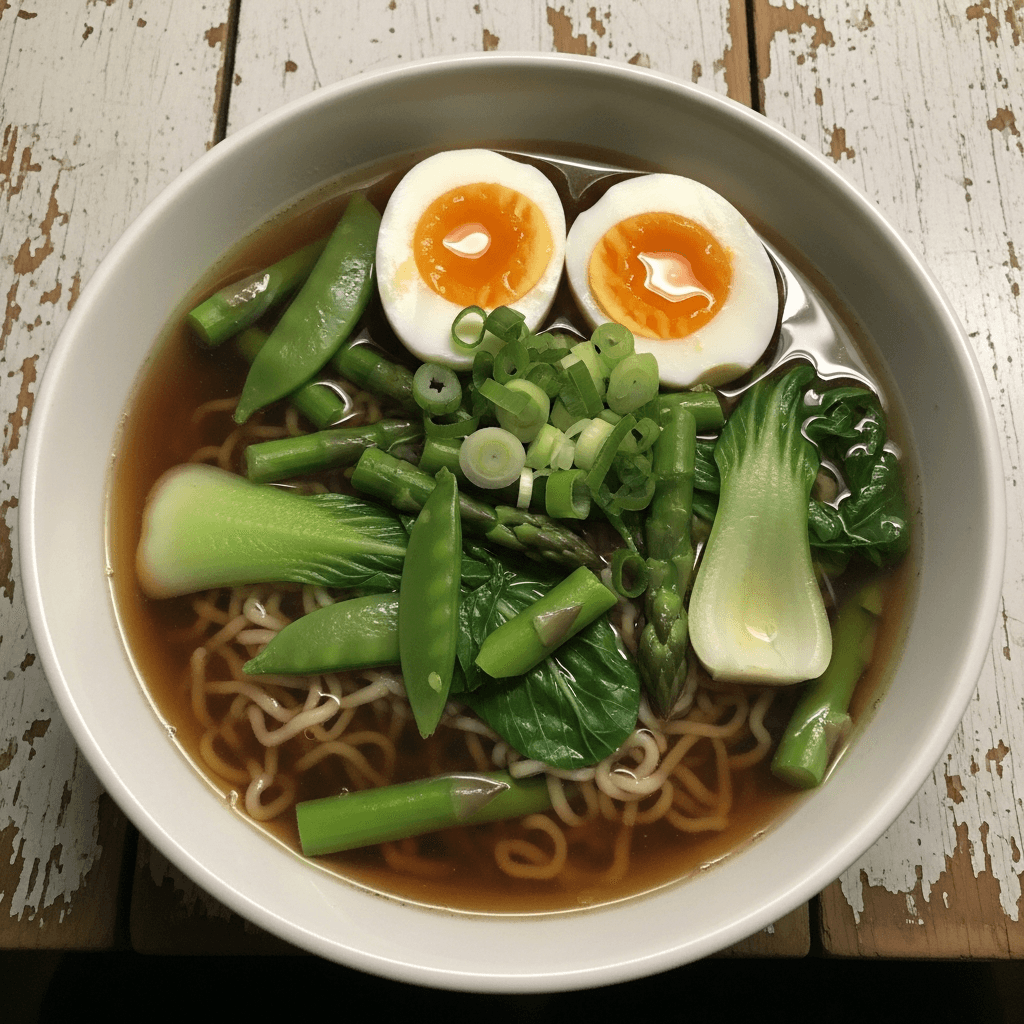
When spring arrives in my town, the market spills over with young asparagus, tender peas, and bright scallions. This bowl of shoyu ramen grew from those mornings. I first made a simple version for my family after returning from a visit to my grandmother in the countryside. She taught me to respect each vegetable's season and to make the broth with patience and a light hand. I adapted her gentle approach into this lunch, a bowl that warms without weighing you down. This ramen is a study in balance. The broth begins with kombu and dried shiitake for sea and forest umami, joined by a light simmer of chicken for body. A splash of shoyu and a whisper of mirin lend depth and sweetness. The spring vegetables are blanched so they remain crisp, speaking of the season rather than being lost in the soup. In Washoku we celebrate harmony. Notice the textures here: the chew of fresh noodles, the velvet of a soft-boiled egg, the bright snap of sugar snap peas. Each element should be treated with gratitude. Slow your pace when building the broth, listen as it changes, and take pleasure in arranging the bowl. The act of cooking becomes a quiet practice. This recipe is designed for a peaceful midday meal. It rewards a calm stove and simple attention. Prepare a pot of tea, clear a small space on your table, and let the making of this lunch become a brief meditation. The flavors will reflect the care you give them.
Total time
65 min
Servings
2
Difficulty
medium
Prep
25 min
Cook
40 min
Market list
Ingredients
Method
Instructions
Begin with the dashi. Wipe the kombu gently with a damp cloth. Place kombu and dried shiitake in a medium pot with 1.5 L water and let them soak for 20 minutes. This slow start invites subtle umami to awaken.
After soaking, bring the pot to a gentle simmer over medium-low heat. Watch for small bubbles around the edges. Remove the kombu just before the water reaches a simmer. The aroma will be quiet and sea-like.
Add the chicken thigh to the pot and continue to simmer gently for 20 minutes. Skim any foam with a small ladle. The broth should remain clear and calm, not turbulent.
Remove the chicken and set aside. Add katsuobushi to the hot broth, let it sink for one minute, then strain through a fine sieve or cheesecloth into a clean pot. You now have a layered broth with sea and meat elements in balance.
While the broth rests, prepare the tare. In a small saucepan, combine shoyu, mirin, sake, and sesame oil. Warm gently until aromatic, then remove from heat. This concentrated seasoning will be the heart of your bowl.
Bring a separate pot of water to a rolling boil for the noodles and vegetables. Blanch the asparagus for 30 to 40 seconds until bright green and still crisp. Remove and shock in cold water to preserve color and texture.
Blanch the sugar snap peas for 20 seconds and the baby spinach for 10 seconds. Keep vegetables vibrant and slightly firm. Taste one piece; it should be lively and fresh, not soft.
Cook the fresh ramen noodles in the boiling water according to package instructions, typically 90 to 120 seconds. Stir gently and listen. The sound of the water will change as the noodles take on character.
Warm the strained broth to a gentle simmer. Add a few tablespoons of the prepared tare to each serving bowl to taste. For two bowls, start with 2 tbsp shoyu base in each and adjust later.
Drain the noodles and transfer to the bowls. Pour the hot broth over the noodles, carrying the aroma with care. Arrange the asparagus, sugar snap peas, spinach, menma, halved soft-boiled eggs, and sliced scallions with balance in mind.
Finish with a sheet of nori, a light sprinkle of toasted sesame seeds, and a small drizzle of chili oil if you like a gentle warmth. Taste the bowl and add salt if needed. Pause and breathe in the steam.
Sit quietly with your lunch. Take a small first sip of broth to honor the work. Eat slowly, appreciating texture and seasonality. This is the point where cooking becomes gratitude.
Kitchen whispers
- ✦Hiro's Notes on Harmony: Make your tare in advance and taste as you go. A little mirin lifts the soy so it does not taste flat.
- ✦Hiro's Notes on Harmony: When handling kombu, never boil it. Gentle heat releases umami without bitterness.
- ✦Hiro's Notes on Harmony: Blanch vegetables briefly and shock in cold water to keep color and crispness. We eat with our eyes first.
- ✦Hiro's Notes on Harmony: Use fresh noodles if possible. They will finish quicker and hold a tender chew without becoming gummy.
- ✦Hiro's Notes on Harmony: Arrange toppings with contrast. A halved egg, a green diagonal of asparagus, and a dark nori sheet create calm visual balance.
Nutritional glance (per serving)
620
Calories
36 g
Protein
68 g
Carbs
22 g
Fat
6 g
Fiber
Keizoku wa chikara nari (Continuance is power). This proverb reminds us that steady care brings strength. You have tended the broth, honored the vegetables, and assembled this bowl with patience. The quiet attention you gave transforms simple ingredients into nourishment for body and spirit.
Tea letters
Comments (0)
Please to leave a note.
No letters yet—be the first.
Tags