Hearty Beef Sukiyaki with Fresh Vegetables
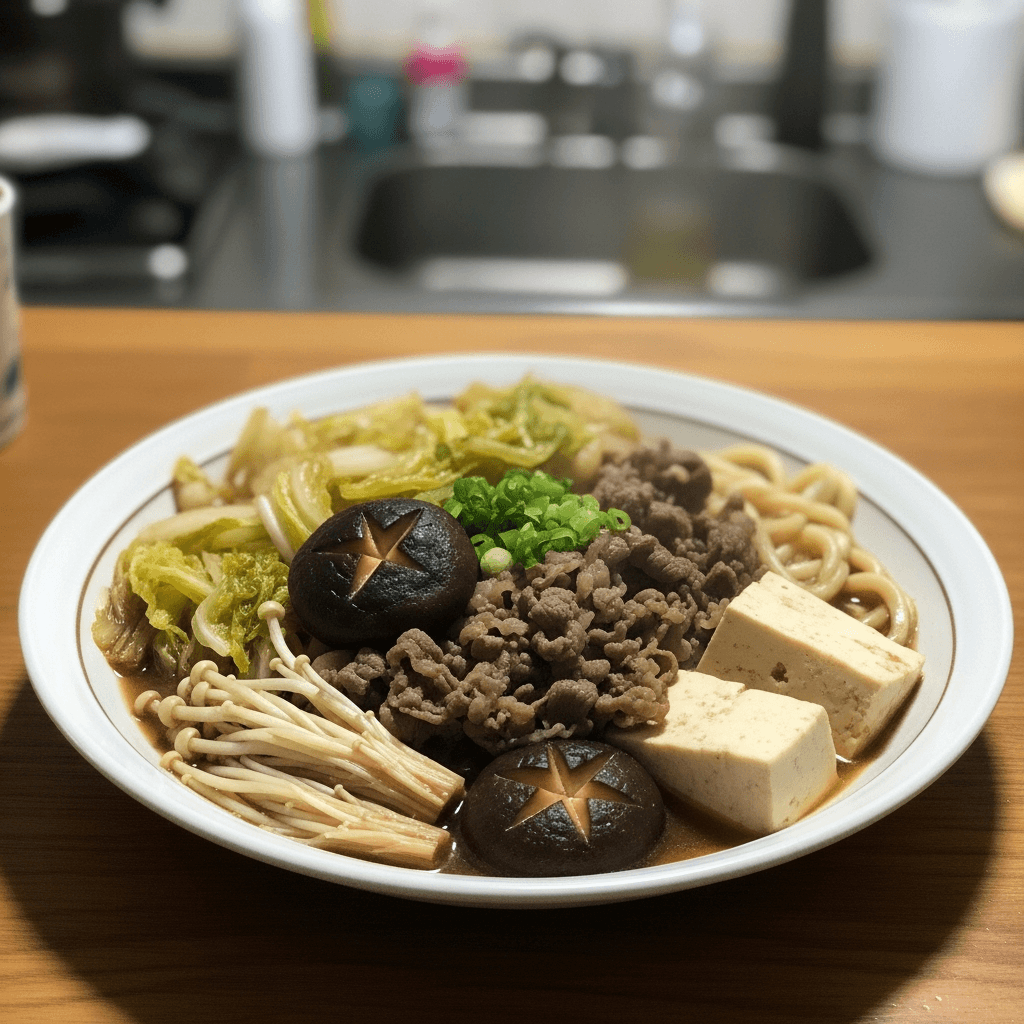
This sukiyaki recipe carries the warmth of family and the quiet joy of shared evenings. I first made a version like this on a rainy autumn night for my children, when the markets were full of crisp napa cabbage and fragrant shiitake. The pot steamed at the center of our low table, and each person reached in gently, dipping tender beef into raw egg or savoring a spoonful of sweet-salty broth. It felt like a small festival of comfort. Sukiyaki is both simple and deeply layered. The profile is sweet-salty, rich with umami from soy, mirin, and a little dashi. The thinly sliced beef melts against fresh vegetables, shirataki, and tofu. In Washoku we celebrate seasonality. Use vegetables that are at their shun. In autumn, use napa and mushrooms. In spring, wakame and early greens change the spirit of the pot. As you cook, consider the rhythm. Start the dashi and seasoning slowly. Let sugar and mirin dissolve and mingle with soy so the aroma unfolds. Slice the beef against the grain to respect its texture, and add ingredients in stages so each keeps its integrity. Cooking is a meditation. Allow the heat to transform simple things into something nourishing. This is hearty enough for a main dinner, meant for sharing. It invites conversation and quiet gratitude. Take your time with the broth. Taste, adjust, and present the sukiyaki with balance in mind. The act of cooking here is an offering to those who will eat, and to the season that provided the ingredients.
Total time
45 min
Servings
4
Difficulty
medium
Prep
25 min
Cook
20 min
Market list
Ingredients
Method
Instructions
Prepare the ingredients mindfully. Slice the beef thinly, against the grain, so each bite is tender. Rinse the shirataki under running water and trim into bite sized portions. Cut napa cabbage into 4 cm wide pieces. Slice negi on the diagonal into 3 cm lengths. Halve shiitake and trim enoki roots. Cube the tofu into 2.5 cm blocks.
Make the sukiyaki stock slowly. In a small saucepan combine dashi, soy sauce, mirin, sake, and sugar. Warm over low heat until the sugar dissolves. We are not trying to boil, only to let flavors marry. Taste and adjust gently. The balance should be a clear, sweet-salty umami that sings with the beef.
Heat a wide shallow pot or a cast iron skillet over medium heat. Add the sesame oil and allow it to warm until it shimmers faintly. Place a few slices of beef in the pan, searing just enough to render some fat and release aroma. Listen for the searing to change pitch from a light sizzle to a deeper sound. That fragrance is the beginning of the pot.
Pour about one third of the prepared stock into the pot. Arrange some cabbage, negi, mushrooms, tofu, and shirataki beside the beef. Keep space so ingredients do not overcrowd. We want each item to poach gently in the broth rather than steam.
Allow the vegetables to cook until tender but still holding shape. Napa should soften and become translucent. The aroma will become sweeter and deeper. Add more stock in stages so the broth remains balanced rather than diluted.
As diners are ready, place more beef slices into the pot, cooking briefly until the edges curl and the meat becomes rosy. Thin beef cooks quickly. Use chopsticks to move pieces gently so they do not tear. Dip cooked beef into raw beaten egg if you like the traditional method. The egg soothes the heat and rounds the flavors.
Continue adding vegetables and beef in turns, maintaining a gentle simmer. If the broth reduces, add a splash of dashi or water, then a little soy or mirin to rebalance if needed. Taste as you go. Adjust sweetness with a bit more sugar only if the broth seems flat.
When most ingredients are eaten and the broth is concentrated and savory, add shungiku or spinach last for a bright finish. Their aroma lifts the pot. Take care not to overcook leafy greens.
Serve directly from the pot at the table, arranging remaining pieces with balance and respect. Offer small bowls of broth for sipping and optional raw egg or condiments. Eat slowly, appreciating texture contrasts and the layered umami.
When the meal winds down, you may add cooked rice or udon to the remaining broth to create a finishing course. Simmer briefly so the grains or noodles absorb the concentrated flavor. This is a humble, satisfying close to the evening.
Kitchen whispers
- ✦Hiro's Notes on Harmony: Slice beef thin and chill briefly before slicing to make cleaner cuts and tender texture.
- ✦Hiro's Notes on Harmony: Rinse shirataki well and blanch briefly to remove any scent. Toss with a little soy if you like deeper flavor before adding to the pot.
- ✦Hiro's Notes on Harmony: Add ingredients in order of density. Root vegetables and firm tofu first, delicate greens last, so each keeps its ideal texture.
- ✦Hiro's Notes on Harmony: Use a small amount of high quality dashi. A clear, well-made stock will lift the whole dish more than extra soy or sugar.
Nutritional glance (per serving)
590
Calories
36 g
Protein
38 g
Carbs
32 g
Fat
4 g
Fiber
Ichi-go ichi-e (One time, one meeting). This proverb reminds us that each shared meal is unique and will not be repeated in exactly the same way. You have tended the ingredients with patience and care. Sit, breathe, and enjoy the harmony you created with gratitude.
Tea letters
Comments (0)
Please to leave a note.
No letters yet—be the first.
Tags