Heartwarming Chicken Nabe with Seasonal Vegetables
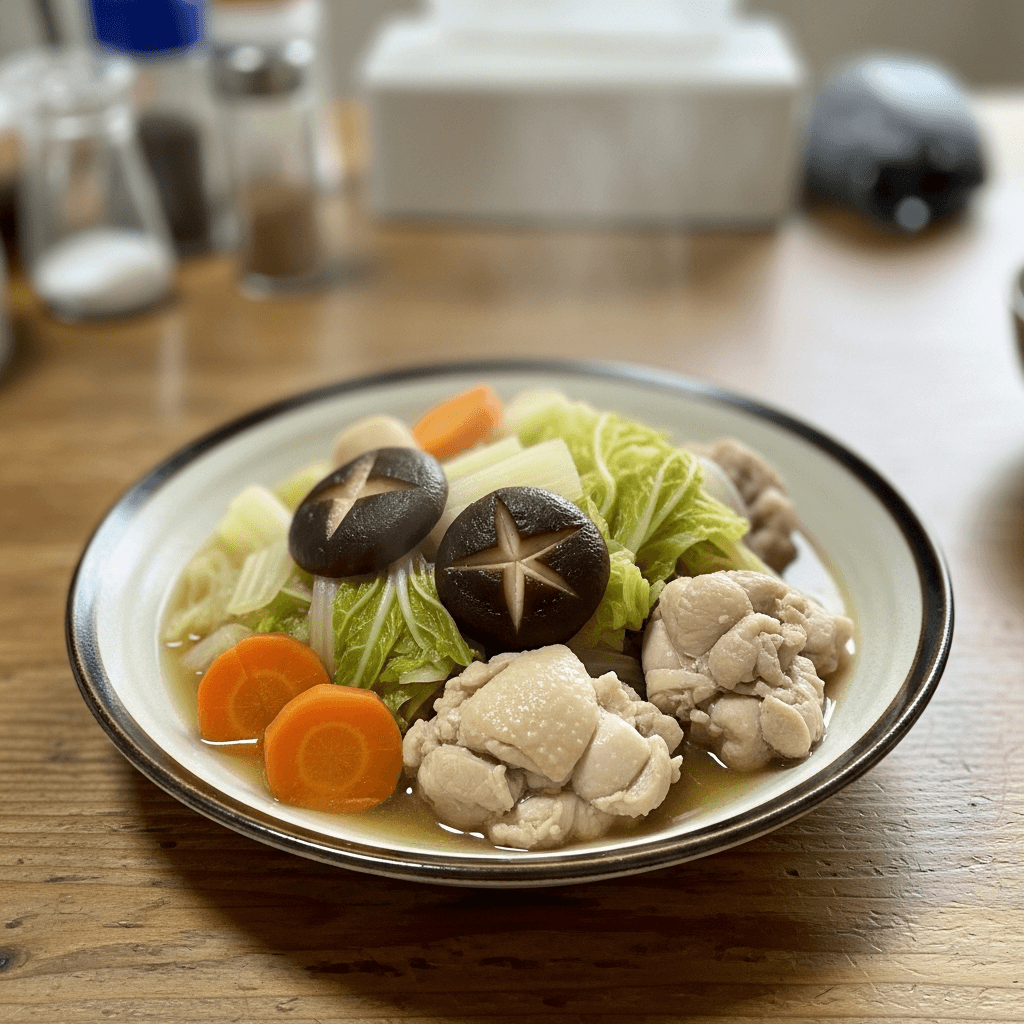
This chicken nabe is a meal that holds the warmth of small family gatherings. I first made a version like this on a rainy evening in Kyoto, when my eldest nephew arrived cold and tired. I remember my grandmother placing a heavy clay pot on the hearth and saying, with a soft smile, that food should mend both the body and the spirit. That memory guided me as I adapted the recipe to include seasonal vegetables we could find at the local market. Nabe is simple and humble, yet it is shaped by respect for ingredients. The broth sings with umami when kombu and bonito are treated gently, and the seasonal vegetables contribute texture and brightness. We seek balance in every spoonful: the richness of chicken, the sweetness of root vegetables, the silk of tofu, and the crispness of greens. This is classic washoku harmony. When you prepare this dish, slow down and listen to the pot. Notice how the aroma deepens as the broth warms. Good flavor takes time, do not rush the dashi. Slice with care and arrange with respect. Nabe is as much an act of gratitude as it is a way to feed friends and family. Set the table simply. Serve this at dinner when you wish to bring people closer. Encourage each person to take from the pot mindfully. The final broth, enriched by everything that has been cooked in it, is a small blessing. Enjoy the process and the quiet joy that comes from sharing a warm bowl.
Total time
55 min
Servings
4
Difficulty
medium
Prep
25 min
Cook
30 min
Market list
Ingredients
Method
Instructions
Prepare your mise en place. Cut the chicken into large, even pieces so they cook uniformly. Slice napa cabbage into 4 cm pieces. Peel and slice daikon into 3 mm half moons. Cut carrot into thin rounds. Trim shiitake stems and halve if large. Trim enoki ends and separate into small clusters. Cube tofu gently and set on paper towel to remove excess moisture. Cut negi on the diagonal into 3 cm lengths. Arrange mizuna leaves in a shallow bowl.
Make a gentle dashi. Wipe the kombu lightly with a damp cloth. Place kombu and water in your nabe or a heavy pot and bring to room temperature with the water. Warm slowly over medium-low heat. We are looking for tiny bubbles forming at the edge, not a rolling boil. Remove kombu when small bubbles appear around 60 to 70 C, just before boiling.
Add bonito flakes. Once the kombu is removed and the pot reaches a gentle simmer, add bonito flakes. Let them sink and release aroma for 30 seconds to 1 minute, then strain the liquid through a fine sieve or cheesecloth into the pot. This is your clear, savory base. The aroma should smell clean and deeply savory.
Season the broth. Return the strained dashi to gentle heat. Add sake and mirin. Then add soy sauce and a small pinch of salt. Taste gently with a spoon. The broth should be balanced, with a soft roundness from mirin and a delicate umami from the dashi. Adjust one small step at a time.
Brown the chicken lightly. Heat a separate skillet over medium. Add sesame oil and listen for a soft sizzle. Place chicken pieces skin side down and sear until the skin turns golden and fragrant, about 2 to 3 minutes. We are not fully cooking here, only building a hint of caramelized flavor. The sound will change as the skin releases moisture and crisps.
Assemble the nabe. Place seared chicken in the center of the pot of seasoned dashi. Surround with daikon, carrot, shiitake, enoki, tofu, and shirataki, arranging things so each ingredient is accessible. Add napa cabbage and negi last so their lighter textures do not overcook. Bring to a gentle simmer, cover partially, and cook for 8 to 10 minutes.
Check textures mindfully. Test the chicken for doneness by cutting a piece; juices should run clear and the texture should be tender. Vegetables should be soft but with structure. The aroma now should be warm, slightly sweet, and very savory. If needed, add a small splash of water or dashi if the pot has reduced too much.
Finish with greens. Add mizuna or komatsuna in the last minute so they wilt but keep their bright color. Taste the broth once more and correct seasoning with a pinch of salt if needed. The finished pot should smell like home and feel comforting.
Serve mindfully. Bring the pot to the table and allow each person to take from it. Provide small bowls and dipping sauces if you like, such as a simple ponzu or a mixture of soy sauce and grated daikon. Encourage slow, attentive eating. The remaining broth becomes a treasured second course.
Enjoy the final broth. When the main ingredients are finished, ladle the enriched broth into bowls. If you wish, add cooked rice or udon to the pot to finish. Sit together, drink slowly, and give thanks for the simple abundance.
Kitchen whispers
- ✦Hiro's Notes on Harmony: To keep the dashi clear, do not boil the kombu. Warm slowly and remove kombu before the water reaches a full boil.
- ✦Hiro's Notes on Harmony: Sear the chicken briefly for added aroma, but do not overbrown. We want the meat to remain tender and release gentle fat into the broth.
- ✦Hiro's Notes on Harmony: Add delicate greens last. Their color and texture are part of the dish's balance, and gentle wilting preserves both.
- ✦Hiro's Notes on Harmony: Save the leftover broth. It is a precious resource. Use it to finish rice or cook noodles for a quiet second helping.
- ✦Hiro's Notes on Harmony: When plating from the pot, think of balance. Place a piece of chicken, a variety of vegetables, and a small portion of tofu to create contrast on the bowl.
Nutritional glance (per serving)
520
Calories
38 g
Protein
45 g
Carbs
22 g
Fat
6 g
Fiber
Ichigo ichie (One time, one meeting). This proverb reminds us that each shared meal is a unique encounter that will not be repeated in exactly the same way. You prepared this nabe with care and attention. Treasure the warmth you created and the company you share it with. Your patience and respect for the ingredients have turned a simple dinner into a moment of quiet joy.
Tea letters
Comments (0)
Please to leave a note.
No letters yet—be the first.
Tags