Heartwarming Chicken Katsu Curry
When I first made this Chicken Katsu Curry for my family, it was a quiet weekday lunch after a long morning in the garden. My children returned muddy and hungry, and the warm aroma of simmering curry and the crisp sound of freshly fried katsu brought a soft hush over our small table. The meal felt like a simple festival of comfort, a small celebration of ordinary things: warm rice, golden crust, and a spoonful of rich curry. This dish sits at the intersection of two traditions. The katsu, a breaded cutlet, speaks to a Western influence adapted into Japanese home cooking. The curry, slow-simmered and layered with umami from stock, sautéed onions, and a touch of soy and apple, is pure Washoku in spirit. We seek balance: the crunchy texture of the katsu, the velvet weight of the curry, and the clean, tender rice. Umami is the quiet backbone here. It arrives from kombu-rich stock, caramelized onions, and a small touch of soy. Each element supports the others without overpowering. I invite you to take this lunch slowly. Prepare the rice with respect. Caramelize the onions until they are a deep, sweet brown. When you dredge and fry the chicken, listen for the change in the sizzle and watch the color deepen like a sunrise. Good flavor takes time. If you treat each step with patience, the meal will repay you with comfort and clarity. This recipe is practical for a weekday lunch yet reverent enough to bring presence to the act of cooking. Serve it with a small garnish of pickled ginger or a few steamed greens. Let each bite be an invitation to be grateful for the season, the ingredients, and the hands that prepared them.
Total time
60 min
Servings
2
Difficulty
medium
Prep
25 min
Cook
35 min
Market list
Ingredients
Method
Instructions
Rinse the rice until the water runs clear. Drain and let rest for 10 minutes. Place the rice and 1.8 cups of water in a rice cooker or pot. Bring to a gentle simmer, cover, and cook until tender. Allow the rice to steam off heat for 10 minutes before serving. We eat with our eyes first, and steamed rice should be glossy and each grain separate.
Prepare the chicken. Lightly pound each thigh to an even 1.2 centimeters thickness with a meat mallet. This ensures even cooking and a tender bite. Season both sides with a pinch of salt and pepper, then brush with the soy, mirin, and sake marinade. Let rest for 10 minutes so the flavors settle.
Set up your breading station. Place flour in one shallow dish, beaten eggs in another, and panko in a third. Dredge each marinated thigh first in flour, shaking off excess, then into the beaten egg, and finally press into the panko until the surface is thoroughly coated. The panko should cling like a light armor.
Heat the oil to 170 degrees Celsius if you have a thermometer. If not, warm 2 to 3 centimeters of oil in a wide skillet over medium. Test with a small breadcrumb: it should sizzle immediately and float steadily. Fry the cutlets in batches, without crowding, for 4 to 5 minutes per side until deeply golden. Listen for the sizzle to change pitch as the crust browns.
Remove the fried katsu to a wire rack or paper towel to drain. Rest briefly before slicing. A rested cutlet keeps the crust crisp and the inside moist. Slice each piece into strips while warm, cutting across the grain so each bite feels tender and balanced.
Meanwhile, begin the curry. In a heavy saucepan, melt butter over medium heat. Add the thinly sliced onion and stir. Caramelize slowly until deep golden and sweet, 12 to 15 minutes. We are patient here. The aroma should deepen and become rich and savory.
Add the carrot and potato to the pan and stir to coat. Cook for 3 minutes. Sprinkle in the 2 tablespoons of flour and the curry powder. Stir constantly to make a dry roux that smells toasty. This step builds body and warmth.
Slowly pour in the chicken stock while stirring to avoid lumps. Add the grated apple and tomato paste. Bring to a gentle simmer and cook until the vegetables are tender, about 12 to 15 minutes. The curry should thicken and become glossy.
Finish the curry with 1 teaspoon soy sauce and 1 teaspoon honey. Taste and season with salt as needed. The balance should be savory, slightly sweet, and rounded. If the sauce is too thick, add a splash of stock to reach a comfortable spoonable texture that will drape over rice.
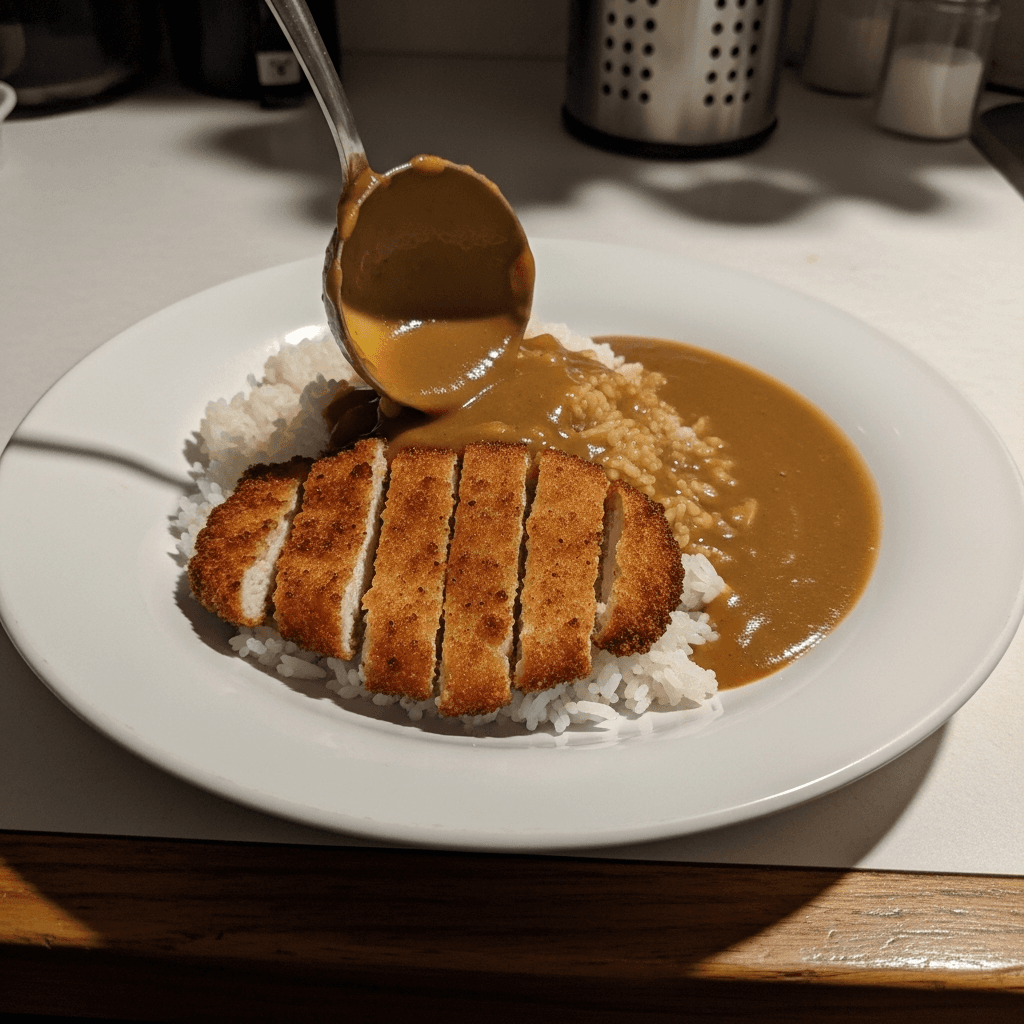
Assemble the lunch. Spoon a mound of steamed rice on each plate. Place sliced chicken katsu gently atop or beside the rice. Ladle the curry alongside or over half the katsu if you prefer a crisp edge. The plate should feel calm and composed.
Garnish with a small portion of pickled ginger and a sprinkle of chopped parsley or mitsuba. Serve immediately so the katsu remains contrastingly crisp against the warm, velvety curry. Sit down, breathe, and enjoy slowly.
Kitchen whispers
- ✦Hiro's Notes on Harmony: Rinse rice until water runs clear to remove excess starch. Properly rinsed rice yields separate, glossy grains.
- ✦Hiro's Notes on Harmony: Caramelize onions slowly. Patience here creates natural sweetness and deep umami that makes the curry sing.
- ✦Hiro's Notes on Harmony: Keep the oil temperature steady while frying. Too hot and the crust will burn before the chicken cooks; too cool and the crust will absorb oil and become heavy.
- ✦Hiro's Notes on Harmony: Arrange the plate with balance in mind. Place rice, katsu, and curry so each element is seen. We eat first with our eyes.
Nutritional glance (per serving)
850
Calories
45 g
Protein
95 g
Carbs
30 g
Fat
7 g
Fiber
Ichi-go ichi-e (One time, one meeting). This proverb reminds us to cherish each moment and each meal as unique. You have brought patience and care to this lunch, and that attention transforms simple ingredients into a meaningful experience. Sit quietly, taste slowly, and let the meal be its own small celebration.
Tea letters
Comments (0)
Please to leave a note.
No letters yet—be the first.
Tags