Golden Tempura Vegetables with Dipping Sauce
When I was a young man visiting Kyoto during the festival of Gion, I sat on a wooden bench beneath paper lanterns and tasted my first perfect piece of vegetable tempura. The batter was light as a cloud and the vegetable inside was warm and full of flavor. Since then I have made this simple snack many times for family gatherings and quiet evenings. It reminds me of paper lantern light, the hush of a summer night, and the joy of sharing small, warm things. This golden tempura is humble and elegant at once. We celebrate the season by choosing vegetables at their shun, when sweetness and texture are at their best. The crisp, thin batter highlights the natural umami of the vegetables rather than masking them. The dipping sauce, or tentsuyu, is a short meditation in balance: dashi for umami, mirin for a gentle sweetness, and soy for savory depth. Tempura is more than a technique. It teaches patience and respect for timing and temperature. Keep your batter cold, heat the oil steadily, and fry just enough to achieve a pale-golden crispness. When you cook this way you allow the vegetables to sing. The contrast of textures is important: the initial crisp, then the tender vegetable inside. Take this as an invitation to slow down. Prepare your ingredients with care. Listen to the whispering sizzle as each piece enters the oil. Share the snack with someone you love, or keep it as a quiet gift to yourself. Cooking like this is a small practice of gratitude for nature's bounty.
Total time
35 min
Servings
4
Difficulty
medium
Prep
20 min
Cook
15 min
Market list
Ingredients
Method
Instructions
Prepare your vegetables with respect. Slice the sweet potato into 3 mm rounds, cut kabocha into thin crescents leaving the skin on for texture, halve the eggplants lengthwise and score lightly, trim green beans, remove shiitake stems. Pat each piece dry with a clean cloth. We remove surface moisture so the batter adheres.
Make the dipping sauce first so flavors settle. Warm the dashi gently until it is aromatic and steaming but not boiling. Add mirin, soy sauce, and sugar. Stir until the sugar dissolves, then remove from heat and allow to cool to warm. The aroma of the dashi is the heart of tentsuyu; breathe it in.
Chill the batter components. Place the flour and rice flour in a shallow bowl and keep it cool. Put the egg and ice-cold water in a separate jug and return to the refrigerator for a few minutes. Cold batter and warm oil give the most delicate texture.
Just before frying, whisk the cold egg and water lightly. Do not overmix. We want a lumpy, loose batter. Fold in the flour with a few gentle strokes. The presence of small lumps will lighten the crust. If you overwork it the gluten will tighten and the batter becomes heavy.
Heat the oil to 170 to 175 degrees Celsius. If you do not have a thermometer, test with a small drop of batter: it should sink briefly then rise and form pale bubbles. Keep the oil steady; too hot and the crust browns without cooking the vegetable, too cool and the coating becomes greasy.
Dust vegetables lightly with a little flour to help batter cling. Using chopsticks or tongs, dip one piece at a time into the batter, letting excess drip off, then slide gently into the oil. Fry in small batches so the oil temperature recovers quickly. Listen for a clear, steady sizzle; it should not roar.
Fry until pale golden and delicate, 1.5 to 3 minutes depending on the vegetable. Sweet potato and kabocha need a little longer, thin items like green beans and shishito peppers will be quick. The crust will look dry and slightly bubbly. Remove to a wire rack or paper towel briefly to drain.
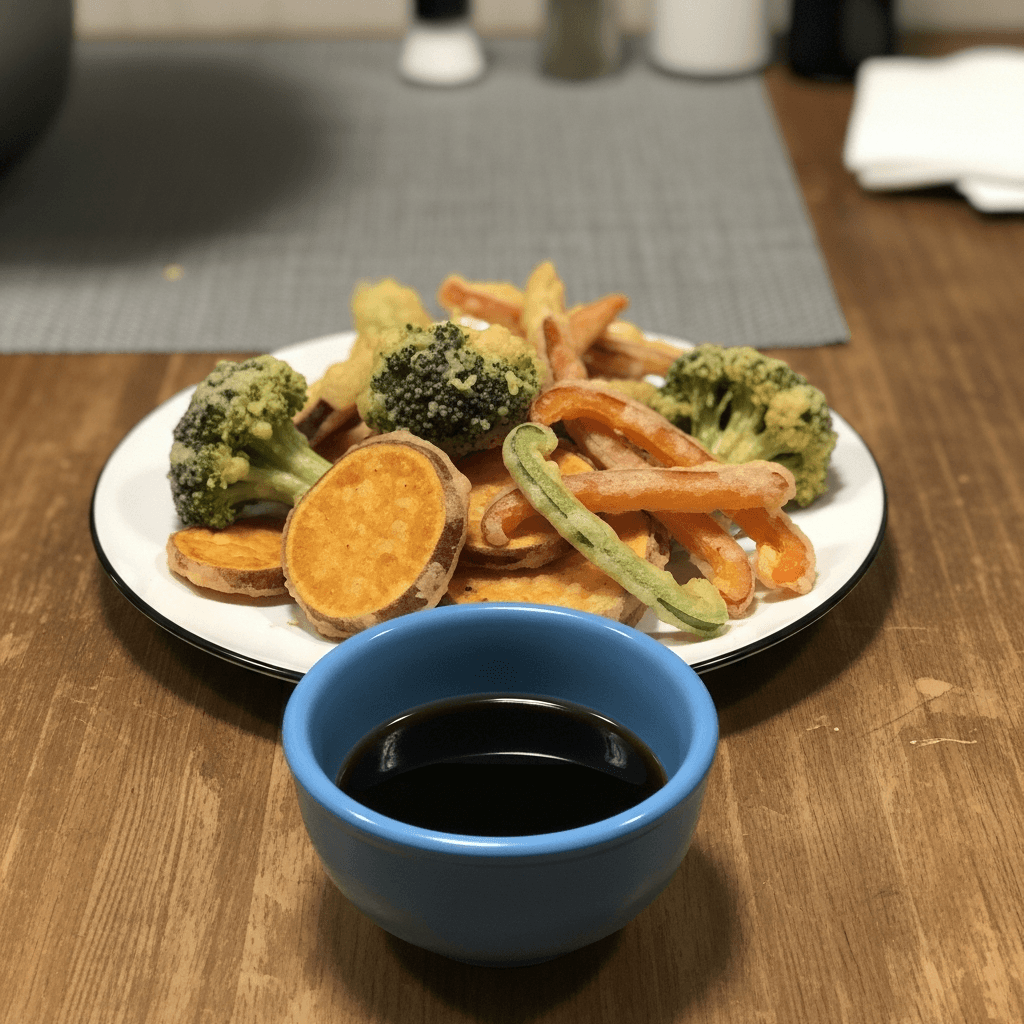
Serve immediately. Arrange the pieces with balance on a platter. Place the warmed tentsuyu in a small bowl with a portion of grated daikon on the side and lemon wedges. A light sprinkle of salt can enhance certain vegetables; offer it separately for guests to use.
Eat slowly and mindfully. Dip each crisp piece into the sauce sparingly so the batter remains airy. Notice the contrast of warm interior and crisp shell, the brightness of daikon, and the subtle umami of the sauce.
Kitchen whispers
- ✦Hiro's Notes on Harmony: Keep the batter cold. Place the mixing bowl over another bowl filled with ice if your kitchen is warm. Cold batter keeps gluten from forming quickly.
- ✦Hiro's Notes on Harmony: Do not overmix the batter. A few lumps are a sign of lightness. Stirring too long creates a dense crust.
- ✦Hiro's Notes on Harmony: Fry in small batches. Crowding lowers the oil temperature and makes the coating absorb oil. Give each piece space to breathe.
- ✦Hiro's Notes on Harmony: Use a thermometer if possible. Aim for 170 to 175 C. If the oil smokes, lower the heat and let it calm before continuing.
- ✦Hiro's Notes on Harmony: Presentation is part of the food. Arrange colors and shapes with balance. A small mound of grated daikon and a lemon wedge bring freshness and contrast.
Nutritional glance (per serving)
360
Calories
6 g
Protein
34 g
Carbs
22 g
Fat
4 g
Fiber
Ichi-go ichi-e (一期一会). This proverb teaches us to treasure each encounter and the moment we create. You have tended the vegetables, watched the batter, and listened to the quiet sizzle. That care turns simple ingredients into a meaningful snack. Sit, breathe, and enjoy the golden pieces you made with steady hands and a gentle heart.
Tea letters
Comments (0)
Please to leave a note.
No letters yet—be the first.
Tags