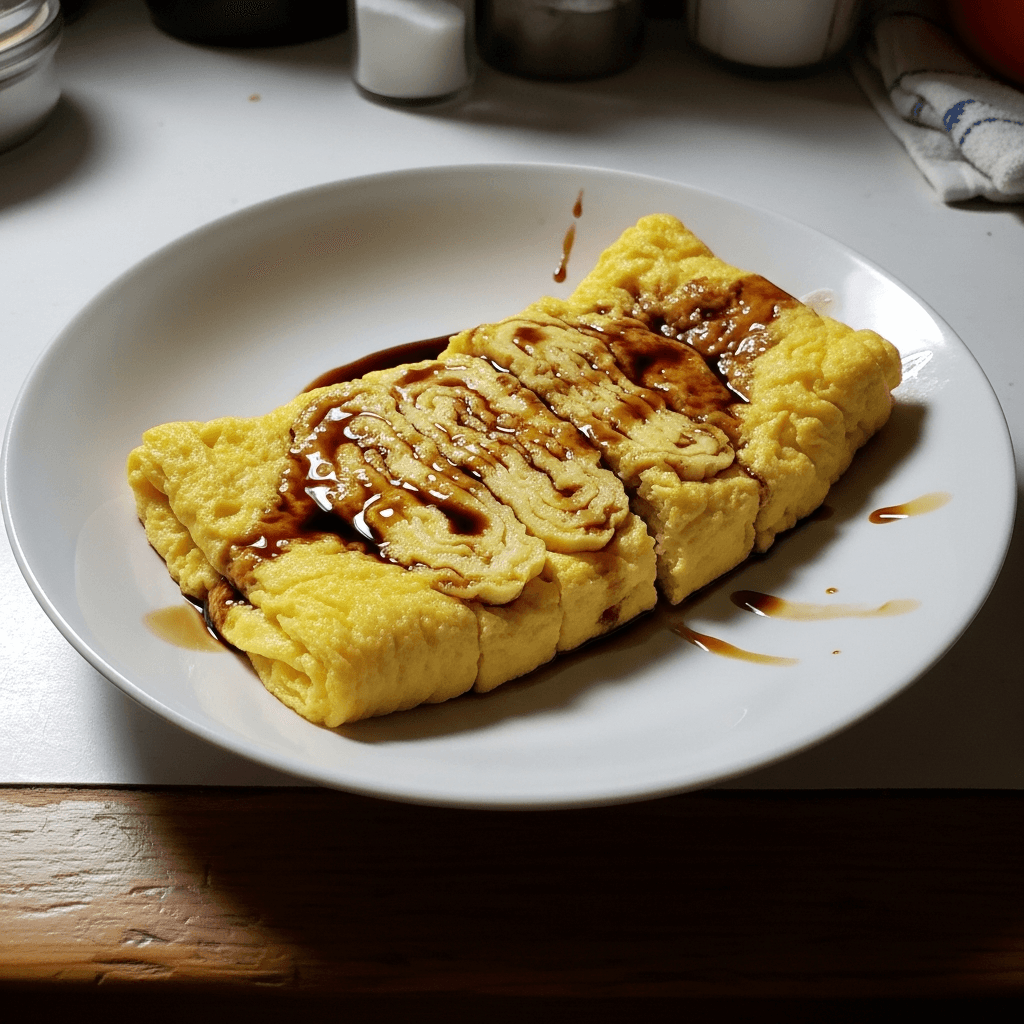
Fluffy Tamagoyaki with Sweet Soy Glaze
When I was a child, my grandmother in the countryside would wake before dawn to prepare a simple breakfast for the family. She would heat the small tamagoyaki pan and, with slow, careful movements, roll layer after golden layer of egg. The aroma of sweet soy and warm eggs filled the kitchen and the moment felt like a quiet festival of morning, gentle and full of gratitude. This tamagoyaki is a memory and an offering. It celebrates umami and balance: the sweetness that comforts, the soy that deepens, and the dashi that gives a subtle sea-scent harmony. In Washoku we honor seasonality and texture. A fluffy, moist tamagoyaki respects the egg’s delicate spirit and the patience we bring to the pan. Cooking this is a practice of mindfulness. We measure, mix, and pour with intention. We listen for the soft hiss of the egg as it meets the pan and watch the color shift from pale gold to a warm amber. These small attentions yield a breakfast that soothes and restores. Please slow your hands and enjoy the rhythm. The glaze at the end is optional but recommended for a gentle shine and a whisper of caramelized soy. Serve it with a small mound of grated daikon or steamed rice and you will find that the morning becomes a ceremony of simple, balanced flavors.
Total time
20 min
Servings
2
Difficulty
easy
Prep
10 min
Cook
10 min
Market list
Ingredients
Method
Instructions
Prepare your mise en place. Crack the eggs into a bowl and gently whisk until the yolk and white are just combined. We do not want a frothy storm, only a smooth, unified mixture.
Add the dashi, sugar, mirin, soy sauce, and a pinch of salt to the eggs. Stir with calm, even strokes. Sense the aroma: the sweet and savory beginning to harmonize.
Heat the tamagoyaki pan over medium-low heat. Brush a very thin layer of oil across the surface. The pan should be warm enough that a drop of batter sets slowly, not so hot that it browns immediately.
Pour a thin layer of the egg mixture to just cover the pan. Tilt to spread evenly. We aim for a delicate sheet, not a thick omelet. Listen for a quiet sizzle and watch as the edges set while the center remains slightly soft.
When the surface is mostly set but still a little glossy, roll the edge toward you with a spatula or chopsticks to form the first roll. Roll gently and with confidence; keep the roll loose enough to continue layering.
Brush more oil in the empty pan area. Pour another thin layer of batter, lifting the roll so the liquid flows beneath it. Allow the new layer to set until satin-surface, then roll the existing roll back toward the far edge to incorporate the new layer.
Repeat the pour, set, and roll process until you have used all the batter. Each layer should be slightly set before you roll, and the final roll should be warm and gently firm to the touch. If a layer cooks too quickly, lower the heat.
For a clean shape, place the roll on a bamboo sushi mat or a sheet of parchment and press gently to form a neat rectangle. Allow it to rest for one to two minutes so the interior finishes steaming and becomes evenly tender.
Make the glaze while the tamagoyaki rests. In a small pan combine the glaze soy, mirin, and sugar. Warm gently until the sugar dissolves and the mixture becomes glossy. We want a syrup, not a caramelized burn.
Brush a light coat of the warm glaze over the tamagoyaki for shine and a touch of sweetness. Slice the roll into even pieces using a sharp knife. Wipe the knife between cuts for clean edges.
Arrange on a plate with a small portion of grated daikon and a few scallion slices if you like. Serve immediately while warm. Pause and breathe in the gentle mix of sweet, savory, and egg’s softness before you eat.
Kitchen whispers
- ✦Hiro's Note on Harmony: Use a light dashi for subtle umami. A strong dashi will overpower the egg; we seek balance and elegance.
- ✦Hiro's Note on Harmony: Keep the heat gentle. Too hot and the layers will brown and become tough; gentle heat yields a tender, fluffy interior.
- ✦Hiro's Note on Harmony: When slicing, wipe your knife between cuts. Clean edges honor the presentation and the care you put into the dish.
- ✦Hiro's Note on Harmony: If you prefer a sweeter profile for children or festivals, increase the sugar by 1 teaspoon. Adjust gently and with respect for the egg's texture.
Nutritional glance (per serving)
240
Calories
14 g
Protein
10 g
Carbs
17 g
Fat
0.5 g
Fiber
Ishi no ue ni mo sannen (It takes three years on a stone). This proverb reminds us that patience and steady practice yield reward. You have moved with care through each step, and that mindful effort is present in the gentle layers and warm flavor of this breakfast. Enjoy slowly and with gratitude.
Tea letters
Comments (0)
Please to leave a note.
No letters yet—be the first.
Tags