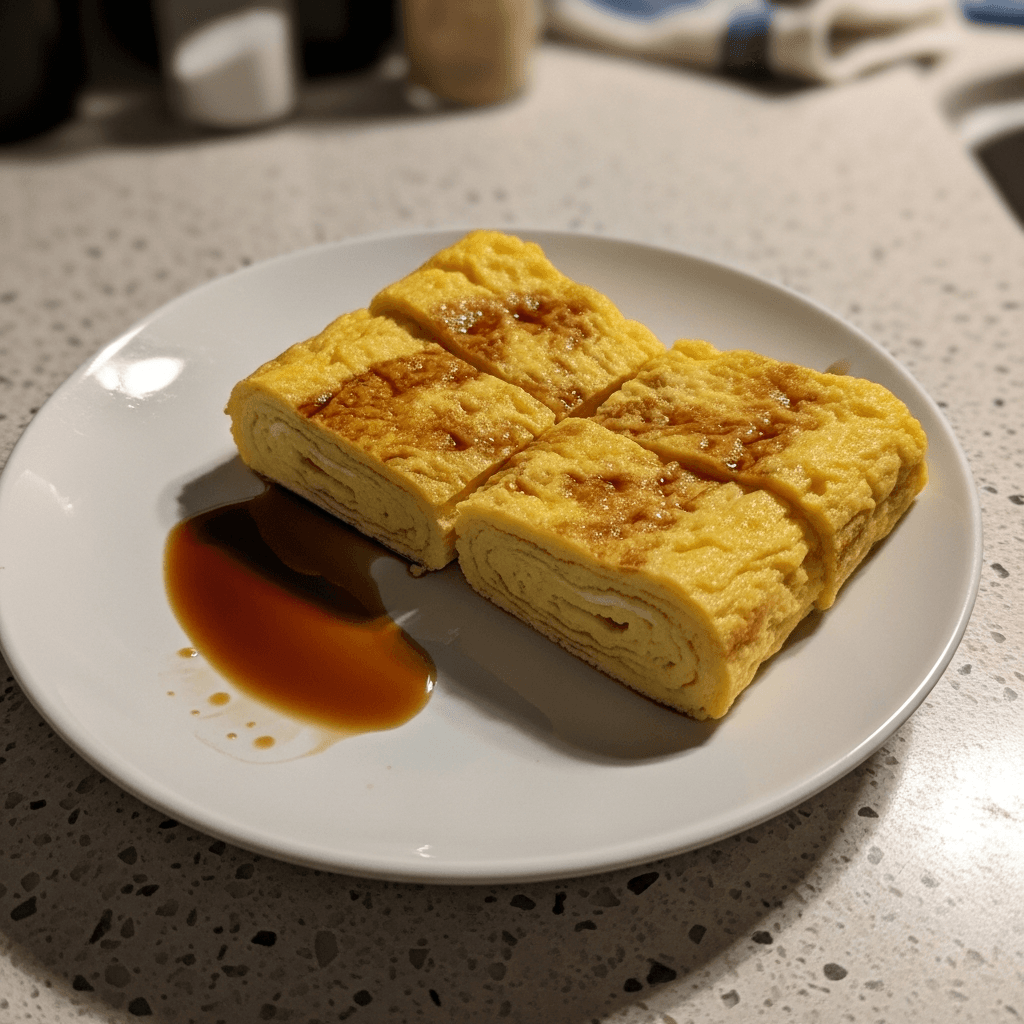
Fluffy Tamagoyaki with Soy Sauce
When I was a child, my grandmother would wake before dawn and make tamagoyaki for the family. The pan hissed softly as she poured the egg, folding each layer with slow, careful hands. That memory of warmth and gentle rhythm lives in this recipe. I adapted her simple seasoning to highlight the egg's sweetness while adding a whisper of soy to deepen the umami. Tamagoyaki is more than a rolled omelet. It carries the philosophy of washoku, a harmony between taste, texture, and season. The layers of egg should be tender and airy, with a savory note that honors the ingredients. In the morning, this tamagoyaki is comfort and calm. It invites you to eat slowly, to notice steam rising, and to listen to the small sounds of breakfast being made. The flavor profile balances sweetness, salt, and umami. Soy sauce adds depth without overpowering the egg. A light dashi wash can bring the sea and field together in one delicate sip of taste. Use the freshest eggs you can find. Good eggs have a bright yolk and a gentle aroma. They will reward your patience with a richer texture and color. Allow the process to be a quiet practice. We slice against the grain to respect the texture. We fold in thin layers to create air and light. Treat each step as if you are tending a small garden. The result is a breakfast that comforts body and mind, a piece of morning peace on your table.
Total time
18 min
Servings
2
Difficulty
easy
Prep
10 min
Cook
8 min
Market list
Ingredients
Method
Instructions
Prepare your workspace. Lay a small bowl, chopstick or fork, and your tamagoyaki pan on the counter. We begin with order and calm.
Crack the eggs into a bowl. Gently whisk until the whites and yolks are just combined. We do not overbeat. Observe the ribbon the whisk leaves as it lifts from the mixture.
Combine dashi, soy sauce, mirin, sugar, and a pinch of salt in a separate small cup. Stir until the sugar dissolves. Pour this seasoning into the eggs and gently mix with two or three turns of the whisk. We incorporate flavor without agitating the eggs too much.
Heat the tamagoyaki pan over medium-low heat. Brush a very light layer of oil across the surface and the corners. The pan should be warm but not smoking. We are seeking gentle heat that cooks the egg slowly.
Pour a thin layer of egg to cover the pan, about enough to create a 2 to 3 millimeter film. Tilt the pan to spread. Listen for a soft sizzle. When the surface is set but still shiny and slightly moist on top, lift an edge with chopsticks or a spatula.
Begin rolling the egg away from you into a loose log. Roll with intention and a steady hand. When you have a small roll, push it to the far edge of the pan.
Re-oil the bare part of the pan lightly. Pour another thin layer of egg under the rolled portion, lifting the roll slightly so the new egg can flow beneath it. When this layer sets in the same way, roll the log back toward you, encasing the new layer. Repeat until all the egg is used, forming several thin layers.
As the final layer sets, shape the roll gently with a bamboo mat if you like. Press just enough to form clean edges without squeezing out the air. The roll should feel springy and tender to the touch.
Transfer the tamagoyaki to a cutting board and let it rest for one to two minutes. Resting lets the texture settle and keeps slices neat. Slice into 1.5 to 2 centimeter pieces, cutting with a sharp knife. We slice against the grain to respect the texture.
Arrange on a plate with a small mound of grated daikon and a scatter of thinly sliced scallion. If using nori, place a small strip beneath each piece. The aroma should be warm, savory, and slightly sweet.
Kitchen whispers
- ✦Hiro's Notes on Harmony: Use room temperature eggs. Cold eggs tighten when cooked and reduce tenderness.
- ✦Hiro's Notes on Technique: Thin layers cook quickly and trap air. Keep the heat medium-low to avoid browning and to keep texture soft.
- ✦Hiro's Notes on Presentation: Resting the roll for a brief moment makes cleaner slices. We eat with our eyes first, so place garnishes asymmetrically for quiet balance.
Nutritional glance (per serving)
195
Calories
12.6 g
Protein
4.5 g
Carbs
12.3 g
Fat
0 g
Fiber
Keizoku wa chikara nari (Continuance is strength). This proverb reminds us that gentle, repeated effort builds skill and calm. By taking the time to whisk, pour, and roll with attention you have practiced patience. The simple pleasure you now hold on your plate rewards that care.
Tea letters
Comments (0)
Please to leave a note.
No letters yet—be the first.
Tags