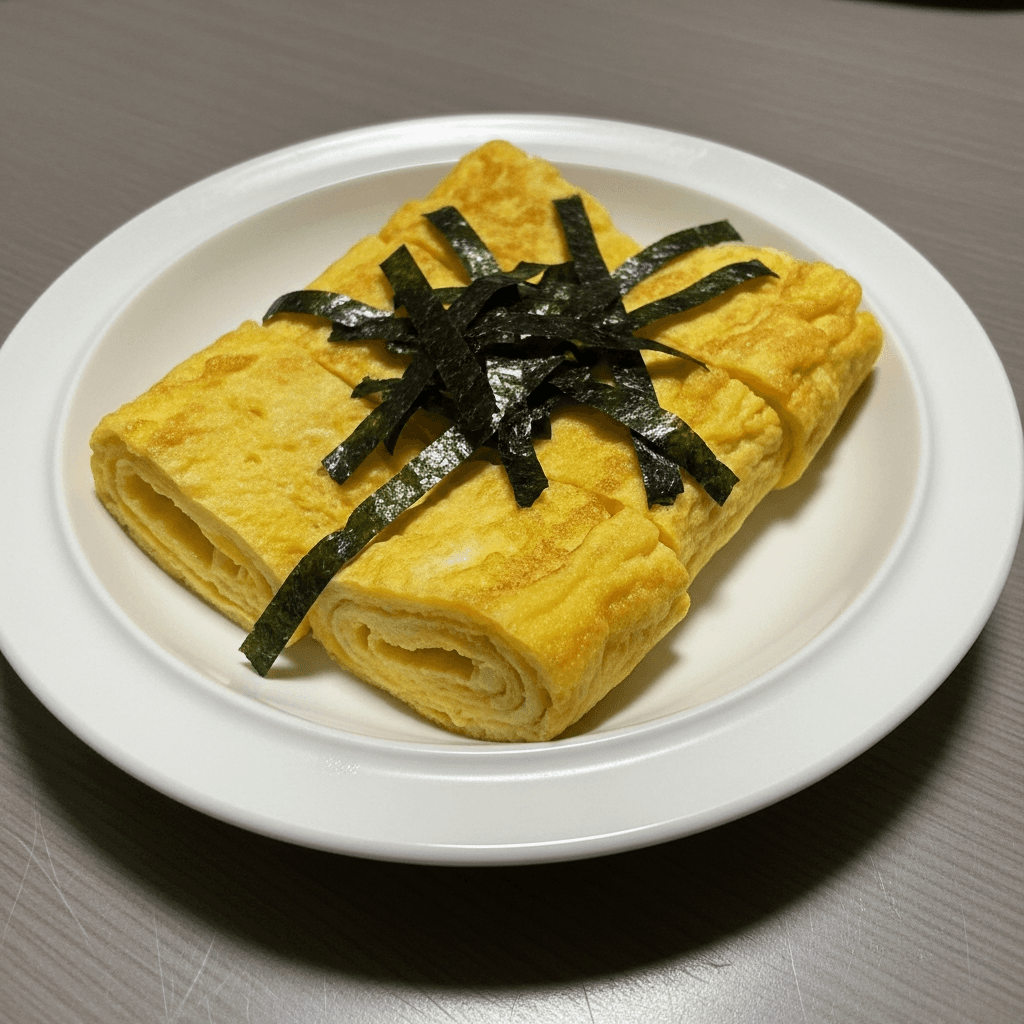
Fluffy Tamagoyaki with Nori
When I was a child, my grandmother would make tamagoyaki in the early light of a winter morning. The kitchen smelled of warm dashi and sweet mirin, and she moved slowly, as if each motion was a quiet prayer of thanks for the eggs and sea. This version with nori came later, a humble addition that my mother loved to tuck into the layers. It is simple, but it carries the calm of those mornings. Tamagoyaki is more than a folded omelet. It is a lesson in balance. The sweetness of mirin, the umami of dashi and soy, and the soft, custardy texture of the egg must sit together in harmony. The nori brings a whisper of the sea, a contrast in texture and flavor that lifts the roll. In Washoku we honor seasonality and subtlety. Fresh eggs at their best make all the difference. Cooking this tamagoyaki is a form of meditation. Prepare with quiet attention. Measure gently, heat the pan with patience, and listen as each layer sets. The sound of the pan will tell you when the egg is ready to roll. Work slowly and with respect for the ingredients. Good flavor grows from care. When you finish, slice and arrange with balance. We eat first with our eyes, so place the pieces with a small gap between them, perhaps a dab of grated daikon or a tiny sprig of mitsuba. Share this breakfast with someone you care for, or sit with it alone and notice the warmth. This meal rewards patience and attention.
Total time
25 min
Servings
2
Difficulty
medium
Prep
15 min
Cook
10 min
Market list
Ingredients
Method
Instructions
Prepare your ingredients and tools. If you have a rectangular tamagoyaki pan, use it. Cut each nori sheet into two equal rectangles roughly the width of your pan. Crack the eggs into a bowl and check each shell thoughtfully. Fresh eggs bring clarity to the flavor.
Make the seasoning. In a small bowl combine the dashi, mirin, soy sauce, sugar and a pinch of salt. Stir gently until the sugar dissolves. Breathe in the aroma. This mixture is the umami heart of the omelet.
Whisk the eggs briefly and then add the seasoning. Do not overbeat. We want a uniform yellow mixture with some air but not foam. Strain the mixture through a fine sieve into a pouring cup if you wish for a smoother custard.
Heat the pan over medium-low heat. Brush a thin film of oil across the surface. We are looking for warmth that will set the egg gently. The pan should not be smoking. A too-hot pan will brown the egg too quickly and change the texture.
Pour a thin layer of egg to coat the pan, about one third of a ladle. Tilt the pan so the egg spreads. When the surface is mostly set but still glossy, place a strip of nori near the far edge of the layer. The egg should feel firm enough to lift but still tender.
Using a spatula or chopsticks, lift the edge and roll the egg toward you in one smooth motion. Roll gently so the nori becomes wrapped within the layer. Move the rolled omelet to the far side of the pan, seam side down.
Brush the exposed pan lightly with oil again. Pour another thin layer so it flows under the rolled omelet. When this layer becomes set but still glossy, roll again, incorporating the previous roll. Listen to the gentle change of sound as the egg sets and slides.
Repeat the process with the remaining egg, adding nori in one of the middle layers or wrapping the finished roll, as you prefer. Aim for a roll with a soft, custard-like center. Keep the heat moderate so the center cooks through without drying.
Once finished, remove the roll to a bamboo mat or a cutting board. Let it rest for 2 to 3 minutes. Resting allows the proteins to settle and makes slicing cleaner. The surface should be glossy and lightly golden.
Slice with a sharp knife into even pieces. Slice in a single confident motion, wiping the blade between cuts if needed. Arrange on a plate with a small mound of grated daikon and a tiny splash of soy sauce if you like. Enjoy slowly and mindfully.
Kitchen whispers
- ✦Hiro's Notes on Harmony: Use fresh eggs at room temperature for a silkier texture. Cold eggs tighten when cooked and will not be as tender.
- ✦Hiro's Notes on Harmony: Strain the egg mixture to remove chalazae and small bits of shell. A smooth mixture yields a cleaner mouthfeel and a more elegant roll.
- ✦Hiro's Notes on Harmony: Maintain medium-low heat. If the pan is too hot the layers will brown and become dry. Gentle heat keeps the center custardy.
- ✦Hiro's Notes on Harmony: When rolling, be decisive yet gentle. Hesitation creates irregular folds. Roll with calm confidence and the shape will please the eye.
- ✦Hiro's Notes on Harmony: Presentation is part of gratitude. Slice evenly and leave a small space between pieces. A little grated daikon brings freshness and balance.
Nutritional glance (per serving)
260
Calories
16 g
Protein
8 g
Carbs
19 g
Fat
1 g
Fiber
Ishi no ue ni mo sannen (Three years on a stone). This proverb teaches us that perseverance brings success. In the quiet practice of rolling tamagoyaki we build patience and skill. You have taken time and care to prepare this breakfast. Let the calm you practiced in cooking carry into your day as you enjoy the gentle balance of flavors.
Tea letters
Comments (0)
Please to leave a note.
No letters yet—be the first.
Tags