Fluffy Mochi Rice Cakes with Sweet Red Bean Paste (Anko)
When I was a child I remember the winter festivals in Kyoto and the small stall that always steamed mochi until the steam smelled like warm rice and comfort. This recipe brings that memory home. I first made these fluffy mochi rice cakes for my family on a rainy afternoon, folding warm anko into the center of each cake while my wife brewed green tea. The kitchen felt like a small temple of quiet work and simple joy. Mochi and anko are humble ingredients that carry much history. The soft chew of mochi balances the gentle sweetness and earthy depth of azuki beans. In Washoku we honor the balance of texture and flavor. The slight salt and the toasted aroma of kinako or sesame lift the sweetness. There is also umami in the beans and a satisfying mouthfeel in the rice, which together create a comforting harmony. This recipe asks you to slow down. Good mochi is made with patience. When you steam the rice flour mixture we listen for the changing sound of steam and feel the dough become glossy. We shape the cakes with calm hands. The process is a meditation, a way to thank the grain and the bean for their seasonal bounty. Take your time and be gentle. Respect the ingredients by using good quality mochiko and a smooth anko, or make your own anko when adzuki beans are in season. The reward is a simple, elegant dessert that invites conversation, quiet reflection, and the pleasure of eating with the senses fully awake.
Total time
40 min
Servings
4
Difficulty
medium
Prep
20 min
Cook
20 min
Market list
Ingredients
Method
Instructions
Prepare the anko if it is not portioned. Divide the sweet red bean paste into eight equal portions of about 27 grams each and roll into smooth balls. Keep them covered so they do not dry out. This filling will be the warm heart of the mochi.
In a mixing bowl combine mochiko, sugar, baking powder, and salt. Stir with a whisk so the dry ingredients are evenly distributed. We respect balance even before water touches flour.
Add warm water and vegetable oil to the dry mixture. Stir gently until there are no dry streaks. The batter should be slightly thick but pourable, like a thin paste. If it feels too stiff add a tablespoon of warm water. Let the mixture rest for two minutes so the flour fully hydrates.
Prepare a steamer with a clean towel or parchment on the tray to catch any drips. Bring water to a steady simmer. Place the mochi batter in a heatproof dish or shallow bowl covered with foil or a lid. Steam gently for 12 to 15 minutes. Listen to the steam; the sound changes as the batter firms and the aroma of cooked rice becomes present. We want a gentle, steady steam not a violent boil.
When steaming is complete, remove the dish carefully. The dough should look glossy and slightly translucent. Using a wet silicone spatula or a greased wooden paddle, fold and press the dough in the dish to help release steam. Work with moist hands or greased utensils so the mochi does not stick to your skin.
Dust your work surface generously with potato starch or cornstarch. Transfer the warm mochi dough to the dusted surface. Divide into eight pieces with a wet knife or bench scraper. Keep your hands and tools lightly oiled or dusted so the mochi does not adhere.
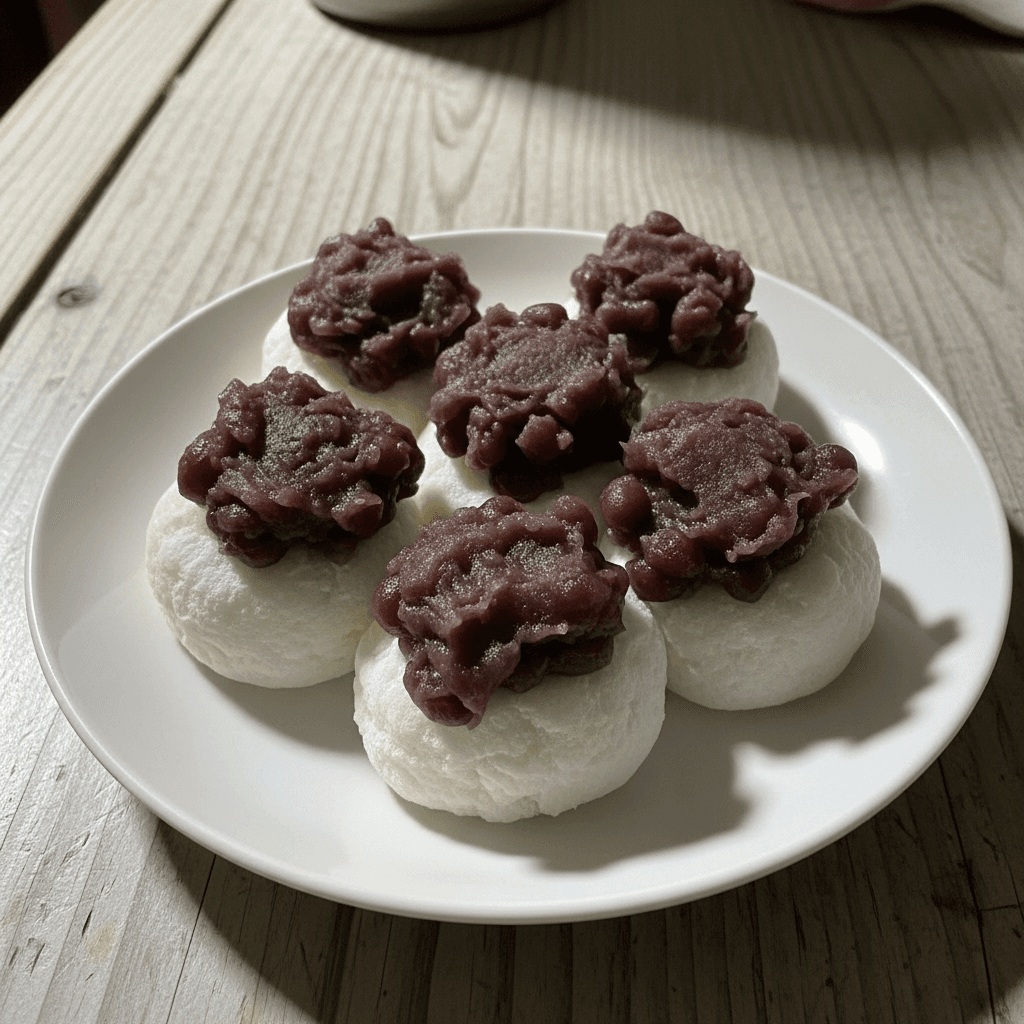
Flatten each piece gently with your fingertips into a round disk. Place a ball of anko in the center. Fold the mochi around the filling and pinch the seams closed. Shape the cake into a smooth round with gentle motion. The mochi should be warm and slightly springy.
Lightly dust each finished cake with kinako or a mixture of kinako and a touch of sugar, or sprinkle toasted sesame for contrast. If using matcha, sift a small amount over a few for a bitter green accent. Arrange the cakes on a small plate with balance in mind. The presentation is part of the gratitude.
Serve within a few hours for the best texture. Mochi will firm as it cools. If the cakes become too firm, steam briefly for 30 seconds to soften, then cool and serve. Enjoy with a cup of brewed green tea. Pause, breathe, and taste each element with awareness.
Kitchen whispers
- ✦Hiro's Notes on Harmony: Rinse is not needed here but the quality of mochiko matters. Choose a fresh, fine mochiko for a cleaner texture. Old flour can yield a grainy mouthfeel.
- ✦Hiro's Notes on Harmony: To achieve a silkier mochi, steam slowly. Rapid, high heat can make the exterior tough while the center remains undercooked. Gentle steam gives an even, glossy finish.
- ✦Hiro's Notes on Harmony: We eat with our eyes first. Use a small dusting of kinako or a light matcha dusting to add color contrast and hint at flavor. Arrange the cakes in odd numbers for natural balance.
- ✦Hiro's Notes on Harmony: If your anko is very sweet, reduce sugar in the mochi slightly. A small pinch of salt in the dough enhances flavor without making the mochi savory.
Nutritional glance (per serving)
260
Calories
5 g
Protein
52 g
Carbs
3 g
Fat
3 g
Fiber
Ishi no ue ni mo sannen (Three years on a stone). This proverb teaches us that patience and steady practice bring reward. You took the time to steam, shape, and present these mochi with care. That quiet effort transforms simple grains and beans into something warm and meaningful. Sit together. Share slowly. Taste the patience.
Tea letters
Comments (0)
Please to leave a note.
No letters yet—be the first.
Tags