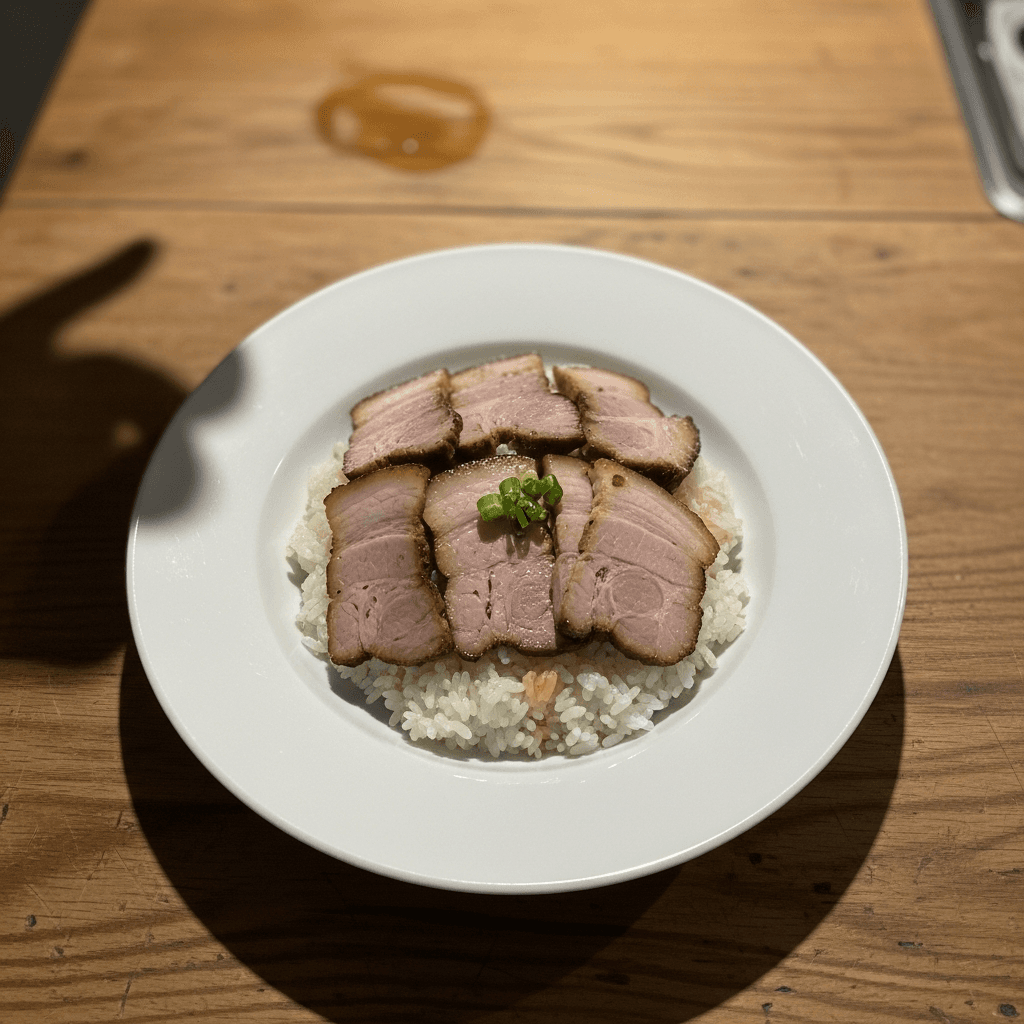
Fluffy Chashu Pork Rice Bowl
When I think of the Fluffy Chashu Pork Rice Bowl I see my small kitchen window in the countryside where the light comes in soft and warm. I first made a version like this for my children on a rainy afternoon when I wanted something nourishing that felt like a hug. The pork was slow-simmered until it yielded when touched and the rice was so light that each spoonful carried the broth like a gentle memory. This dish is an exercise in balance and umami. The braised pork gives deep, savory notes from soy, mirin, and sake while the fluffy rice soaks up the braising liquid and becomes the quiet partner on the plate. In washoku we honor seasonality. In spring I might add young scallions, in winter a touch of lightly pickled daikon. Respect the ingredients and they will reward you quietly. Cooking this bowl is a practice in patience. We sear to seal flavors, not to hurry, and we simmer gently so the meat becomes tender without becoming harsh. Pay attention to aroma and touch. When the kitchen fills with a warm, soy-sweet scent and the pork yields easily to a chopstick, you will know the work is done. Bring a mindful calm to the process. Slow down while rinsing the rice, tie the pork with care, listen for the simmer to change its voice. This is a simple, nourishing lunch that invites you to sit, breathe, and appreciate the harmony of each bite.
Total time
180 min
Servings
4
Difficulty
medium
Prep
30 min
Cook
150 min
Market list
Ingredients
Method
Instructions
Prepare the rice first. Rinse the rice in cold water and gently agitate with your hand. Drain and repeat until the water runs clear. This removes excess starch so the rice will be fluffy. After the final rinse, soak the rice for 30 minutes, then drain and add 2.2 cups of water. Cook according to your rice cooker or on the stove. When finished, let it rest covered for 10 minutes, then gently fluff with a rice paddle. We treat the rice with care so it supports the chashu without overpowering it.
Prepare the pork. If not already, roll the belly into a tight log and tie it with kitchen twine at 1.5 cm intervals. Season lightly with a pinch of salt and black pepper. Tying helps the meat hold its shape and slice beautifully. The cuts will be even and present well in the bowl.
Sear the pork on medium-high heat in a heavy pan until all sides are golden brown. Listen for the oil to change pitch and watch the surface caramelize. Searing forms flavor through the Maillard reaction and gives the braise a deeper aroma. Do not rush this step.
In a deep pot combine 120 ml soy sauce, 60 ml mirin, 60 ml sake, 1.5 tbsp sugar, 600 ml water, smashed ginger, garlic, and tied green onion whites. Add the seared pork. The liquid should come halfway up the pork; add a little more water if needed. Bring to a gentle simmer over medium heat. We are not boiling violently. Gentle movement allows flavors to develop without toughening the meat.
Cover partially and simmer very gently for 90 to 120 minutes, turning the pork every 20 minutes so it cooks evenly. As it simmers, observe the aroma deepen from bright soy to warm caramel. Test tenderness by inserting a skewer. When the skewer meets little resistance the pork is ready. The sound and aroma will tell you more than the clock.
When tender, remove the pork and let it cool in the braising liquid for 20 minutes to absorb more flavor. Resting allows juices to redistribute. Reserve the braising liquid; skim any surface fat and reduce by simmering if you prefer a thicker sauce to spoon over the rice.
While the pork rests, prepare the soft-boiled eggs. Bring a pot of water to a gentle boil. Lower four room-temperature eggs into the water and cook for 6 minutes for jammy whites and set yolks. Immediately transfer to an ice bath to stop cooking. Peel when cool, then marinate in a mixture of 40 ml soy sauce and 15 ml rice vinegar for 30 minutes to 2 hours. The eggs will take on a gentle savory note.
Slice the cooled pork against the grain into 6 to 8 mm thick slices. Against the grain gives a tender bite. Arrange a few slices in a warm bowl to release their aroma, then spoon a little of the strained braising liquid over the meat so the rice can absorb the flavor.
Assemble the bowl: place a generous portion of fluffy rice in each bowl, fan the chashu slices on one side, add an egg halved, sprinkle toasted sesame seeds and sliced scallions, tuck a small amount of pickled ginger on the rim and place nori strips lightly on top. The presentation should feel balanced between color and texture. We eat with our eyes first.
Finish with a final spoon of reduced braising liquid if desired and a light sprinkle of toasted sesame. Sit quietly before you begin to eat and take a breath. Notice the steam carrying those warm aromas. This lunch is a moment to appreciate effort transformed into nourishment.
Kitchen whispers
- ✦Hiro's Notes on Harmony: Rinse rice until the water runs clear to achieve a clean, fluffy texture. The clarity of the rice shows respect for the ingredient.
- ✦Hiro's Notes on Harmony: Sear the pork patiently. A deep, even brown forms complex flavors that will carry through the braise. Listen for a steady sizzle rather than a frantic hiss.
- ✦Hiro's Notes on Harmony: Simmer gently and turn the pork occasionally. Harsh boiling can make the meat tough. Good flavor takes time; do not rush the dashi or braise.
- ✦Hiro's Notes on Harmony: Slice against the grain and serve warm. Tender slices will melt on the palate and pair best with fluffy rice that has been fluffed just before serving.
- ✦Hiro's Notes on Harmony: Balance the bowl visually. Place a touch of bright pickled ginger or scallion for contrast. We eat with our eyes first.
Nutritional glance (per serving)
720
Calories
38 g
Protein
80 g
Carbs
30 g
Fat
4 g
Fiber
Ichi-go ichi-e (One time, one meeting). This proverb reminds us that each meal is a unique encounter that will not come again in exactly the same way. You have taken time and care preparing this bowl. Sit with intention and savor the harmony you created. The effort you gave the ingredients has returned to you as nourishment and quiet joy.
Tea letters
Comments (0)
Please to leave a note.
No letters yet—be the first.
Tags