Elegant Soba Noodle Salad with Vegetables
When I first made this Elegant Soba Noodle Salad with Vegetables, it was at dusk in a small apartment near the Kamogawa river. The air smelled of cooling stone and toasted sesame. I was preparing a simple dinner for my family after a long day. The dish became a quiet celebration of texture and season, a meal that felt both light and deeply satisfying. This salad is rooted in the Japanese sense of washoku, the harmony of ingredients and respect for season. The nuttiness of buckwheat soba meets the clean umami of a gentle dashi-based dressing. Bright, crisp vegetables bring freshness and contrast. Together they form a balance of flavors and textures that is more than the sum of its parts. We pay respect to umami here not by force but by subtlety. A little kombu or a spoon of dashi enhances sweetness without overwhelming the vegetables. We follow the concept of shun, choosing vegetables at their peak when possible. Good ingredients require only a light hand to reveal their best selves. Slow down as you cook. Listen to the water, feel the soba when you taste it, and arrange the salad with patience. Cooking is a kind act, a way to give thanks to the season. Approach each step with gentle attention and you will find a quiet joy in the making and the eating.
Total time
30 min
Servings
2
Difficulty
medium
Prep
20 min
Cook
10 min
Market list
Ingredients
Method
Instructions
Prepare your vegetables first. Slice the cucumber into fine ribbons or julienne. Peel the carrot into thin ribbons. Trim asparagus and blanch in gently boiling water until tender crisp, about 1 to 2 minutes. Shock the asparagus in ice water to preserve color and texture. Arrange vegetables separately; this is a practice in patience and care.
Bring a large pot of water to a lively boil. Salt is not necessary in the water for soba. Add the soba and stir gently to prevent clumping. Listen as the noodles move and loosen in the pot; this is a good sign that they are releasing starch. Follow the package time closely, usually 4 to 5 minutes, and taste a strand for the texture we seek: tender with a slight bite.
When the soba reaches the desired texture, quickly drain into a sieve and transfer immediately to a large bowl of cold water or ice bath. We rinse the noodles gently until the water runs clear. This removes excess starch and gives a clean finish. Handle the soba with patience; do not rub roughly.
Drain the noodles thoroughly, then transfer to a mixing bowl. Toss with a whisper of toasted sesame oil to keep strands separate and to add a warm aroma. The noodles should be glossy but not oily.
Make the dressing. In a small saucepan, warm the kombu dashi gently until steam rises and the aroma opens. Do not boil. Add mirin and allow its sweetness to soften, then remove from heat. Stir in soy sauce, rice vinegar, grated ginger, and sugar or honey. Whisk in the toasted sesame oil and taste. The dressing should be balanced: savory from soy, a gentle acid from vinegar, a hint of sweetness, and deep umami from the dashi.
Combine gently. Add the prepared vegetables and edamame to the bowl with soba. Pour the dressing over the noodles in two stages, tossing gently after each addition. Use a light folding motion as if you are guiding the ingredients to remain themselves. Season with salt or pepper only if needed.
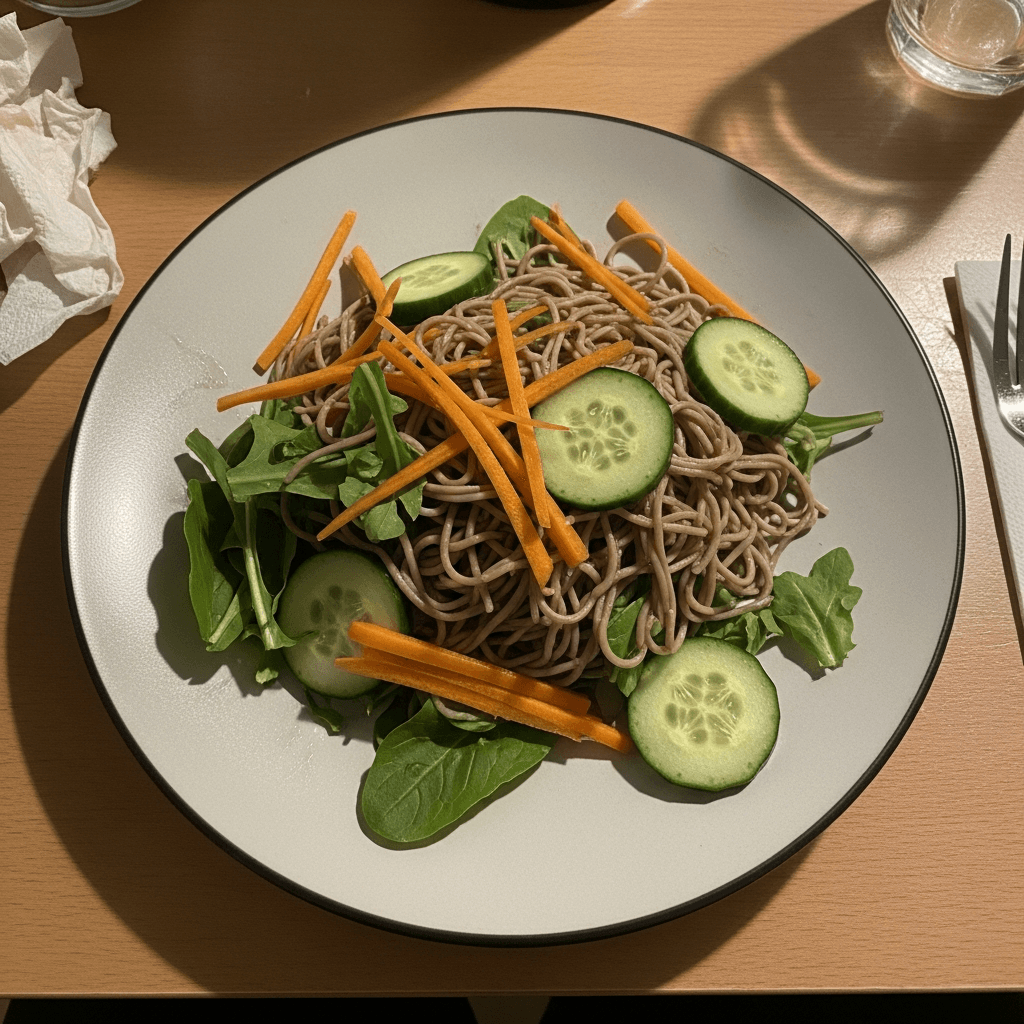
Plate with intention. Divide the salad between two shallow bowls, giving space for each component to be seen. Scatter toasted sesame seeds, sliced nori, shiso leaves, and thinly sliced green onion across the top. We eat with our eyes first, so arrange for balance of color and height.
Serve immediately at room temperature or slightly chilled. Encourage your guests to lift a forkful that includes noodle and vegetable together. Pause for a breath before you taste. Notice the harmony in each bite.
Kitchen whispers
- ✦Hiro's Notes on Harmony: Rinse the soba under cool running water until it runs clear. This step removes surface starch and brightens the flavor of the noodles.
- ✦Hiro's Notes on Harmony: Use a gentle hand when tossing. Overworking the noodles bruises their texture, and the vegetables lose their crispness.
- ✦Hiro's Notes on Harmony: If you choose to make dashi from kombu and bonito, soak kombu in cold water for 30 minutes before gently warming. Remove the kombu just before the water reaches a simmer to keep the dashi clear and delicate.
- ✦Hiro's Notes on Harmony: We eat with our eyes. Arrange contrast in color and shape. A small pile of shredded carrot against pale soba invites the first bite.
Nutritional glance (per serving)
480
Calories
18 g
Protein
70 g
Carbs
12 g
Fat
6 g
Fiber
Ichi-go ichi-e. This proverb means one time, one meeting. It reminds us to cherish the present moment and the care we have given to this meal. You have tended each element with patience and respect. Sit quietly and enjoy the harmony you have created.
Tea letters
Comments (0)
Please to leave a note.
No letters yet—be the first.
Tags