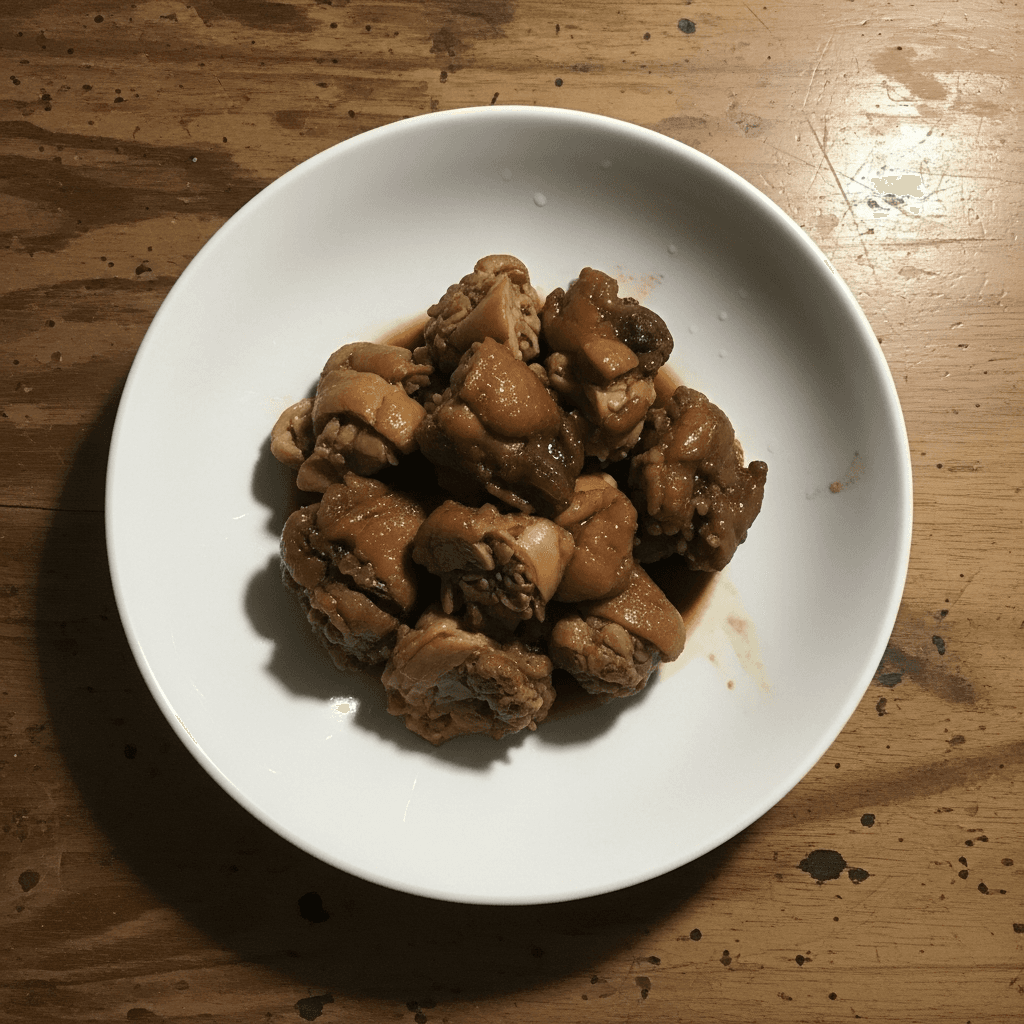
Elegant Shoyu Braised Chicken
When I first made this braised chicken, I was thinking of a cool autumn evening in Kyoto. The streets were quiet after the festival and the air smelled of fallen leaves and warm soy. I wanted a dish that felt both humble and refined, something my grandmother might serve when she wanted to show care without fuss. The result became a family favorite, a small celebration on the table. This dish rests on the harmony of shoyu, mirin and dashi. The soy gives us umami and a deep savory heart. Mirin and a touch of sugar add a gentle roundness and gloss. Dashi brings a quiet background of sea and field, lifting the chicken rather than covering it. We aim for balance so each bite is layered but calm. Pay attention to texture as well as taste. We sear the skin to create contrast between crispness and the soft, braised flesh. Gentle simmering allows the flavors to enter the meat slowly. Good flavor takes time, so do not rush the braise; it rewards patience with clarity and depth. As you cook, think of this as more than a recipe. It is a way to show gratitude for the ingredients and for the people you will share it with. Work deliberately, listen to the pan, and remember that simple, seasonal elements often speak the loudest at the table.
Total time
60 min
Servings
4
Difficulty
medium
Prep
20 min
Cook
40 min
Market list
Ingredients
Method
Instructions
Prepare the chicken. Pat each thigh dry with paper towel. This is important. Dry skin sears better and gives us that pleasant contrast in texture. Season lightly with salt and a small pinch of white pepper.
Heat a wide, heavy skillet or shallow pot over medium heat. Add a small amount of neutral oil and just a whisper of sesame oil for aroma. When the oil begins to shimmer, place the thighs skin-side down. Listen to the sizzle change as the skin touches the pan. We seek a deep golden color, not burnt, about 5 to 7 minutes.
When the skin has a rich color, turn the thighs so they color briefly on the bone side, about 1 minute. Remove the chicken to a plate. Do not wash the pan. The fond will become part of the braising flavor.
In the same pan, add the sliced ginger, the white parts of the scallions and the daikon or carrot. Stir gently and allow the aromatics to soften and perfume the oil for about 1 minute. You should smell a warm, fresh ginger aroma.
Add the shiitake mushrooms and let them brown slightly, two to three minutes. Return the chicken to the pan, skin-side up. Arrange the vegetables so everything sits in a single, even layer as much as possible.
Combine the shoyu, mirin, sake, sugar and dashi in a measuring cup. Pour the mixture gently into the pan, pouring along the side so you do not wash the seared skin. The liquid should come about halfway up the thighs. Listen for the sound of the simmer starting. We want gentle movement, not a rolling boil.
Bring to a gentle simmer, cover with a lid slightly ajar, and reduce heat to low. Braise for 20 to 25 minutes. As the chicken cooks, the aroma of shoyu and dashi should become warm and savory. Turn the thighs once halfway through so flavors distribute evenly.
Remove the lid and increase the heat to medium-low. Allow the sauce to reduce and intensify for 5 to 8 minutes. If you desire a glossy finish, mix the potato starch with a little cold water and swirl it into the simmering sauce. The sauce will thicken and cling to the chicken. Watch the sauce and stir gently; the change in sound signals the syrupy stage.
Taste the sauce and adjust with a small pinch of salt if needed. Remember that the flavors will concentrate as it cools slightly. Finish with the green parts of the scallions and a scattering of toasted sesame seeds. The final touch of shiso or microgreens brings a fresh, seasonal note.
Serve the chicken warm over steamed rice or alongside simple simmered vegetables. Arrange with balance in mind so the skin faces up and the sauce pools gently. Pause before you eat, breathe in the aroma, and give thanks for the meal.
Kitchen whispers
- ✦Hiro's Notes on Harmony: Always pat proteins dry before searing. Moisture is the enemy of a good crust, and a well-seared skin offers texture that contrasts the tender braised flesh.
- ✦Hiro's Notes on Harmony: Use a gentle simmer for braising. A violent boil will toughen the meat and muddy the flavors. Good flavor comes from slow, steady heat.
- ✦Technique and Tradition: If you have homemade dashi, use it. The subtle umami of kombu and katsuobushi deepens the sauce without overwhelming the chicken.
- ✦Technique and Tradition: Finish with a starch slurry only if needed. A glossy, slightly thickened sauce clings beautifully, but too much will hide the delicate balance of shoyu and dashi.
Nutritional glance (per serving)
420
Calories
34 g
Protein
12 g
Carbs
24 g
Fat
2 g
Fiber
Ishinoue ni mo sannen (Three years on a stone). This proverb teaches us that perseverance and patience bring reward. You have tended the braise with care and given the flavors time to deepen. In return, the meal offers calm, warmth and satisfaction. Sit together, eat slowly, and let the simple harmony of the dish remind you that time spent well in the kitchen becomes nourishment for body and spirit.
Tea letters
Comments (0)
Please to leave a note.
No letters yet—be the first.
Tags