Delicate Matcha Cheesecake with Red Bean
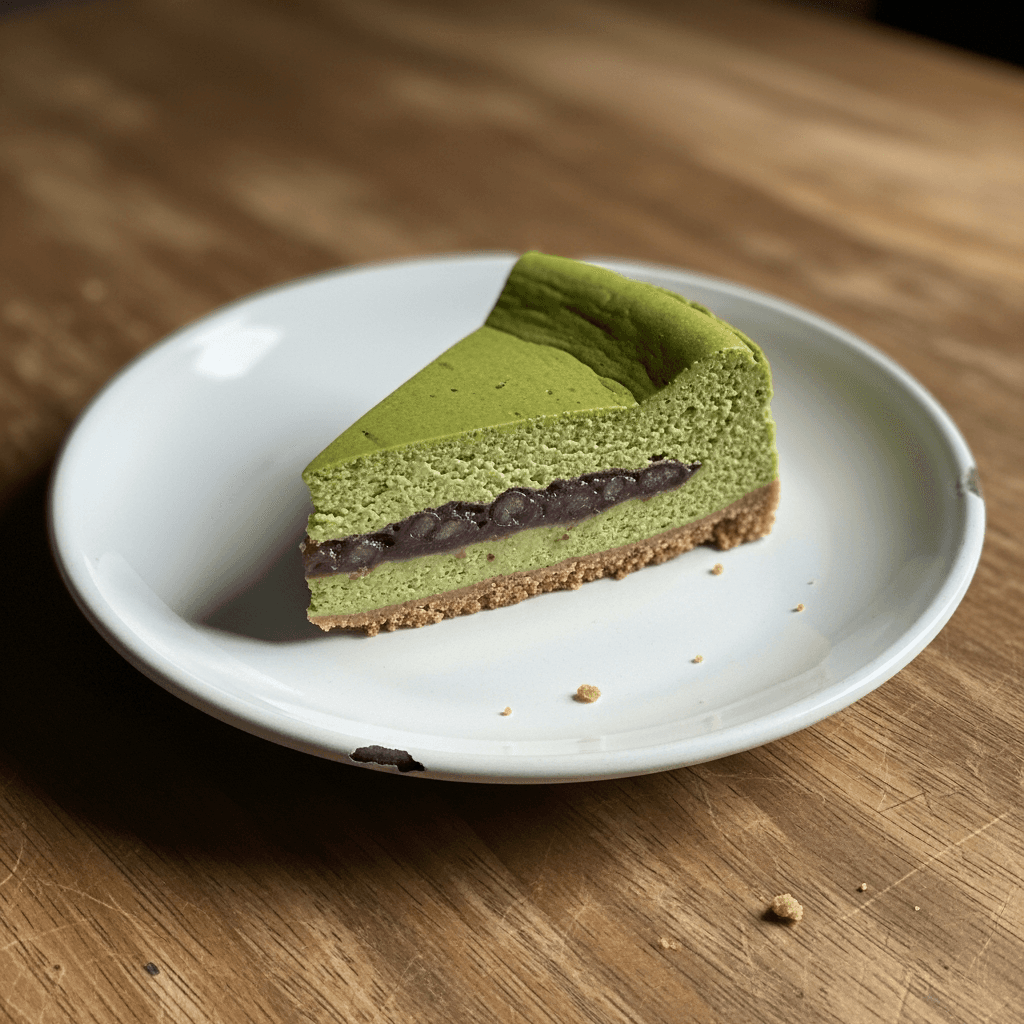
When I first made this matcha cheesecake, it was for a quiet afternoon with my niece after a visit to a temple garden in Kyoto. The green of the matcha reminded her of the moss on stone lanterns and the soft sweetness of anko warmed our hands like a small comfort. I like to think of this cake as a bridge between tradition and the comfort of family. Each slice carries a memory of steeped tea, crisp autumn air, and slow conversation. Matcha brings a gentle, earthy umami that lifts the cream cheese instead of overpowering it. The red bean paste, or anko, offers a slow, rounded sweetness that echoes traditional wagashi. In Washoku we seek balance, and this dessert is a study in balance: a silky filling, a tender crumb, and a sweet bean garnish that honors seasonality and restraint rather than excess. Use matcha in its shun when possible, and choose anko made from lightly sweetened azuki for harmony. Take the process slowly. We temper the cream cheese, fold with care, and give the batter time to settle. Good flavor takes time. When steaming or baking with a bain-marie we are practicing patience; the gentle heat rewards us with a texture both delicate and resilient. Let the aroma of toasted biscuit crust and warm matcha carry you into a quiet rhythm. Serve each slice with gratitude. Allow your guests to taste the different layers in order: the faint salt of the crust, the lush umami of matcha in the filling, and the soft, comforting anko on top. Present simply, with a small cup of green tea if you can, so the palate rests between bites and the spirit of the ingredients is honored.
Total time
90 min
Servings
8
Difficulty
medium
Prep
30 min
Cook
60 min
Market list
Ingredients
Method
Instructions
Preheat the oven to 160 C. Line the base of a 20 cm springform pan with parchment. Light the oven and let it settle so the heat is even and gentle.
Make the crust. Combine the crushed biscuits and sugar in a bowl. Pour the melted butter slowly and mix until the crumbs hold together when pressed. The texture should feel like damp sand. Press the mixture into the base of the pan with the back of a spoon, forming an even layer. Chill in the refrigerator while you prepare the filling.
Warm the cream cheese. Place the room temperature cream cheese in a mixing bowl. Beat briefly until smooth and free of lumps. We move slowly so we do not overbeat and incorporate too much air. A quiet, smooth texture is our goal.
Bloom the matcha. Sift the matcha and cornstarch together to remove any clumps. In a small bowl whisk the matcha with a tablespoon of the cream to make a smooth paste. This step prevents specks and ensures even color and flavor.
Build the filling. Add the sugar to the cream cheese and gently beat until combined. Mix in the remaining cream, sour cream, lemon juice, vanilla, and the matcha mixture. Add the eggs one at a time, folding each in with a spatula or low-speed mixer. Do not rush. We are looking for a silky, cohesive batter that falls slowly from the spatula.
Assemble for the bain-marie. Pour the batter over the chilled crust. Smooth the surface. Wrap the outside of the springform pan in aluminum foil to protect it from water. Place the pan in a larger roasting tray and pour hot water into the tray to reach halfway up the side of the cake pan. Listen to the quiet of the water as you pour; keep it calm.
Bake gently. Slide the tray into the oven and bake for 50 to 60 minutes. The center should still have a very slight wobble when you gently shake the pan. Do not be tempted to overbake. The residual heat will carry the cake to perfect set as it cools.
Cool with patience. Turn the oven off and leave the door ajar for 30 minutes so the temperature drops slowly. This prevents cracks. Then remove the pan from the water bath and let it come to room temperature on a wire rack. When cool, chill in the refrigerator for at least 4 hours or overnight for best texture.
Finish and serve. Remove the springform ring carefully. Spoon dollops of anko across the top, or pipe a few small rounds and place a few whole sweet azuki beans for texture. Dust a light veil of matcha through a fine sieve and place a small mint leaf or edible flower at the edge of each slice. Serve with a quiet cup of sencha or hojicha.
Kitchen whispers
- ✦Hiro's Notes on Harmony 1: Use the highest quality matcha you can find for the most fragrant umami. Ceremonial grade brings a softer, more floral note while culinary grade is earthier. Sifting prevents bitter clumps.
- ✦Hiro's Notes on Harmony 2: Room temperature ingredients blend more gently. Cold eggs or cream cheese lead to overworking the batter and air pockets which can cause cracks.
- ✦Hiro's Notes on Harmony 3: The bain-marie is our tool for even, tender heat. Keep the water calm and warm, not boiling. Gentle steam is kinder to the cake.
- ✦Hiro's Notes on Harmony 4: Let the cake chill properly. Flavors deepen with rest and the texture stabilizes. If you cut too early the slices will be soft and we lose the refined mouthfeel.
Nutritional glance (per serving)
380
Calories
7 g
Protein
33 g
Carbs
24 g
Fat
2 g
Fiber
Mono wo taisetsu ni (Cherish things). This proverb reminds us to treat every ingredient with care and gratitude. By moving slowly, honoring the tea, and respecting the bean, you have created a dessert that reflects patience and harmony. Enjoy each bite as a quiet celebration of nature and effort.
Tea letters
Comments (0)
Please to leave a note.
No letters yet—be the first.
Tags