Delicate Chirashi Sushi Bowl
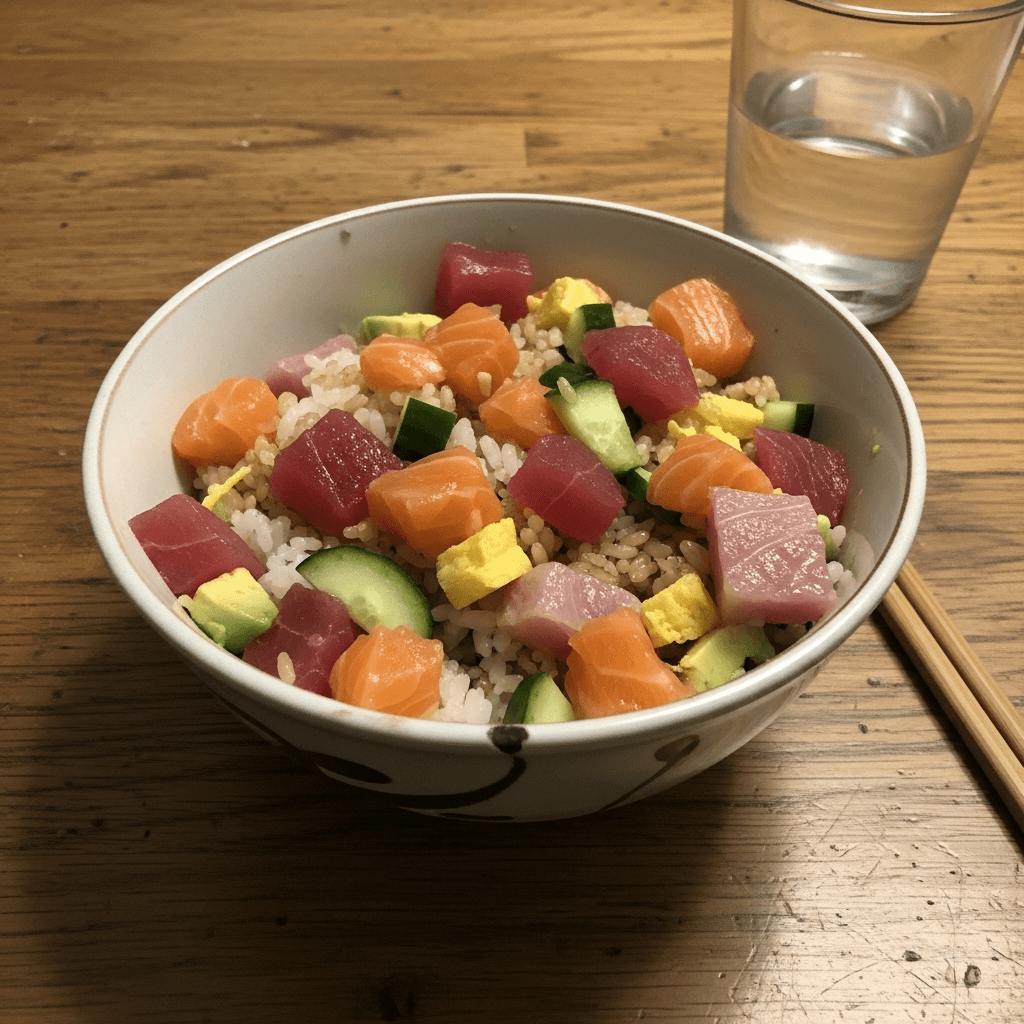
When I first learned to make chirashi it was at my grandmother's kitchen table in the countryside. She would set out small bowls of bright sashimi, simmered shiitake, and a warm pot of seasoned rice. She said that chirashi was a humble celebration, a way to honor the season by scattering the best offerings of the sea and garden over rice. I remember the quiet joy as we assembled our bowls together, each portion placed with care. This Delicate Chirashi Sushi Bowl is my lunchtime adaptation of that memory. It balances soft sushi rice, the clean umami of kombu dashi, and a variety of toppings that offer different textures. Tender sashimi, sweet tamagoyaki, silky avocado, and vinegared mushrooms all meet with a light hand. We aim for harmony of flavor and texture rather than heavy seasoning. Washoku teaches us to respect the natural taste of ingredients and to follow the season. Umami lives in dashi, soy, mushrooms, and the fish itself. By using a gentle kombu dashi and fresh, high quality seafood you let umami unfold slowly. Take time with the rice and with simple, precise cuts of fish. Good flavor takes time. Do not rush the soaking or the seasoning. I invite you to make this dish as a mindful lunch. Arrange each element with balance in mind. The act of preparing this bowl can become a quiet ritual, a way to express gratitude for food and for the hands that prepared it. As you eat, notice the contrast of warm and cool, soft and crisp, subtle salt and bright vinegar. This is the spirit of washoku in a bowl.
Total time
65 min
Servings
2
Difficulty
medium
Prep
40 min
Cook
25 min
Market list
Ingredients
Method
Instructions
Place the rice in a bowl and cover with cold water. Gently rub the grains with your fingertips, then pour off the water. Repeat until the water runs nearly clear. We rinse to remove excess starch so the grains remain distinct and glossy.
After rinsing, let the rice soak in clean water for 20 to 30 minutes. This allows the kernel to rehydrate and cook evenly. Patience here makes for tender, balanced rice.
Prepare a gentle kombu dashi. In a small pot combine 360 ml water and the kombu. Heat slowly and remove the kombu just before the water begins to simmer. Keep this clear, warm broth for cooking the rice if you prefer extra umami.
Cook the rice with the measured water in your rice cooker or on the stove. If using stovetop bring to a gentle simmer, cover and lower the heat to the smallest flame. Cook undisturbed until all water is absorbed, then let rest covered for 10 minutes. Treat the rice gently and allow it to finish quietly.
While the rice cooks, combine rice vinegar, sugar and salt for the sushi seasoning. Warm the mixture slightly so the sugar dissolves, then cool. Taste for a bright, balanced acidity with a whisper of sweetness.
Transfer the cooked rice to a wooden or wide shallow bowl. Pour the seasoned vinegar over the rice in a thin stream while slicing the rice gently with a wooden paddle. Use a fanning motion to cool the rice and create a glossy finish. Listen for the soft sound of grains moving; that is the rhythm of the process.
Prepare toppings with attention and simple technique. Slice sashimi-grade fish with a single smooth stroke. We slice against the grain for a tender bite. Keep the fish chilled until assembly.
Simmer the shiitake briefly in a light mixture of soy sauce and a touch of mirin if you like. Simmer only until tender and fragrant. Drain and cool to room temperature so the texture remains delicate.
Make thin slices of tamago or use pre-made tamago cut into ribbons. Julienne the cucumber and slice avocado just before serving to prevent browning. Blanch the spinach quickly and refresh in cold water to keep color and texture.
Warm the seasoned rice slightly if it has cooled too much. We want rice that is warm, not hot. Place an even bed of rice into two bowls with reverence, leaving space for the toppings.
Arrange toppings on the rice with balance in mind. Place fish, tamago, avocado, cucumber, shiitake, and spinach in small clusters. Scatter ikura and shredded nori where you desire contrast. We eat with our eyes first, so compose the bowl with grace.
Garnish with a sprinkle of toasted sesame seeds and sliced scallion. Serve pickled ginger and a small portion of wasabi on the side. Offer soy sauce but encourage gentle dipping so the flavors remain delicate.
Before eating, take a moment to appreciate the bowl. Notice the steam, the colors, the aroma of vinegar and sea. Eat slowly and with gratitude, savoring each texture and note of umami.
Kitchen whispers
- ✦Hiro's Notes on Harmony: Rinse the rice until the water is nearly clear. This removes excess surface starch and helps each grain remain separate and glossy.
- ✦Technique and Tradition: Use a gentle kombu dashi rather than a strong bonito stock if you want the fish and toppings to sing. The dashi should support, not overpower.
- ✦Presentation and Balance: Arrange toppings in small, thoughtful clusters rather than covering the rice. Balance color, texture, and height so the bowl feels like a composed landscape.
- ✦Timing: Slice sashimi and avocado just before serving to preserve texture and color. Tamagoyaki and simmered mushrooms can be made ahead and chilled, then warmed slightly if you prefer.
Nutritional glance (per serving)
600
Calories
30 g
Protein
80 g
Carbs
18 g
Fat
6 g
Fiber
Ishinoue ni mo sannen (Three years on a stone). This proverb teaches us that perseverance and quiet patience bring results. You have worked gently and with care to prepare this chirashi. Allow the calm you brought to the kitchen to be felt in each bite. Enjoy this lunch with gratitude for the ingredients and the time you have given them.
Tea letters
Comments (0)
Please to leave a note.
No letters yet—be the first.
Tags