Crispy Onigiri with Umami Seaweed
When I was a young man walking the lanes of Kyoto during a summer festival, the vendors sold grilled rice balls that crackled as you bit them. The sound, the texture, and the warm grain stayed with me. Years later I recreated that memory at my own table, combining a soft, seasoned rice interior with a thin, crispy crust and a concentrated umami seaweed filling. Each bite is a small celebration of simple things done well. This snack sits between comfort and ceremony. Onigiri are humble, portable, and honest. The seaweed I use here, a slow-simmered kombu tsukudani, is concentrated nature. It is salt, sweetness, and ocean all in one spoonful. When paired with toasted nori and a touch of soy-brushed crispiness, the flavor finishes round and lingering like a soft bell note. Washoku teaches us to honor seasonality and balance. Even for a snack, I choose rice at its best, a small amount of quality kombu or store-made tsukudani, and a neutral oil that browns cleanly. We aim for contrast of textures and a harmony of tastes. Umami is the thread that links them together. I invite you to slow your pace while making these. Shape the rice with intention. Listen to the sizzle when the onigiri meet the pan. Good flavor takes patience. This recipe is gentle enough for a weekday afternoon and special enough for guests who appreciate quiet, mindful cooking.
Total time
40 min
Servings
4
Difficulty
medium
Prep
25 min
Cook
15 min
Market list
Ingredients
Method
Instructions
Rinse the rice gently until the water runs nearly clear. We do this to remove excess starch so the grains remain distinct. Let the rice rest for 30 minutes if you have time. This resting honours the grain and improves texture.
Combine the rinsed rice and measured water in your rice cooker or a heavy pot. Bring to a gentle simmer, then cook according to your device. If using a pot, cover and cook on low for 12 minutes, then remove from heat and let steam, covered, for 10 minutes. Do not lift the lid while it steams.
While the rice is warm, mix the rice vinegar, sugar, and pinch of salt until dissolved. Fold this seasoning into the rice with a wooden paddle or spatula using cutting motions. We separate the grains, not smash them. The rice should feel glossy and slightly sticky.
Prepare a shallow bowl of water and a small bowl of salt. Wet your hands so the rice does not cling. Take a palmful of rice and press a small well in the center. Spoon about 1 tablespoon of kombu tsukudani into the well. Cover with another thin layer of rice and shape into a compact triangle or oval, pressing gently but firmly. Repeat to make four onigiri.
Lightly pat a sheet of toasted nori on one side of each onigiri. Do not wrap completely if you prefer crispy edges. The nori will provide an umami note that complements the filling.
Heat a frying pan over medium heat. Add the neutral oil and sesame oil, swirling so the pan is evenly coated. We are aiming for a warm, shimmering surface, not smoking.
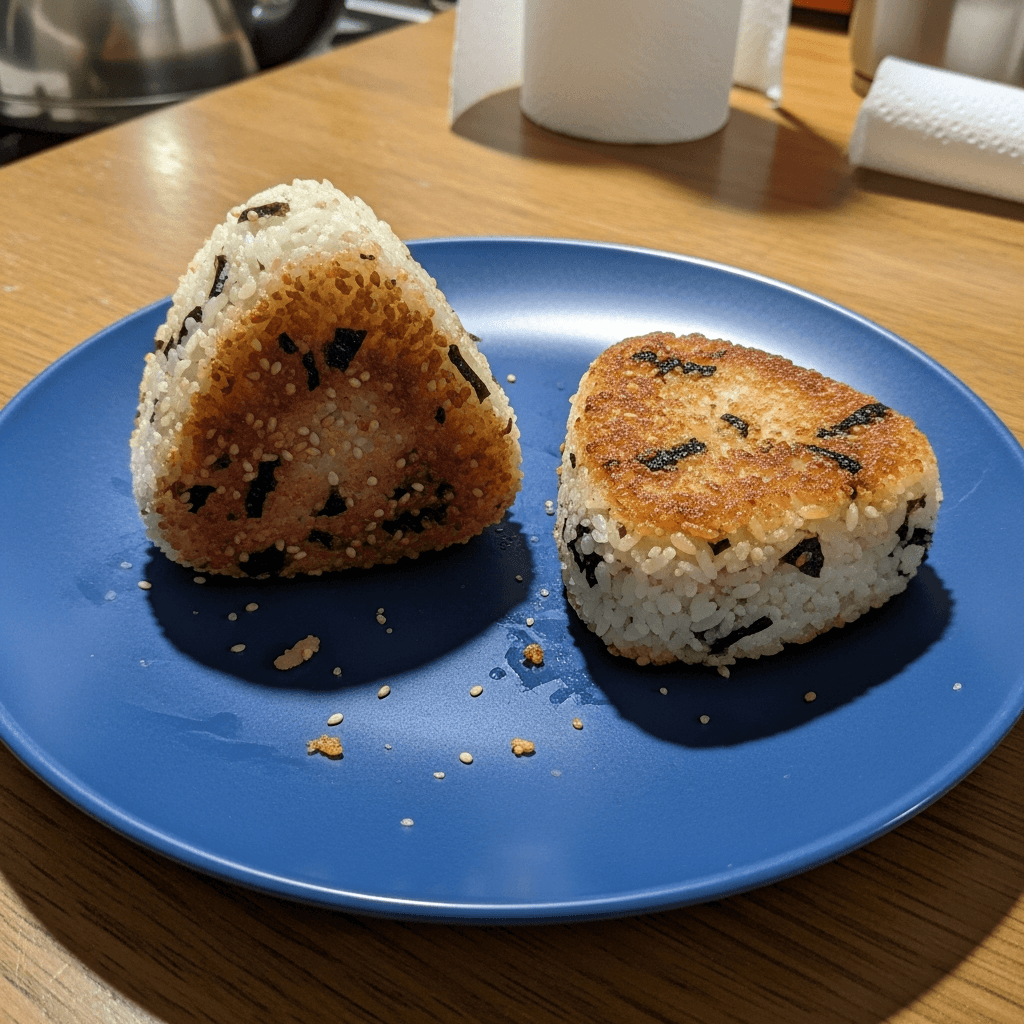
Place the onigiri in the pan, nori-side up if you want the nori to remain delicate, or nori-side down to toast it. Press slightly with a spatula so the base makes full contact. Listen for the sizzle changing tone from soft to bright. After 2 to 3 minutes the underside should be golden and crisp.
Gently flip each onigiri and cook the other side for another 2 to 3 minutes. If you like a deeper color, lower the heat and give a few more minutes per side. The goal is a thin, even crust while the interior stays tender.
Mix the soy sauce and mirin. With a pastry brush, lightly glaze each onigiri once the crust has formed. Return to the pan for 30 to 45 seconds so the glaze sets and the aroma becomes savory and sweet. Watch closely so the sugars do not burn.
Remove the onigiri to a plate. Sprinkle a small pinch of finishing salt and a few toasted sesame seeds. Serve warm with pickled ginger on the side. Breathe in the aroma. Listen to the gentle crackle as you bite.
Kitchen whispers
- ✦Hiro's Notes on Harmony: Rinse rice until the water is nearly clear but not perfectly transparent. A little starch helps the rice bind, which is important for shaping onigiri.
- ✦Technique and Tradition: Use a light brushing of soy-mirin rather than soaking. The glaze adds shine, salt balance, and a caramelized edge without making the crust soggy.
- ✦Hiro's Notes on Harmony: If you cannot find kombu tsukudani, mix a spoon of bonito flakes with a little soy and mirin, simmer until thick, and cool. It will provide concentrated umami.
- ✦Technique and Tradition: Toast the nori just before assembly for best aroma. Nori loses its crispness quickly once exposed to air.
- ✦Hiro's Notes on Harmony: Keep your hands slightly wet and lightly salted when shaping. This protects the rice from sticking and seasons the exterior delicately.
Nutritional glance (per serving)
320
Calories
6 g
Protein
60 g
Carbs
6 g
Fat
2 g
Fiber
Ishi no ue ni mo sannen (Three years on a rock). This proverb teaches us that patience and steady practice deepen skill and appreciation. You have taken care in each step, from rinsing the rice to listening for the sizzle. The quiet attention you offered is reflected in each crispy, savory bite.
Tea letters
Comments (0)
Please to leave a note.
No letters yet—be the first.
Tags