Crispy Lotus Root Chips with Soy Sauce Drizzle
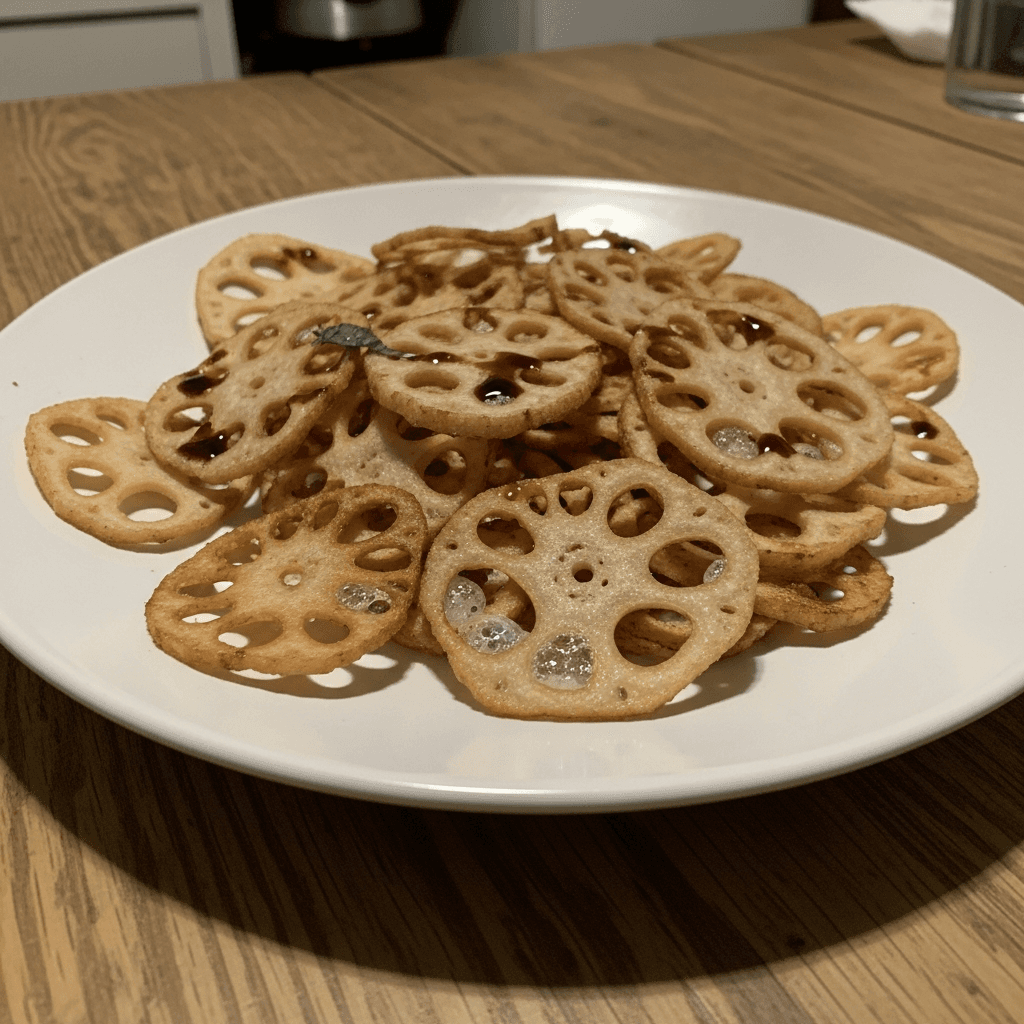
When I was a child visiting my grandmother in the countryside, she would slice lotus root with a calm rhythm while humming a folk song. The thin rings glinted like small suns. She fried a small batch and offered them with a simple soy drizzle. The memory of that quiet afternoon is the spirit behind these crispy lotus root chips. I make them now for family gatherings and as a small offering to season itself. Lotus root, or renkon, has a firm, starchy bite and a gentle sweetness. When it is cut thin and fried, the texture becomes crisp and light, yet the flavor carries an earthy, almost nutty umami. The soy sauce drizzle deepens that umami and brings balance with a touch of sweetness and toasted sesame. This snack celebrates seasonal rhythm. In autumn and winter lotus root is at its best, but it is a humble ingredient that can be enjoyed year round. Cooking these chips is a practice in patience and attention. We slice with respect to texture, we soak gently to keep color and clarity, and we fry with steady heat so each piece becomes uniformly crisp. The small rituals are important. Good flavor takes time. Do not rush the steps. Let the process be a quiet meditation and a way to show gratitude for the ingredient. When you serve them, arrange the chips so their lace patterns are visible. We eat with our eyes first. Offer the soy drizzle modestly so each person can decide how much umami they wish to invite. This is a snack to share, to nibble slowly, and to enjoy conversation that moves like soft steam rising from a teacup.
Total time
30 min
Servings
4
Difficulty
easy
Prep
15 min
Cook
15 min
Market list
Ingredients
Method
Instructions
Prepare the lotus root. Scrub and peel the root gently. We pay respect to the shape. Slice into 2 to 3 millimeter rounds. If some slices are thicker, set them aside for a longer fry. The lace pattern of the slices is part of the beauty.
Soak the slices in cold water with rice vinegar. Place the rounds in a bowl with 1 liter of cold water and 1 tablespoon rice vinegar. The vinegar keeps the color clear and the water leaches excess starch. Leave for 5 to 10 minutes while you ready the rest.
Dry and coat. Drain the lotus root and pat each slice thoroughly with a clean kitchen towel or paper towel. Toss the slices in 2 tablespoons potato starch so each ring has a light, even dusting. The starch is the secret to an even, glassy crisp.
Heat the oil. Pour 500 milliliters of vegetable oil into a deep pot. Warm slowly until it reaches 170 to 175 degrees Celsius. If you do not have a thermometer, test with a small piece of lotus root; it should sizzle steadily without smoking. We look for a gentle, confident sizzle.
Fry in small batches. Slide the coated slices into the oil in a single layer, few at a time. Do not overcrowd. Listen for the sound: the sizzle will change pitch as the moisture leaves. Fry each batch 2 to 4 minutes until the edges turn a pale gold and the texture is crisp. Remove with a spider and place on a wire rack over a tray to drain.
Season while warm. Sprinkle a light touch of salt on the chips when they are still warm and slightly oily so the seasoning adheres. Taste one. The balance of salt and lotus sweetness should feel respectful, not overpowering.
Make the soy sauce drizzle. In a small saucepan combine 1 tablespoon soy sauce, 1 teaspoon mirin, 1 teaspoon toasted sesame oil, and 1 teaspoon sugar. Warm gently over low heat until the sugar dissolves and the aroma becomes savory and toasted. We are not caramelizing. Remove from heat and let the mixture cool slightly.
Dress and garnish. Arrange the chips on a shallow plate in a fan so each lace pattern shows. Drizzle the soy mixture sparingly across the chips, or serve it on the side for dipping. Scatter 1 tablespoon toasted sesame seeds and a few slices of scallion. Add a light pinch of shichimi togarashi if you wish a gentle heat.
Serve immediately. The chips are at their finest when freshly fried and crisp. If you must keep them, leave them on a wire rack in a low oven at 100 degrees Celsius to preserve texture for a short time. Share with quiet appreciation.
Kitchen whispers
- ✦Hiro's Notes on Harmony 1: Slice consistently. Use a mandoline or a very sharp knife to achieve uniform thickness. Uniform slices cook evenly and create a harmonious texture.
- ✦Hiro's Notes on Harmony 2: Soak with care. The brief vinegar soak prevents discoloration and removes surface starch. If the water becomes cloudy, change it once so the soaking is gentle and effective.
- ✦Hiro's Notes on Harmony 3: Fry patiently. Keep oil temperature steady. If chips brown too quickly they will be oily inside. Lower the heat slightly rather than rushing with higher temperature.
- ✦Hiro's Notes on Harmony 4: Salt while warm. Seasoning adheres best to warm chips. Add garnishes just before serving so their textures remain distinct.
- ✦Hiro's Notes on Harmony 5: Presentation matters. Arrange chips so the holes and patterns are visible. A simple paper doily or a small bowl of the drizzle at the side invites sharing.
Nutritional glance (per serving)
142
Calories
2 g
Protein
20 g
Carbs
7 g
Fat
3 g
Fiber
Ishi no ue ni mo sannen (Sit on a stone for three years). This proverb teaches us that patience and quiet perseverance bring understanding and result. You have taken time to slice, soak, fry, and season with care. The slender attention you paid is folded into each crisp bite. Enjoy the harmony of texture and umami you have created.
Tea letters
Comments (0)
Please to leave a note.
No letters yet—be the first.
Tags