Crispy Agedashi Tofu with Dashi Sauce
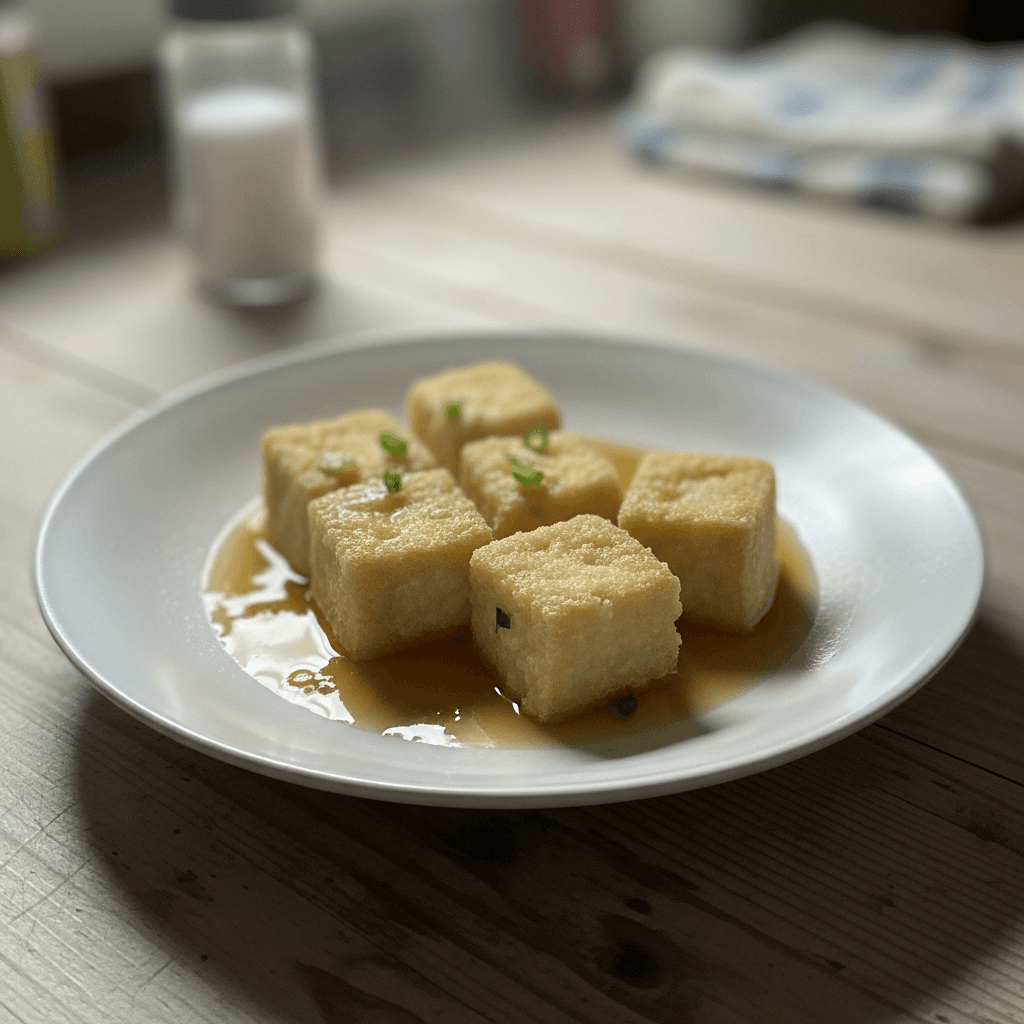
When I first learned to make agedashi tofu I was in a small kitchen near my aunt's house in Kyoto. She served warm bowls after summer festivals, and I would watch steam rise as we sat on low stools. The memory of the crisp exterior and the soft, warm heart of the tofu has always felt like a quiet celebration of simple things. This version is my mindful adaptation for the everyday snack. The harmony of textures is important: the thin, crisp coating, the silken tofu inside, and the light pool of dashi sauce that carries umami forward. In Washoku we honor season and balance, so the dashi is clean and restrained so that garnishes like grated daikon and a whisper of ginger can sing. Umami is the spirit of this dish. Good dashi made from kombu and katsuobushi will give depth without heaviness. We do not rush the stock. We allow the kombu to release its essence gently, and we listen as the aroma changes when the bonito meets the warm water. The frying is brief and attentive so the tofu keeps its tender center. Prepare this as a quiet ritual. Press the tofu patiently. Heat the oil without haste. When you sit to eat, close your eyes for a moment and notice the steam, the gentle saltiness, and the contrast of textures. This snack is a small offering of gratitude to the season and to the hands that grew the ingredients.
Total time
40 min
Servings
2
Difficulty
medium
Prep
25 min
Cook
15 min
Market list
Ingredients
Method
Instructions
Prepare the tofu. Gently lift the block from its packaging and drain. Wrap the tofu in a clean kitchen towel or paper towels and place it on a flat plate. Set a small weight on top to press for 15 to 20 minutes. We press to remove excess water so the tofu crisps rather than steams.
While the tofu presses, make the dashi. Place the kombu and 600 ml water in a small saucepan and let it rest for 10 minutes. Slowly warm the water to just before a simmer. You will see small bubbles at the edges. Remove the kombu just before the water begins to boil. Add the katsuobushi, bring briefly to a bare simmer for 30 seconds, then turn off the heat and let the flakes sink for 3 minutes. Strain through a fine sieve or cloth into a clean pot.
Season the dashi. With the clear dashi returned to low heat, add the soy sauce, mirin, and sugar. Warm gently and taste. The aroma should be savory and clean. Keep the dashi warm but not boiling while you finish the tofu.
Cut and coat the tofu. Unwrap the pressed tofu and cut into 6 to 8 bite sized cubes. Pat each piece lightly with towel. Sprinkle the potato starch evenly and turn each cube so every side has a thin, even dusting. Shake off excess starch. A light coating becomes crisp without feeling heavy.
Heat the oil. In a deep saucepan or a small fryer warm the oil to 170 to 175 C. If you do not have a thermometer, test with a small pinch of starch; it should sizzle gently and rise slowly. Keep the heat steady. We want a consistent sizzle, not a violent boil.
Fry the tofu. Carefully lower a few pieces into the oil using a slotted spoon. Listen to the sizzle; at first it will be lively then it will settle into a lower tone as moisture leaves the tofu. Fry for 2 to 3 minutes until the coating is golden and crisp. Turn gently so all sides color evenly. Remove and drain on a rack or paper towel. Do not overcrowd the pot.
Assemble and serve. Place the hot tofu pieces in shallow bowls. Pour a ladle of warm dashi around them so the bottoms are gently bathed but the coating stays crisp on top. Add a small mound of grated daikon, a touch of grated ginger, and scatter sliced green onion and katsuobushi flakes on top. Finish with a light pinch of salt if needed and, if you like, a tiny dusting of shichimi togarashi.
Enjoy mindfully. Serve immediately. Notice the contrast between warm dashi and crisp coating, the aroma of bonito, and the cooling brightness of daikon. This snack is meant to be eaten soon after serving to keep the texture balanced.
Kitchen whispers
- ✦Hiro's Notes on Harmony: Press the tofu with care. Fifteen to twenty minutes is enough for firm tofu. Longer pressing can make the center too dry for agedashi.
- ✦Hiro's Notes on Harmony: Make the dashi gently. Do not let it reach a rolling boil when the kombu is present. Gentle heat preserves the clear umami we seek.
- ✦Hiro's Notes on Harmony: Keep the coating light. A thin dusting of starch gives a delicate crisp. Too much starch yields a heavy crust that hides the tofu's softness.
- ✦Hiro's Notes on Harmony: Temper the oil and fry in small batches. This keeps the temperature steady so each piece crisps evenly.
- ✦Hiro's Notes on Harmony: Serve immediately. We eat with our eyes first. Arrange pieces with balance and leave a little space so steam does not condense and soften the crust.
Nutritional glance (per serving)
420
Calories
18 g
Protein
28 g
Carbs
28 g
Fat
4 g
Fiber
Ichigo ichie (One time, one meeting). This proverb reminds us to cherish this single moment at the table. The care you gave to pressing, frying, and making dashi turns simple ingredients into a mindful snack. Savor it slowly and carry the calm of the kitchen with you.
Tea letters
Comments (0)
Please to leave a note.
No letters yet—be the first.
Tags