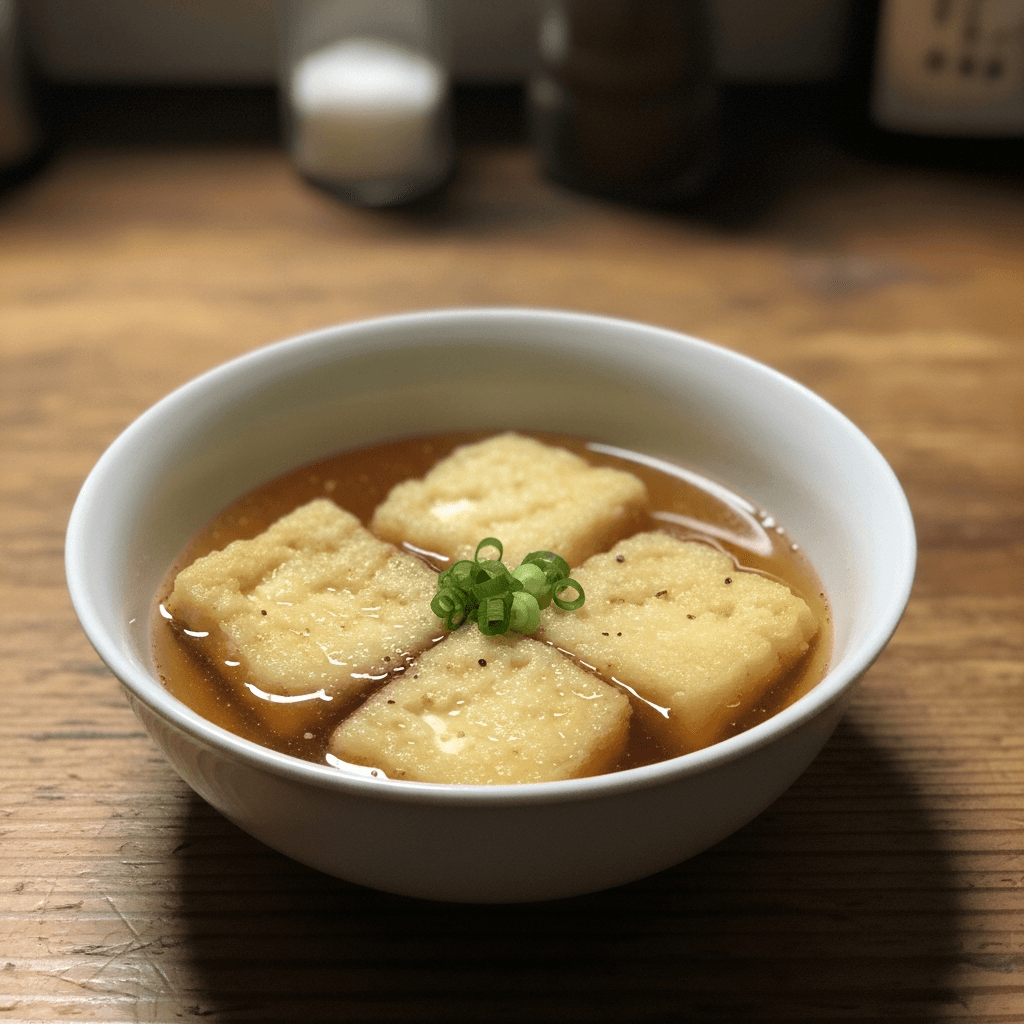
Crispy Agedashi Tofu in Warm Dashi
When I was a child in the countryside, my grandmother would serve small bowls of agedashi tofu on nights when the air smelled of woodsmoke and rice. The soft heart of the tofu, dusted in starch and fried until a thin crust sang when pierced, sitting in a warm, clear dashi — this memory still brings quiet contentment. I learned to move slowly in the kitchen from her, to treat each ingredient like an honored guest. Crispy agedashi tofu is simple and refined. The dish lives in the balance between textures and umami. The tender soy bean curd offers a gentle creaminess, the coating gives a fleeting crunch, and the dashi provides a savory, clean backdrop that lets the tofu speak. In washoku we respect seasonality; in spring I lean to milder garnishes, and in winter I deepen the dashi for comfort. This recipe is my mindful adaptation for sharing as a snack: not too large, meant to be savored between courses or alongside tea. As you make it, remember that every step is part of the offering. We slice against the grain of haste and listen to the small sounds, because cooking is a way to thank nature for each ingredient. Slow down with the water, the heat, and the oil. Good flavor takes time, and crispness rewards patience. I invite you to prepare this bowl with a calm heart and to enjoy each mouthful with gratitude.
Total time
40 min
Servings
2
Difficulty
medium
Prep
20 min
Cook
20 min
Market list
Ingredients
Method
Instructions
Prepare the tofu with care. Gently remove the tofu from its package and place it on a tray lined with paper towel. Sprinkle a small pinch of salt atop the tofu. Cover with another layer of paper towel and weigh gently with a light plate to press for 10 minutes. We press to remove excess water so the coating adheres and the interior keeps its delicate texture.
Make the dashi. Place the kombu and water in a small saucepan and let it sit 10 minutes to rehydrate. Bring the water to a near simmer over medium heat. Watch for tiny bubbles at the edges; do not let it boil. Remove the kombu just before the water simmers, and add the katsuobushi. Let the flakes sink, then strain through a fine sieve, pressing gently to capture the clear broth.
Season the dashi. Return the clear dashi to the saucepan, add soy sauce, mirin, and sugar. Warm gently until the aroma is balanced and savory. Taste with mindfulness. The broth should be a soft umami presence that supports the tofu, not overpower it. Keep the dashi warm over the lowest heat.
Cut the tofu. After pressing, cut the block into four even rectangles. Hold each piece with both hands and be gentle. The tofu should feel cool and slightly firm after pressing. Pat each piece dry with paper towel to remove surface moisture.
Prepare the coating. In a shallow dish, combine potato starch and flour. Stir with a whisk until the mixture is uniform and airy. This blend yields an ethereal crust that turns crisp quickly without becoming heavy.
Coat the tofu. Lightly dust each piece of tofu in the starch-flour mixture, shaking off any excess. The layer should be thin and even. We want a whisper of crust that will become a delicate shell around the tender interior.
Heat the oil. In a deep skillet or small pot, pour enough oil to reach about 2.5 cm depth. Heat slowly over medium until the oil reaches 170-175°C. If you do not have a thermometer, test with a small pinch of coating: it should sizzle gently and rise slowly. Too hot and the crust will brown before the interior warms; too cool and the crust will be greasy.
Fry with attention. Carefully slide two pieces of coated tofu into the oil. Listen to the sound; the sizzle should be steady and soft, not a loud crack. Fry for 2 to 3 minutes until the crust is pale golden. Turn gently with a slotted spoon so each side cooks evenly. Remove to a rack or paper towel and drain briefly.
Arrange bowls. Pour warm dashi into two small bowls, enough to reach midway up each tofu piece. The broth should steam gently and smell sweet and savory. Place two pieces of fried tofu into each bowl so they sit with kindness in the broth.
Add the toppings. Spoon a small mound of grated daikon atop the tofu, then add a little grated ginger and scatter sliced green onion. Finish with a small flurry of bonito flakes and a light pinch of shichimi togarashi if you like a whisper of heat. The garnish should sing in harmony, not compete.
Serve immediately. The contrast of textures is best enjoyed right away: the crisp shell will slowly soften into the warm dashi. Invite your guest or yourself to take the first bite with gratitude. Notice the gentle steam and the quiet scent of kelp and bonito.
Clean with respect. After you eat, tidy the bowls and return the kitchen to calm. This is part of the dish: honoring the tools and the effort keeps the practice of cooking beautiful.
Kitchen whispers
- ✦Hiro's Notes on Harmony: Use kinugoshi (soft silken) tofu for a silky interior. If you prefer a firmer center, choose momen tofu and reduce pressing time.
- ✦Hiro's Notes on Harmony: Maintain oil temperature between 170 and 175°C. Too hot and the coating will brown; too cool and it will absorb oil. A steady, gentle sizzle is the sign of balance.
- ✦Hiro's Notes on Harmony: Make the dashi from kombu and katsuobushi for the cleanest umami. If you need a shortcut, good quality instant dashi powder can be used, but adjust the soy and mirin to taste.
- ✦Hiro's Notes on Harmony: Prepare toppings ahead. Grated daikon holds its brightness if you squeeze out excess water; keep garnishes chilled and add them just before serving.
- ✦Hiro's Notes on Harmony: We eat with our eyes first. Serve in small bowls with contrasting colors: white tofu, clear amber dashi, green onion and white daikon bring balance to the plate.
Nutritional glance (per serving)
420
Calories
18 g
Protein
28 g
Carbs
22 g
Fat
3 g
Fiber
Ishi no ue ni mo sannen (Three years on a stone). This proverb teaches us that patience and steady effort yield reward. You have taken time to press the tofu, to coax flavor from the dashi, and to fry with care. These quiet efforts transform simple ingredients into a nourishing snack. Sit, breathe, and enjoy the subtle harmony you have created.
Tea letters
Comments (0)
Please to leave a note.
No letters yet—be the first.
Tags