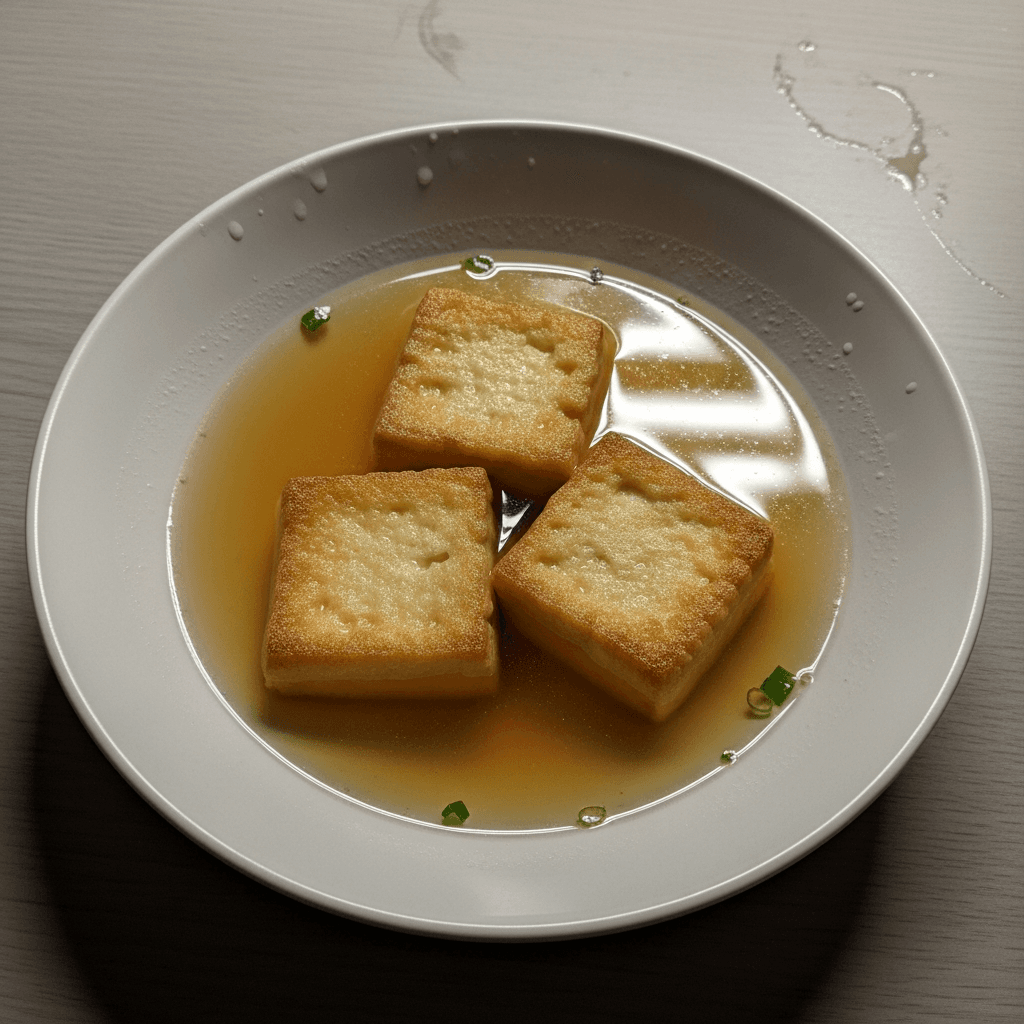
Crispy Agedashi Tofu in Dashi Broth
When I was young I remember a small stall by a temple in Kyoto where the air was a mix of incense and simmering dashi. The vendor would serve warm, crisp tofu in a shallow bowl of clear broth. I learned then that simple things can carry great comfort. This Crispy Agedashi Tofu brings me back to that quiet moment, and also to my grandmother's countryside kitchen where she would pat the tofu gently with a cloth and say, watch it carefully as it browns. Agedashi tofu is a celebration of textures. The outside is light and golden, offering a delicate crunch. Inside the tofu remains tender and silky. The dashi broth ties the dish together with umami and subtle sweetness. In Washoku we honor seasonality and balance. If daikon is in season, grate it finely. If fresh spring scallions appear, use them. These small choices honor the ingredient's spirit. We focus on umami here because it is the quiet heart of the bowl. Kombu and katsuobushi bring a round, savory base, while soy and mirin add depth and a touch of sweetness. The fried coating gives contrast. We use potato starch to achieve a thin, crisp mantle that does not weigh down the tofu. Good flavor takes time, so do not rush the dashi; let it rest briefly so the aroma settles. This recipe is offered as a mindful snack. It invites slowing down between tasks and sharing a small, nourishing plate with someone you care for. Treat each step as a gesture of gratitude to the ingredients and to the hands that prepared them.
Total time
45 min
Servings
4
Difficulty
medium
Prep
20 min
Cook
25 min
Market list
Ingredients
Method
Instructions
Prepare the dashi. Wipe the kombu gently with a damp cloth to remove any grit. Place the kombu and 1000 ml water in a pot and let it sit for 10 minutes so the sea aroma enters the water.
Bring the kombu and water to a gentle simmer over medium heat. We are looking for small bubbles around the edges, not a rolling boil. Just before it reaches a boil, remove the kombu. This preserves the clean umami of the kelp.
Add the katsuobushi. Let the liquid come to a soft boil for 30 seconds, then turn off the heat. Allow the flakes to sink on their own for 2 to 3 minutes. You will see the broth clear slightly and smell a savory, rounded aroma.
Strain the dashi through a fine sieve or cheesecloth into a clean pot. Return the strained dashi to low heat and season with 30 ml soy sauce, 30 ml mirin, and 2 g sugar. Taste gently. The broth should be balanced, quietly savory and a little sweet. Keep warm but do not boil.
Prepare the tofu. Gently drain the tofu and place it on a clean cloth or paper towels. Cover with another towel and place a light weight for 10 minutes to remove excess water. We are not pressing it firm. We only want a tender interior preserved.
Cut the tofu into 8 even cubes. Season each piece with a very light pinch of salt. Pat each piece dry carefully so the coating will adhere.
Place the potato starch in a shallow bowl. Dredge each tofu cube lightly and evenly. Shake off excess starch. The coating should be thin so the crispness is delicate and the tofu still feels soft inside.
Heat the oil in a deep pan to 170 to 175 C. If you do not have a thermometer, test with a small pinch of starch; it should sizzle and rise gently. Fry the tofu in batches to avoid crowding. Listen for the sizzle to soften and change pitch as the pieces brown.
Fry each piece for about 2 to 3 minutes until the surface turns light golden. Turn gently with a slotted spoon so all sides are even. Remove and drain on a wire rack or paper towel briefly. The exterior should be crisp without feeling heavy.
To serve, place two tofu cubes in a shallow bowl for each person. Ladle the warm dashi broth around the tofu so it comes up to the edges but does not drown the surface entirely. The contrast of hot broth and crisp tofu is important.
Garnish each bowl with a small mound of grated daikon, a little grated ginger, a scattering of sliced scallions, and a few bonito flakes. Finish with a light dusting of shichimi togarashi if you like a gentle heat.
Pause before eating. Notice the steam, the aroma of dashi, and the gentle give of the tofu when you break it with chopsticks. Eat slowly to appreciate the balance of texture and umami.
Kitchen whispers
- ✦Hiro's Notes on Harmony 1: Use a gentle heat when extracting dashi. Rapid boiling dissipates delicate flavors. Patience gives a cleaner, more balanced broth.
- ✦Hiro's Notes on Harmony 2: For a crisper coating use potato starch rather than flour. It creates a whisper-thin crust that contrasts with the silkiness of tofu.
- ✦Hiro's Notes on Harmony 3: Dry the tofu well but do not press it until hard. The interior must remain soft. A light weight for 10 minutes is enough.
- ✦Hiro's Notes on Harmony 4: Arrange the bowl with balance in mind. Place garnishes to one side so the eye and appetite are guided slowly across the bowl.
Nutritional glance (per serving)
230
Calories
12 g
Protein
14 g
Carbs
14 g
Fat
2 g
Fiber
Ishinoue ni mo sannen (Three years on a stone). This proverb teaches us that perseverance and patience bring success. You have taken time to coax flavor from simple ingredients and to craft a small, thoughtful snack. The reward is not only the taste but the calm you carried into the kitchen.
Tea letters
Comments (0)
Please to leave a note.
No letters yet—be the first.
Tags