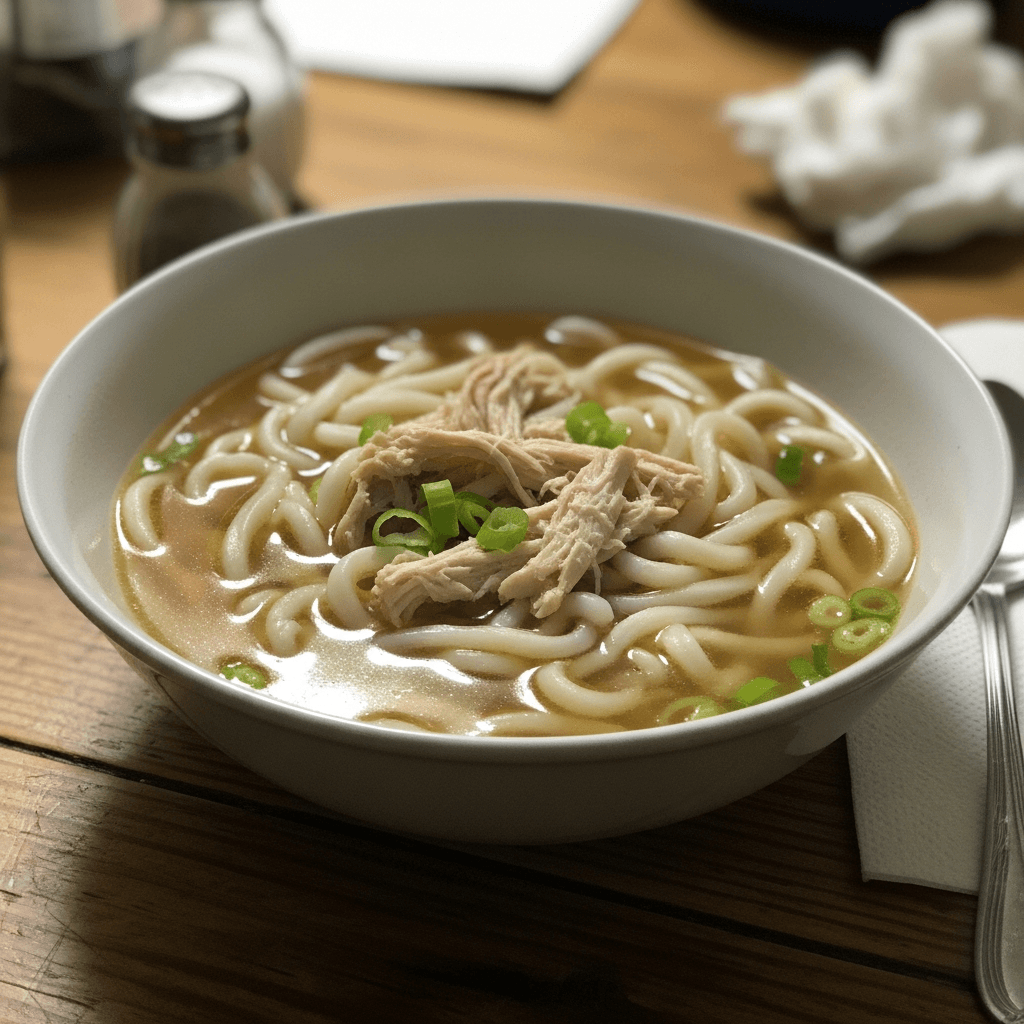
Comforting Chicken Udon Soup
When I was young, my mother would make a large pot of udon soup on rainy afternoons. The house would fill with a gentle steam and the sweet, savory scent of simmering dashi. We would gather quietly around the low table and each bowl felt like an embrace. This Comforting Chicken Udon is my memory of those afternoons, adapted to the busy rhythms of modern life yet unchanged in spirit. This dish celebrates balance. The clear dashi brings umami that lifts the chicken and vegetables without overpowering them. Udon offers a comforting chew, like a warm pillow for the appetite. We use seasonal vegetables when possible. In spring I add soft greens, in winter I turn to hearty cabbage and mushrooms. The practice of shun keeps the soup honest and kind to the palate. In Washoku we honour ingredients and the time they require. We slice, simmer, and season with intention. We listen for the quiet change as flavors deepen. Good flavor takes time. Do not rush the dashi or the gentle simmer that tenderizes the chicken. The small rituals are the heart of the meal. If you cook this for lunch, treat the hour as your offering to yourself and to those you feed. The steps are simple, but performed with care they become restful. I invite you to slow your breath, prepare each ingredient with respect, and enjoy the calm that comes from a bowl made with attention.
Total time
40 min
Servings
4
Difficulty
medium
Prep
15 min
Cook
25 min
Market list
Ingredients
Method
Instructions
Prepare your mise en place. Trim and slice the chicken into bite sized pieces. Slice the mushrooms, carrot, green onions, ginger, and garlic. Having everything ready keeps the cooking calm and focused.
If you make dashi from kombu and bonito, place 1.2 L of cold water with a 10 cm kombu strip and slowly bring to just below a simmer. Remove the kombu before the water boils. Add bonito flakes, let them sink, then strain. The aroma should be clean and sea like. If using instant dashi, dissolve it now and warm gently.
Place a medium pot over medium heat and add a splash of oil. Sauté the ginger and garlic until fragrant and warm. Listen for the gentle shift in the scent. Do not let them brown; we seek a soft perfume that will season the broth.
Add the sliced chicken to the pot. Stir to separate the pieces. We are looking for the surface to turn pale and for a faint sizzling sound to slow. This signals the chicken is sealing in juices.
Pour in the warm dashi and bring the liquid to a gentle simmer. We want small, steady bubbles. A violent boil will roughen the texture of the chicken and cloud the broth.
Skim any foam or scum that rises. The act of skimming clarifies the soup and honors the pure taste beneath. Continue to simmer gently for 6 to 8 minutes until the chicken is cooked through and tender.
Add shiitake, carrot, and napa cabbage to the pot. Simmer for another 3 to 4 minutes. Vegetables should be tender but still have a little bite. The aroma should deepen and become more layered with sweet and savory notes.
Stir in soy sauce, mirin, sake, and sugar. Taste the broth. Adjust salt sparingly. We build umami slowly and balance sweetness and acidity so the udon and chicken remain the stars.
Cook the udon according to package instructions in a separate pot so the noodles do not release excess starch into the soup. For fresh udon, a brief 1 to 2 minute bath in boiling water is often enough. Drain and rinse briefly under warm water to relax the gluten.
Place a portion of udon into each warmed bowl. Gently ladle the hot broth, chicken, and vegetables over the noodles. The steam will carry the broth into the noodles so they finish in the bowl.
Finish each bowl with sliced green onions, mitsuba or parsley, a touch of yuzu peel if using, and a light dusting of shichimi if you like heat. A pinch of white pepper can bring the flavors together.
Before serving, pause for a moment. Observe the colors and inhale the aroma. Serve immediately so the udon remains pillowy and the broth warm like a gentle hand.
Kitchen whispers
- ✦Hiro's Notes on Harmony: Use chicken thigh for tenderness and flavor. Breast is leaner but can dry quickly. Slice against the grain for a softer mouthfeel.
- ✦Hiro's Notes on Harmony: Make dashi when you have the time. A simple kombu and bonito dashi creates clean umami that supermarket broths cannot replicate. If pressed, use a high quality instant dashi.
- ✦Hiro's Notes on Harmony: Rinse cooked udon briefly under warm water to remove loose starch and relax the gluten. This prevents the broth from clouding and keeps the noodles pleasantly chewy.
- ✦Hiro's Notes on Harmony: Arrange garnishes with balance in mind. Place green onions and mitsuba to one side and yuzu on the other. We eat first with our eyes, then with gratitude.
Nutritional glance (per serving)
520
Calories
36 g
Protein
58 g
Carbs
12 g
Fat
4 g
Fiber
Ichi-go ichi-e (One time, one meeting). This proverb reminds us to cherish each moment and each meal as a singular encounter. You have taken time and care to prepare this udon. Sit, breathe, and receive the warmth you created. The calm you brought to the process is part of the nourishment.
Tea letters
Comments (0)
Please to leave a note.
No letters yet—be the first.
Tags